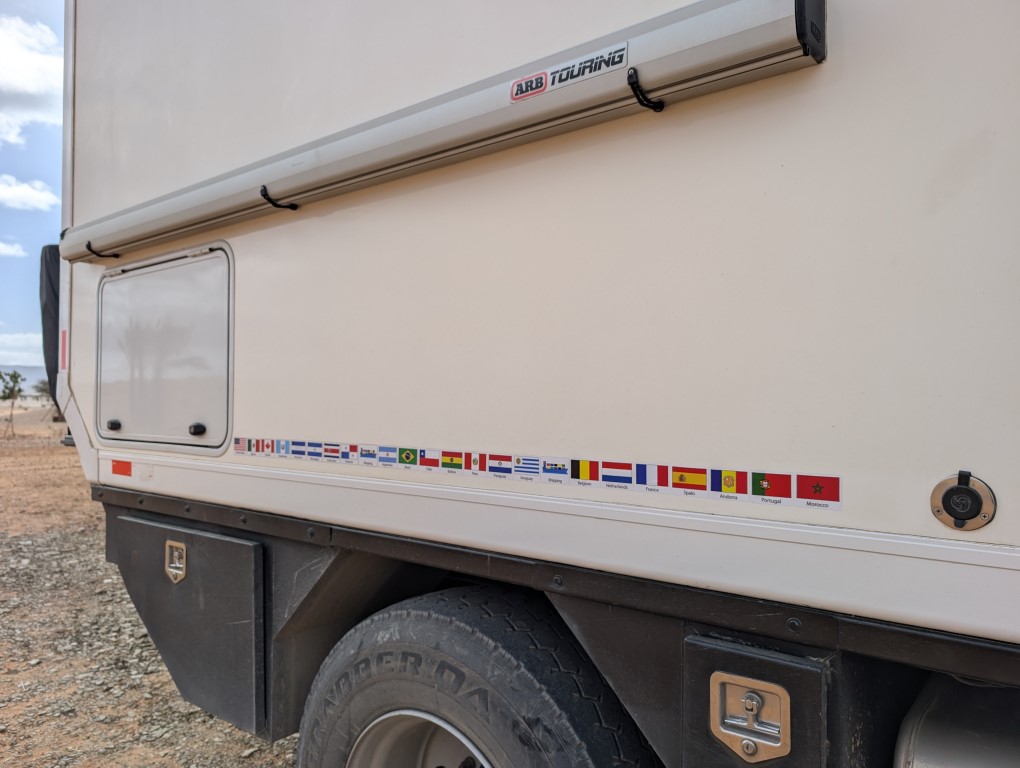
We’re really enjoying overlanding in Morocco and are seeing a lot. It’s impressive what you can pack into a day. Here are a few highlights to catch up at least partway.
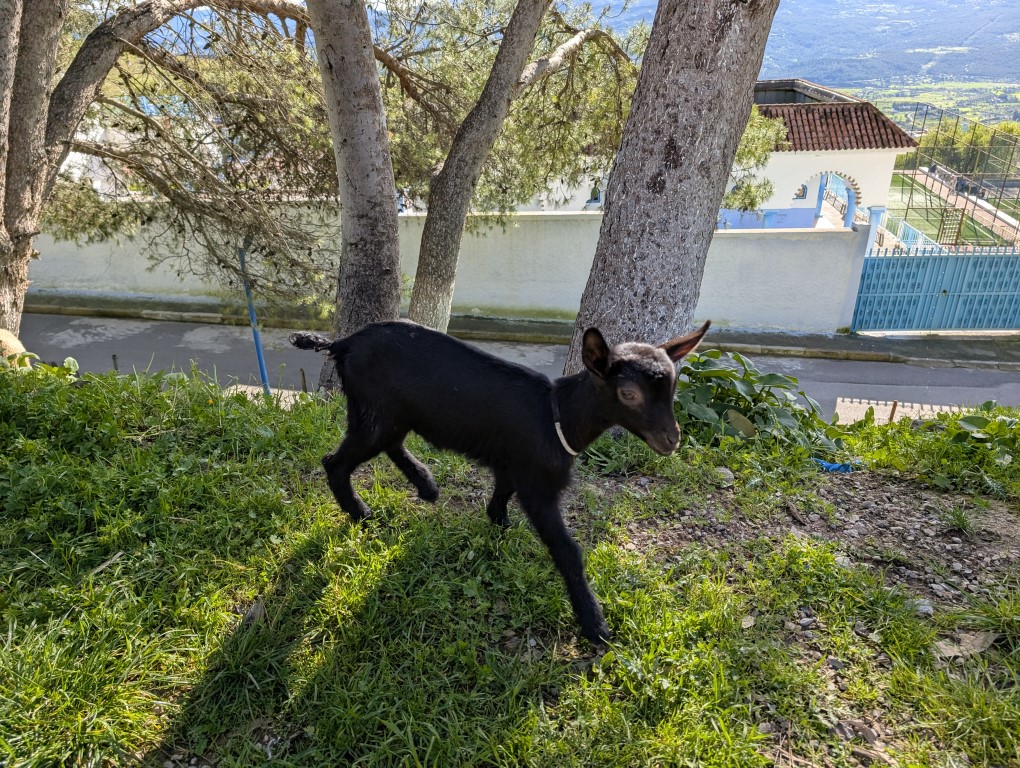
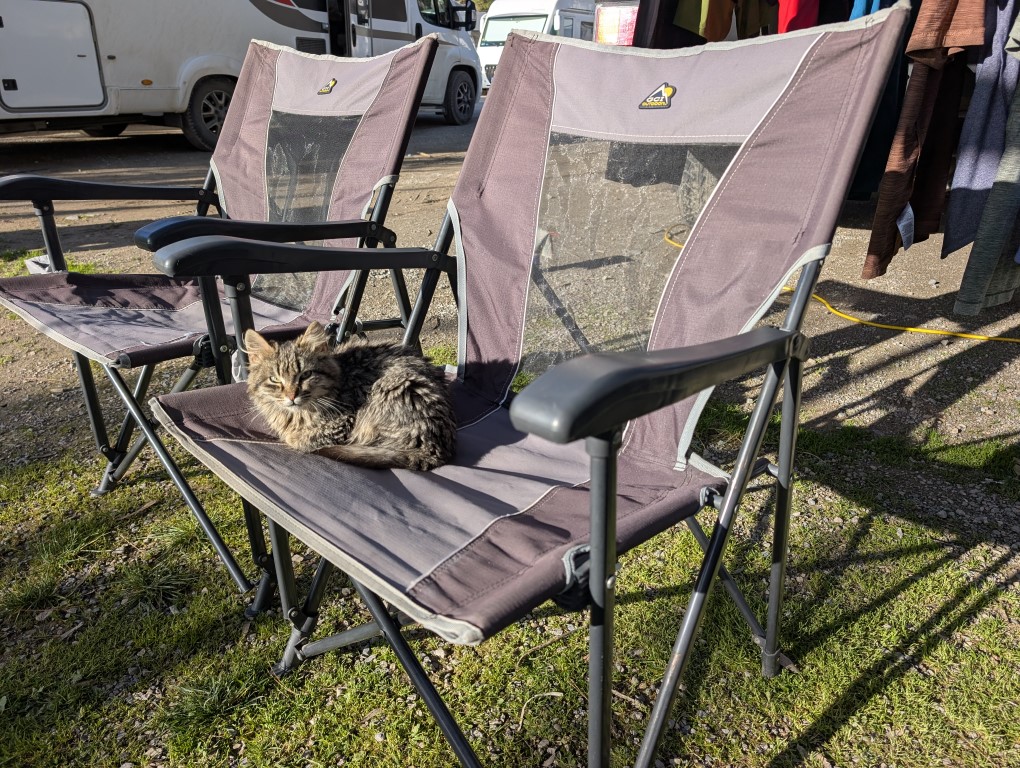
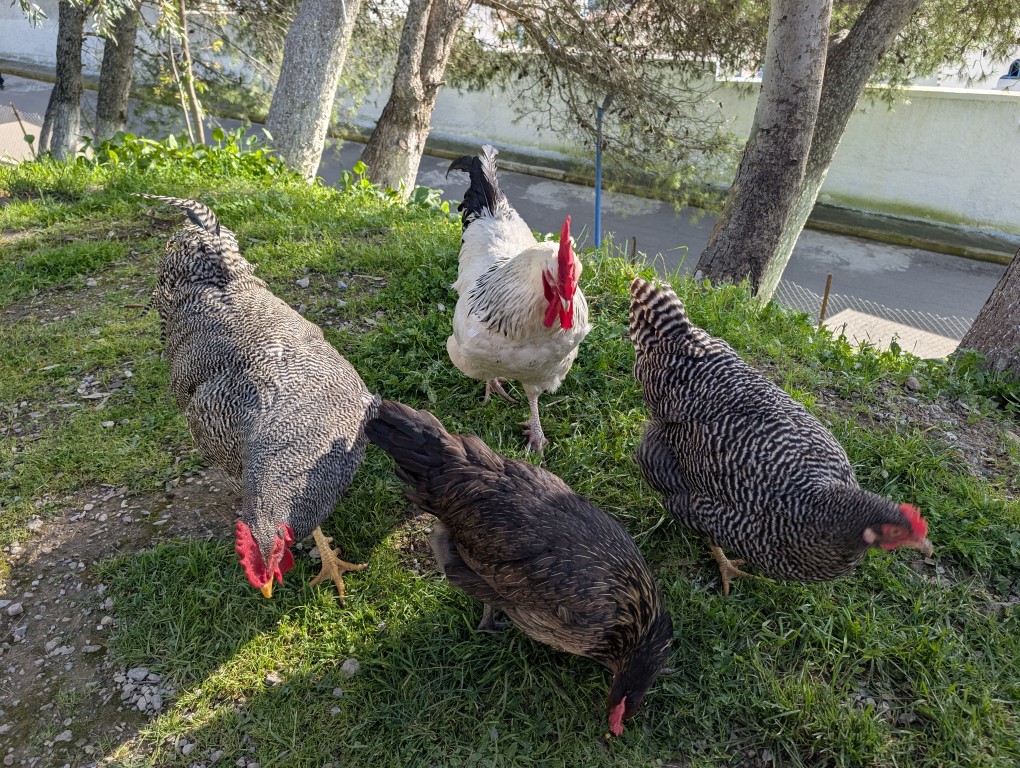
We really enjoyed Chefchaouen, the blue city, especially the campground with all the friendly animals to pat. Baby goats, chickens, cats and dogs. And we know now that we had our favorite kefta there because we haven’t been able to repeat it since.
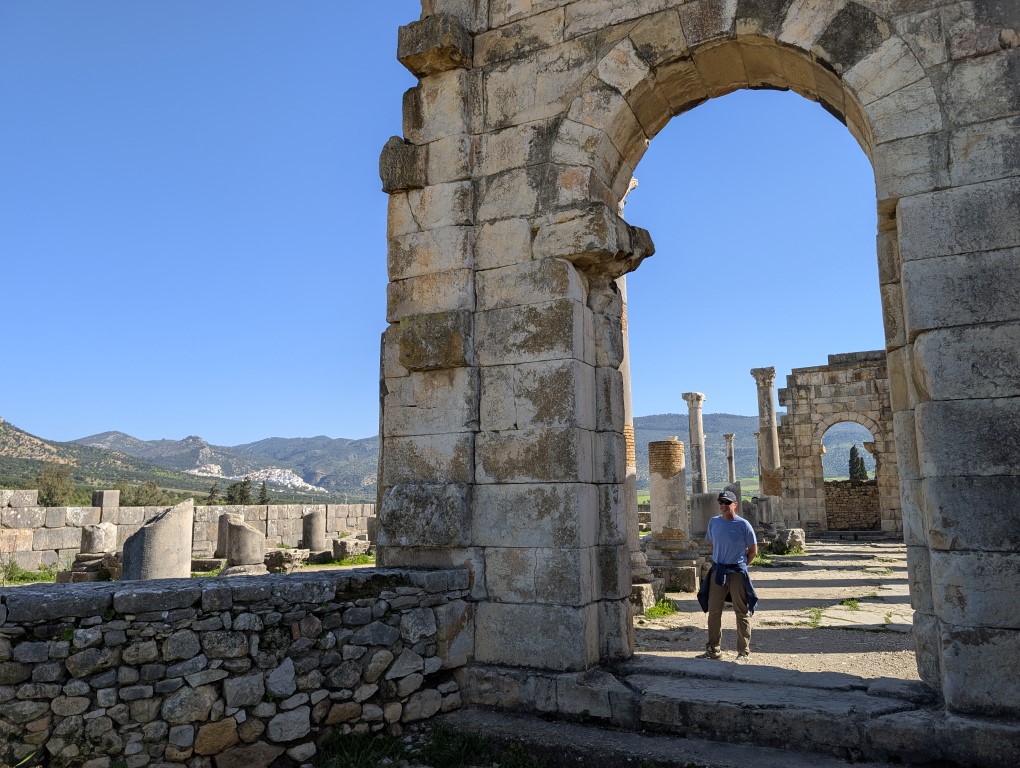
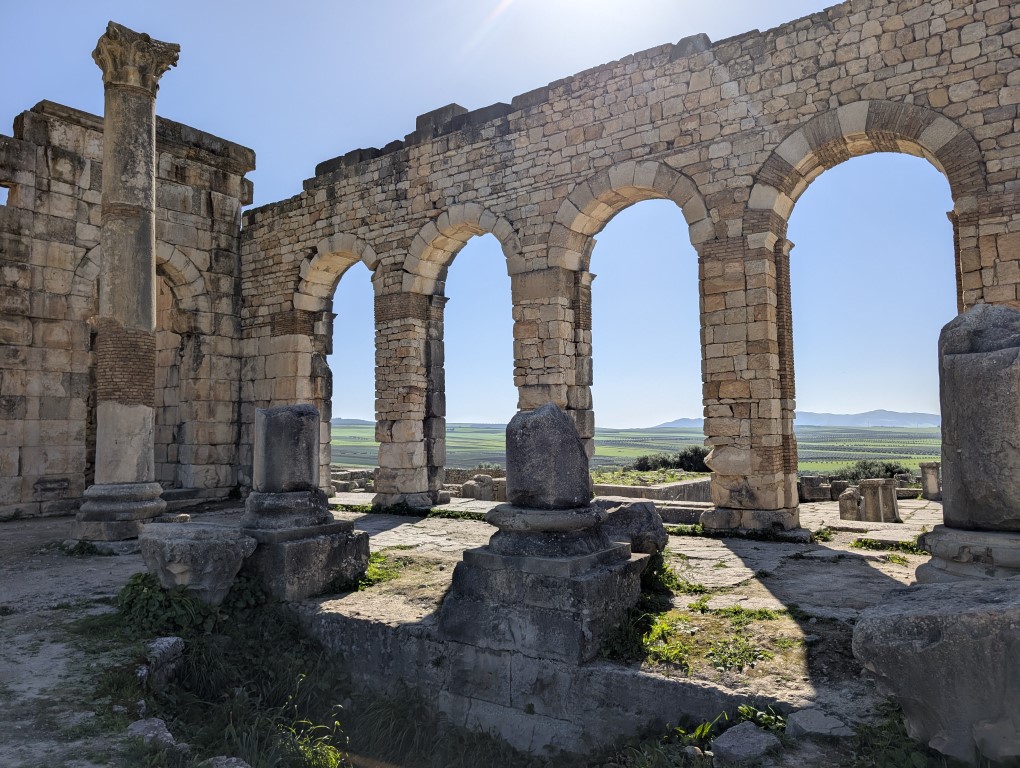
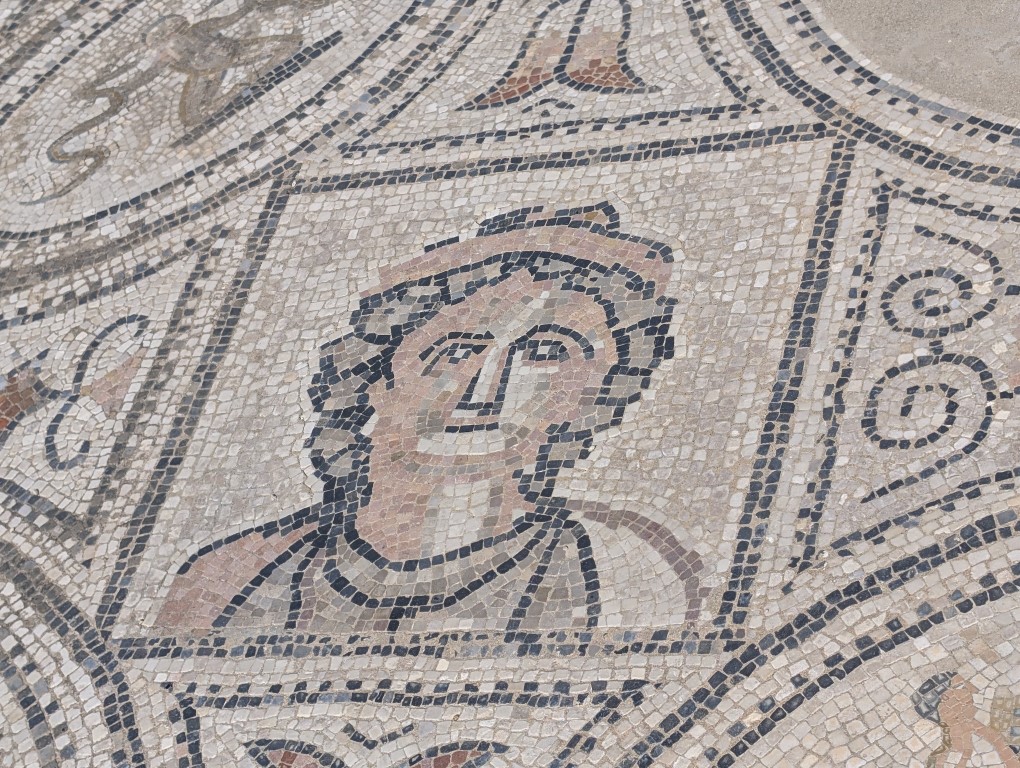
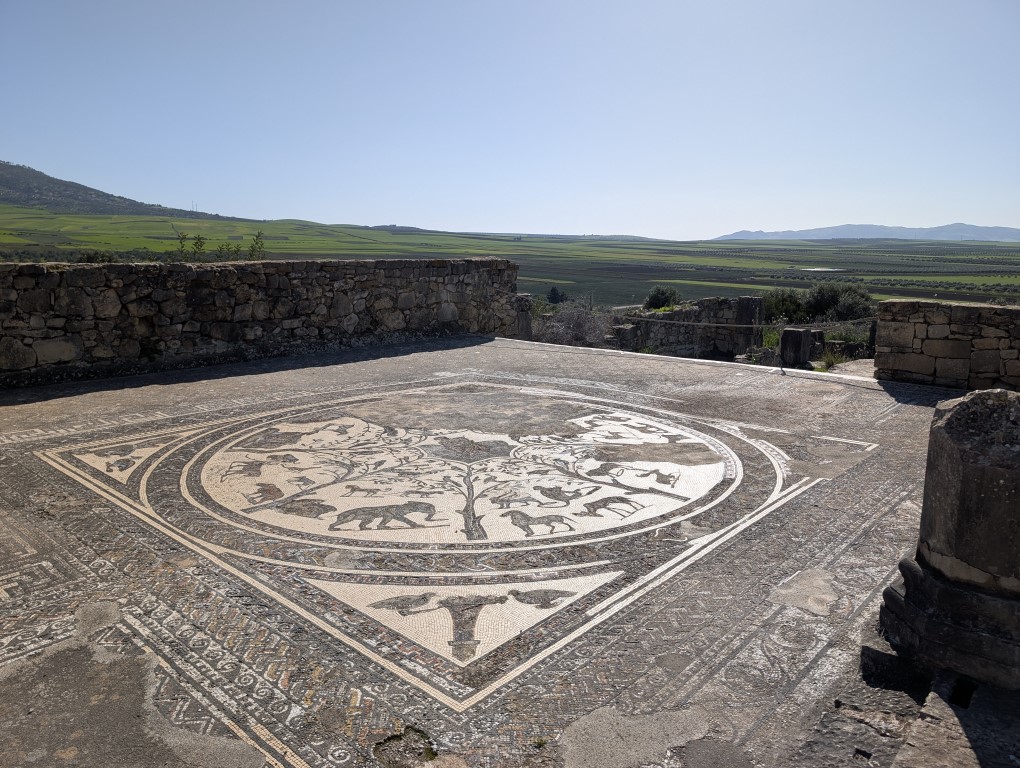
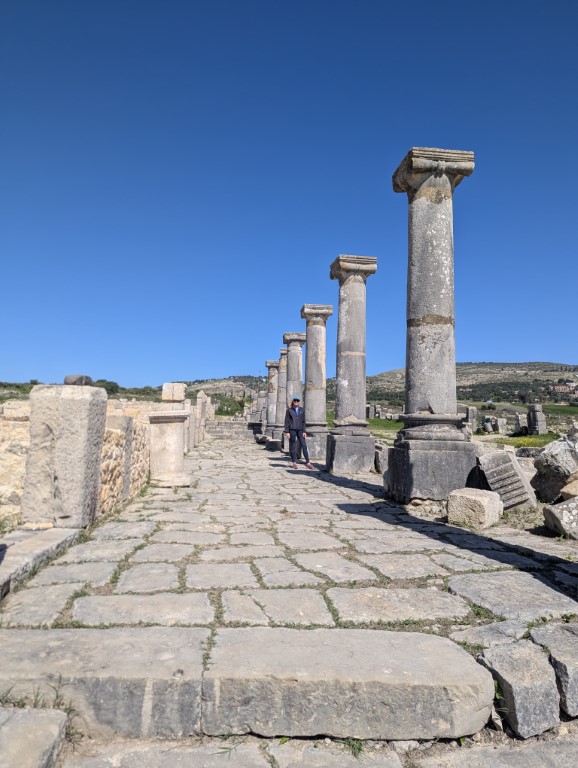
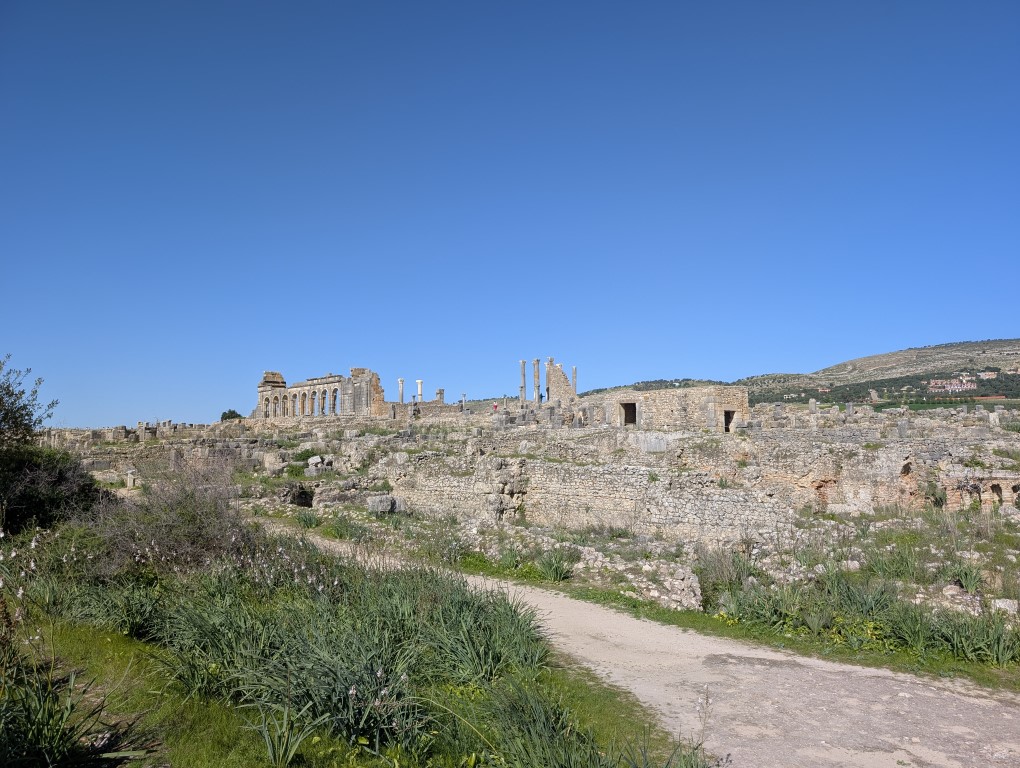
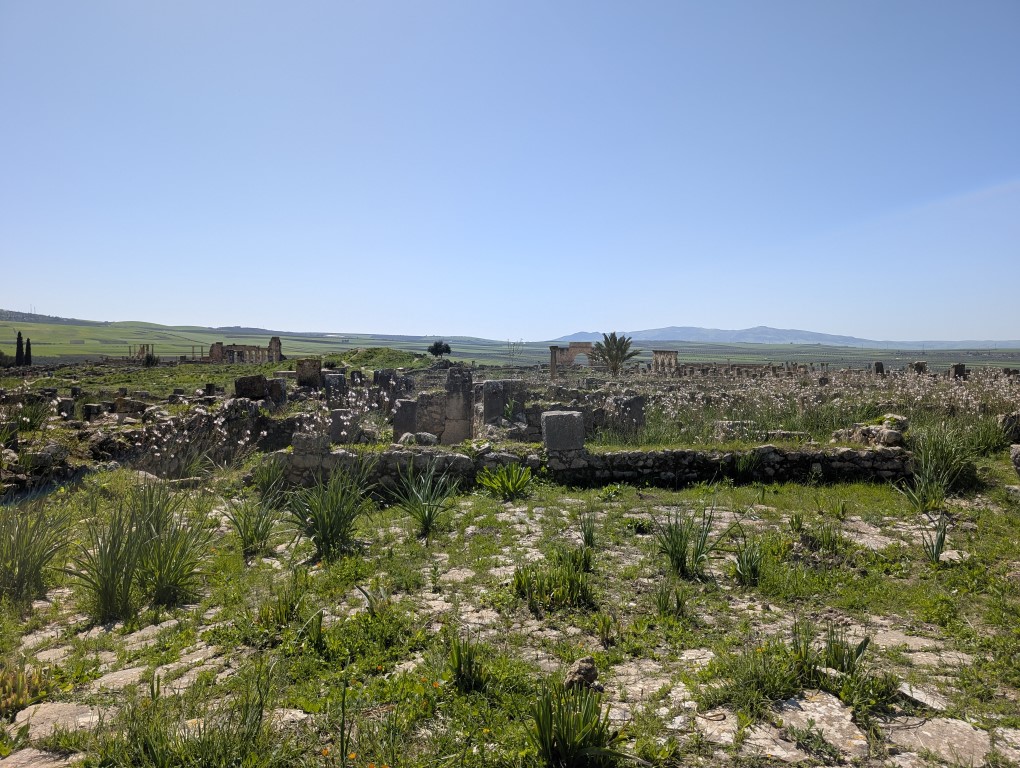
We moved southward to start exploring the Middle Atlas mountains stopping at the Roman ruin site of Volubilis. It was once a Berber settlement, followed by being the capital of the kingdom of Mauretania, then came under Roman rule in 1st century AD. It’s prosperity came mainly from olive growing which resulted in more money put into fine houses with mosaic floors. Eventually, the Romans were run out by local tribes. These mosaic floors persist today and while the site isn’t anything like what you can see in Europe, it was still nice to visit it and see the surrounding area.
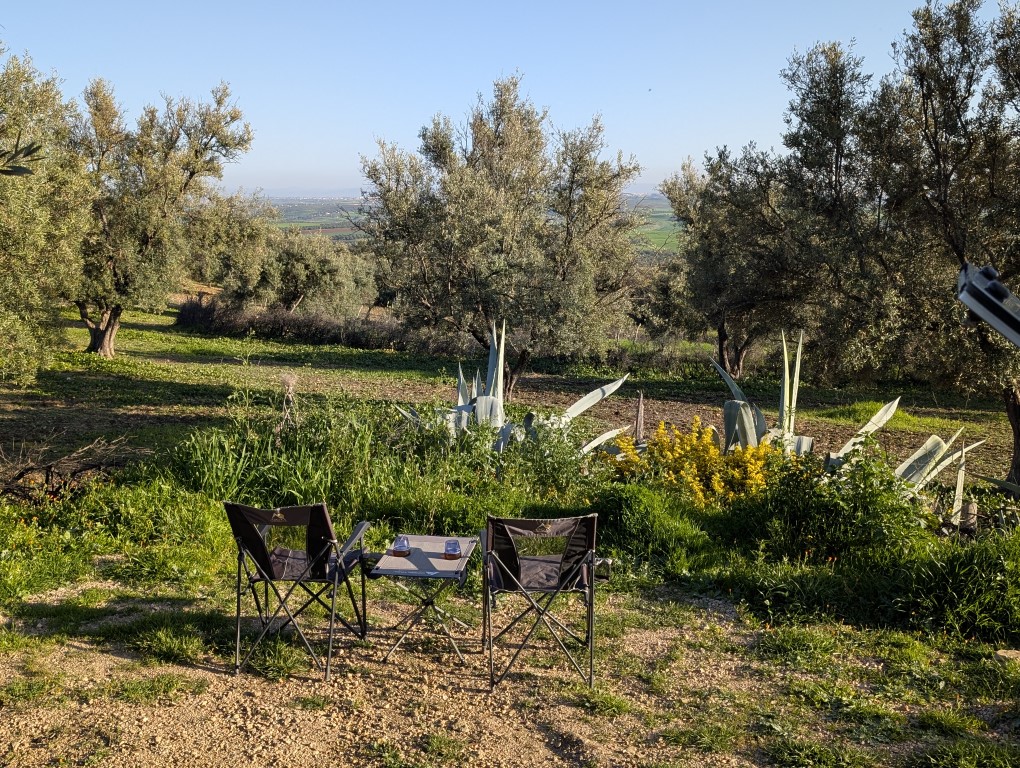
We ended up at a campground in an olive grove and could sit out in our chairs to watch the sun go down with a beautiful little screech owl sitting in a tree the whole time.
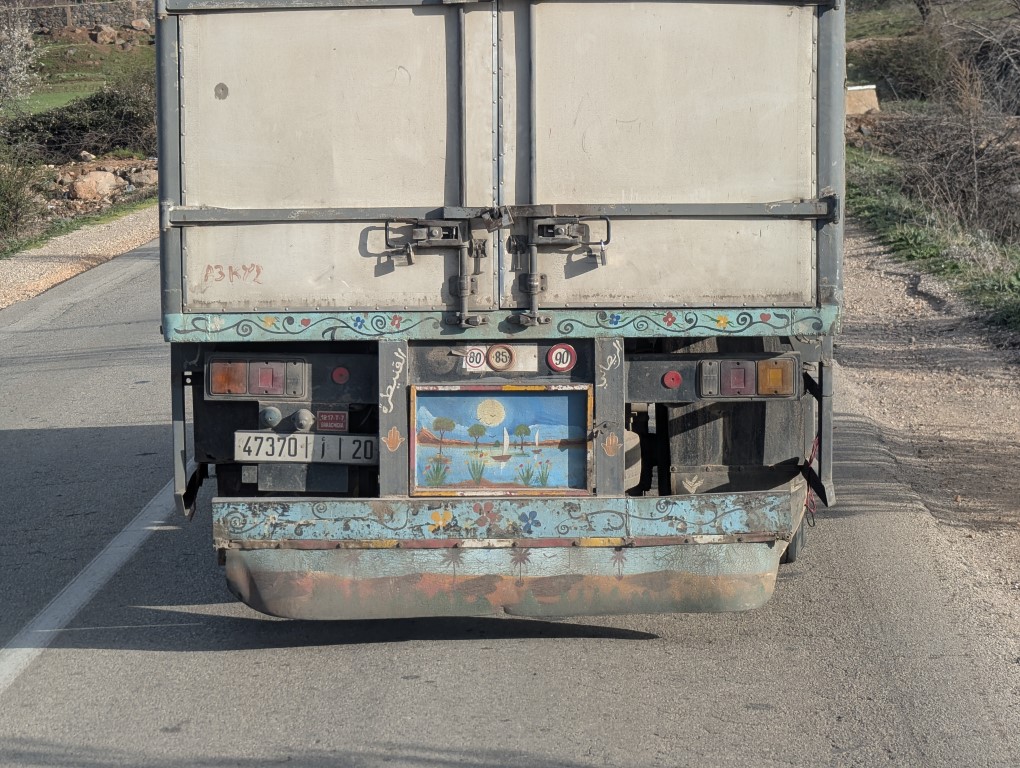
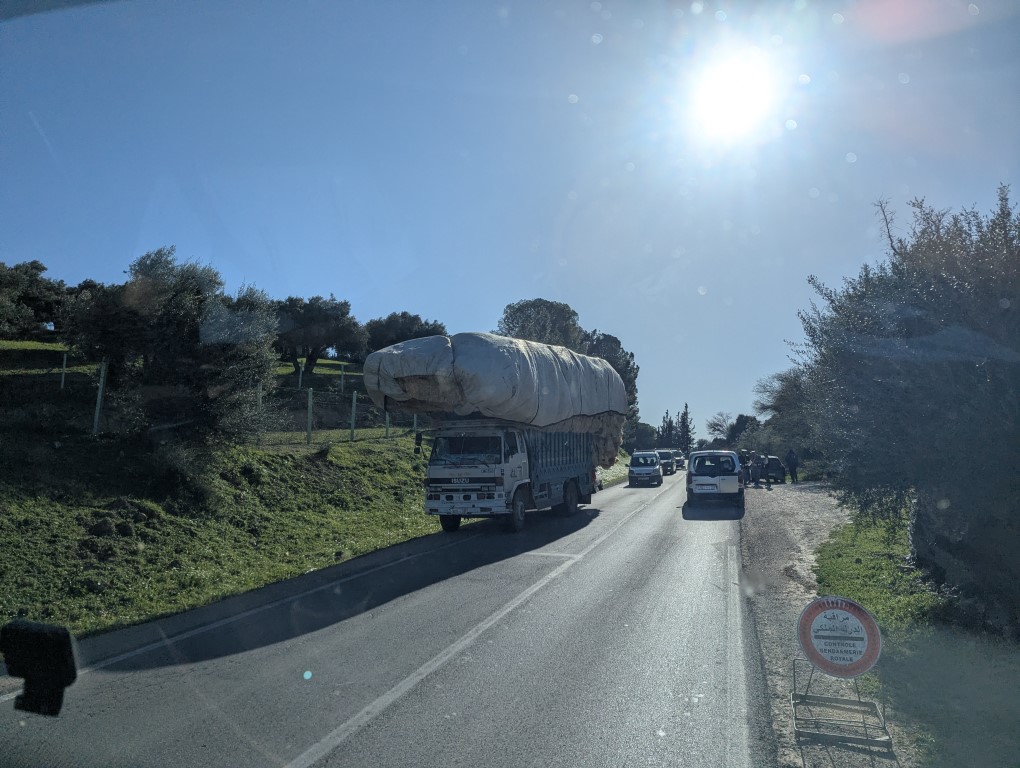
We’re back to the countries that have impossible loads on their trucks. It’s just so funny how it all works. And I love this painting on the back of one of them.
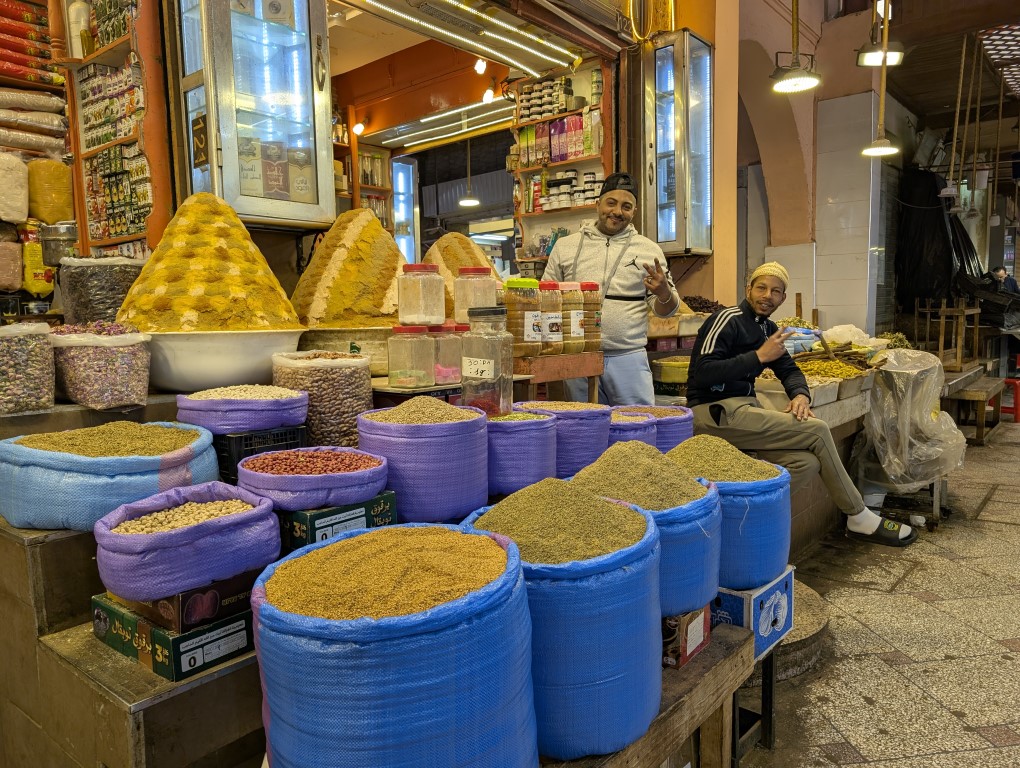
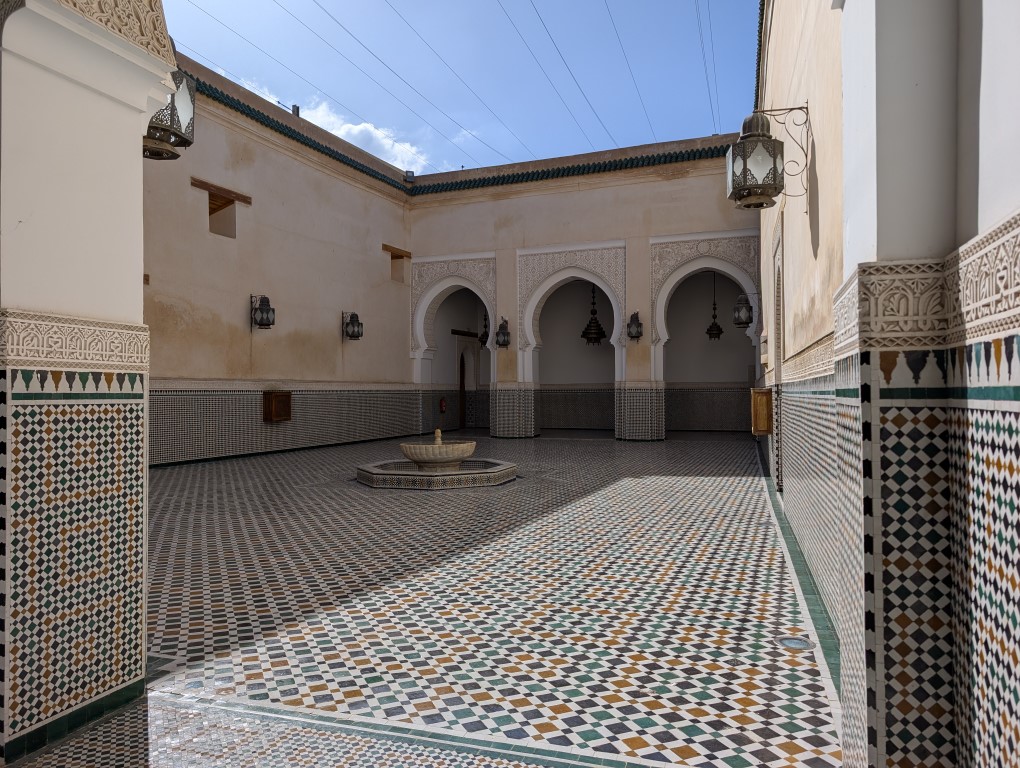
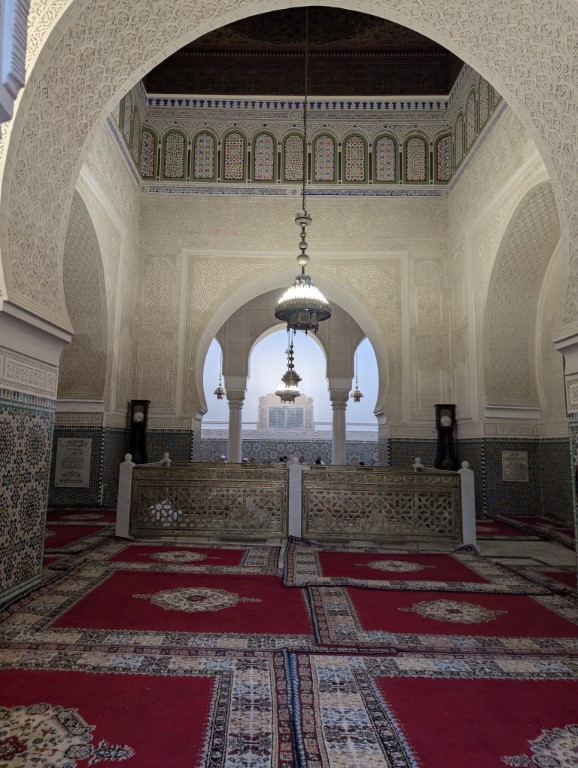
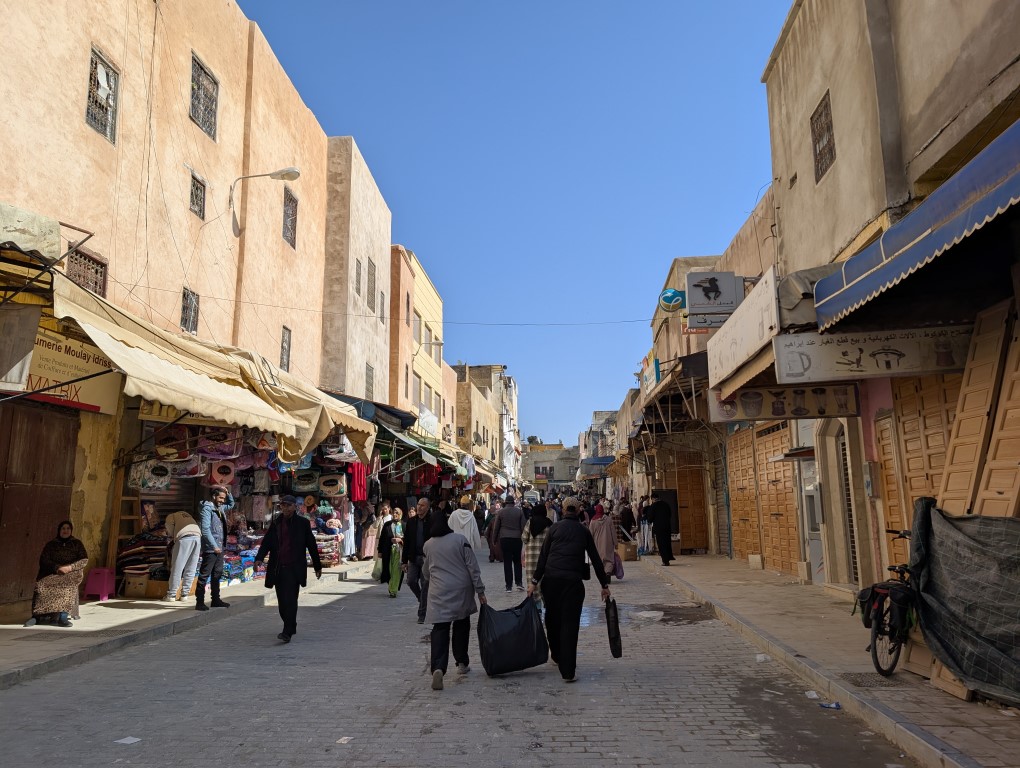
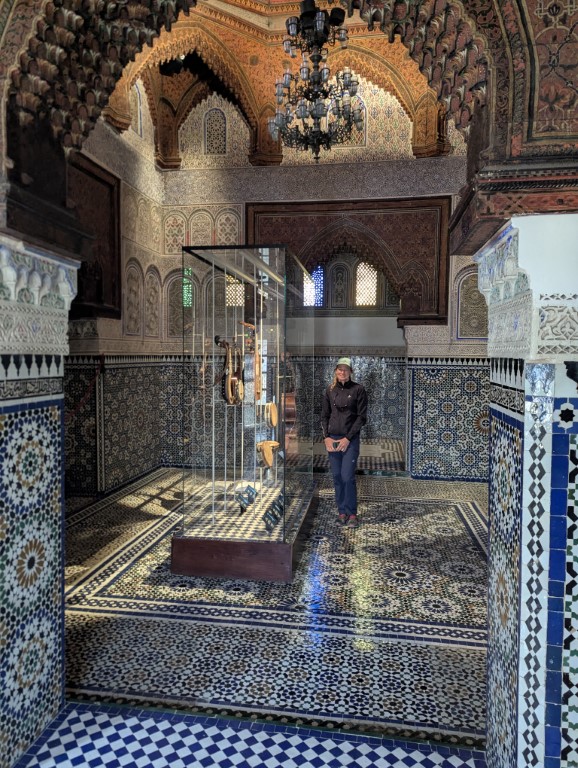
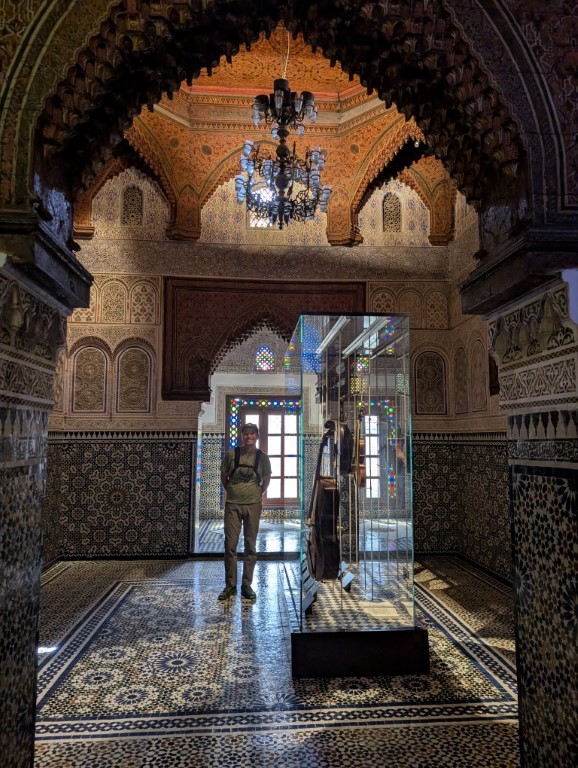
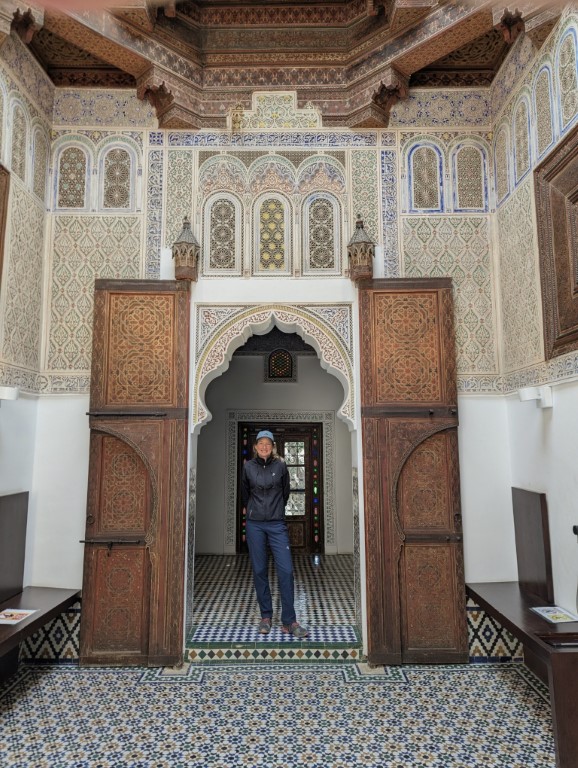
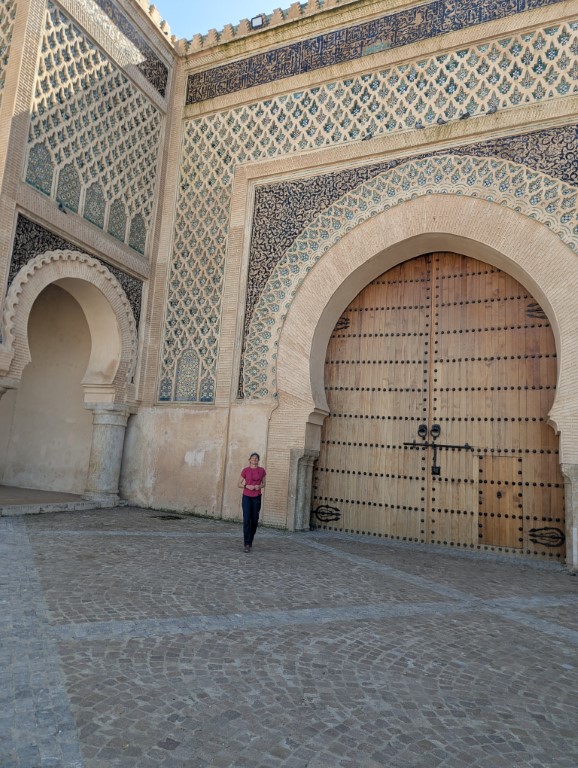
We spent a day in the old city of Meknes. Previously a capital city when Morocco was ruled by Moulay Ismael, his mausoleum is newly refurbished and open to the public. This is the closest we will get to entering a mosque, because normally we can’t. It had pretty tile covered rooms and carpets and you remove your shoes before entering. We visited a couple of interesting museums with Islamic art and decor.
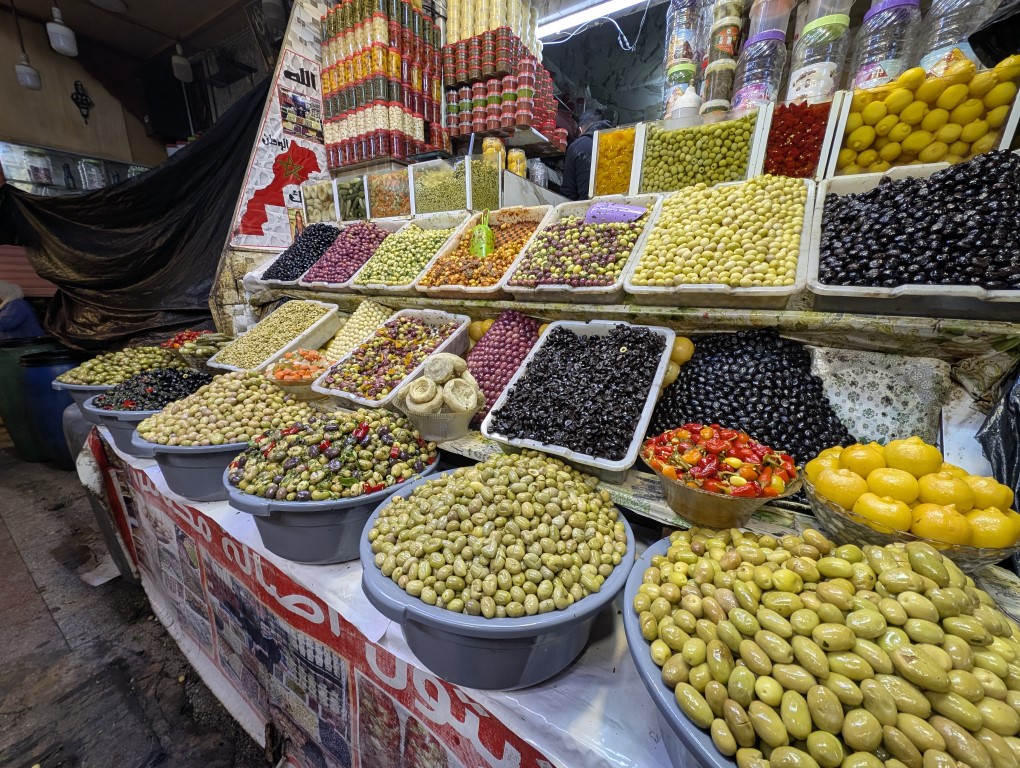
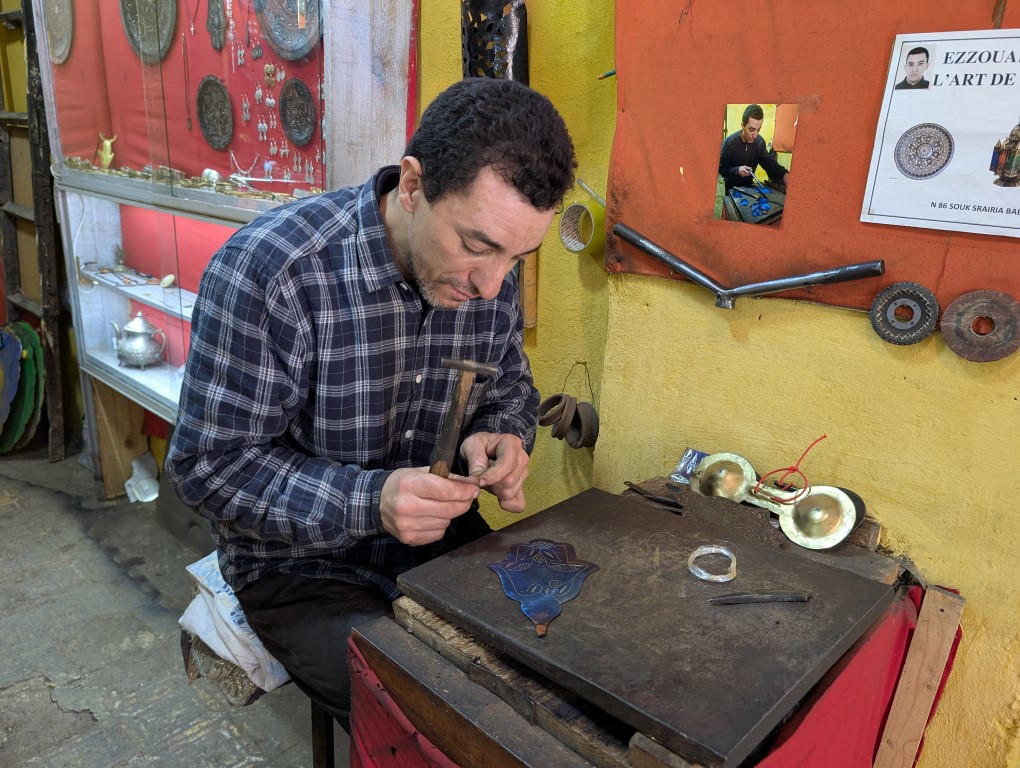
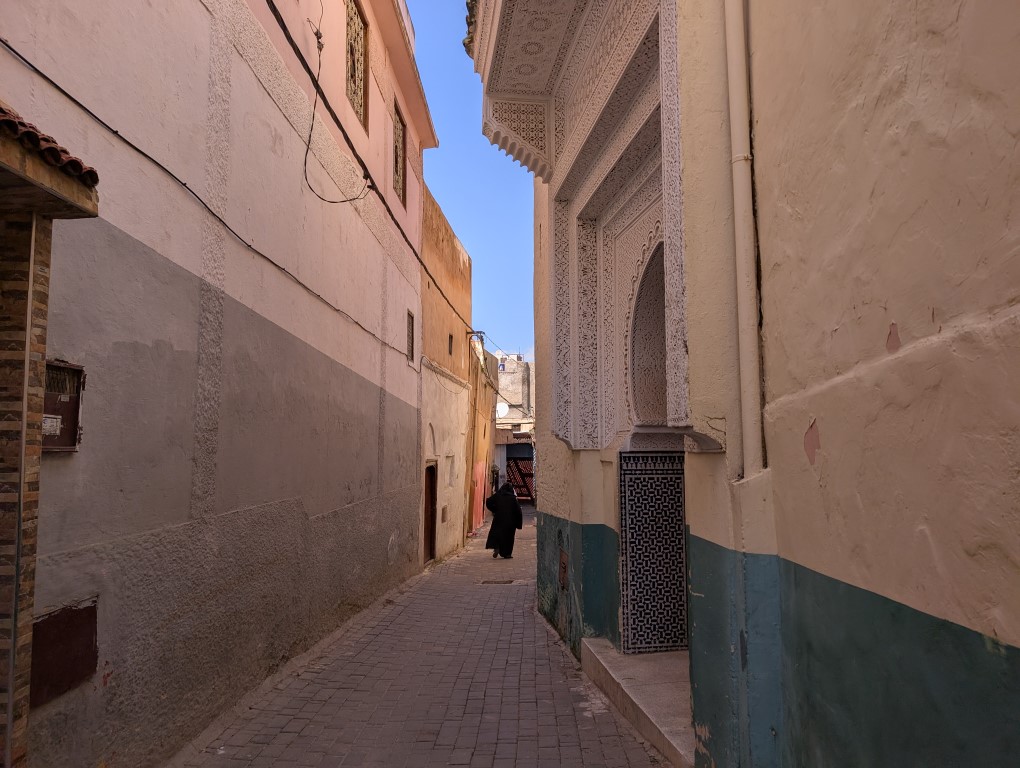
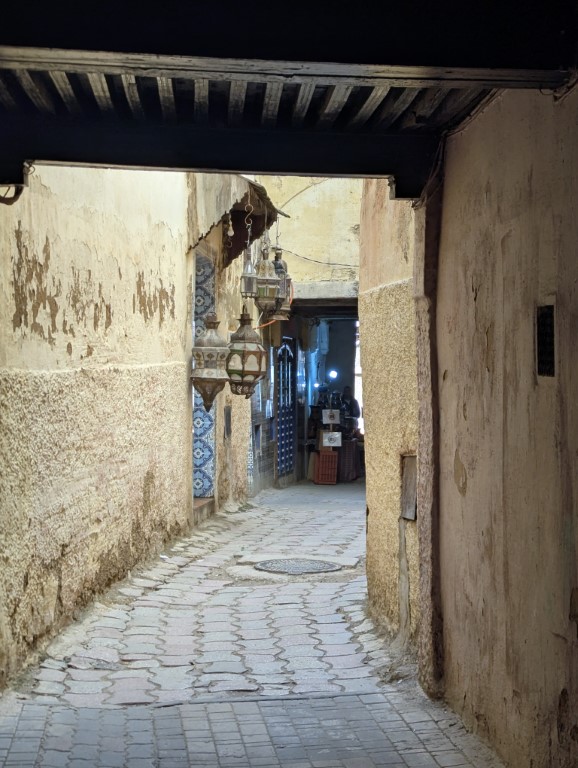
We were really interested in buying a piece of Damascene which is an ancient art form of etching metal in geometric patterns and then inlaying it with gold or silver. This is reportedly the only place in Morocco that is still making it but we found it to be a much more simplified version of hammering the silver on rather than inlaying it and it’s known to fall off so we dropped that idea. It was still nice to see the artist at work though. We had a mediocre lunch and moved on.
In general, Morocco’s roads are pretty good, if narrow. You can still get some really big potholes but a big infrastructure improvement initiative has meant more & more roads are being paved and made safer. Even so, at times the drop-offs will make your heart flutter.
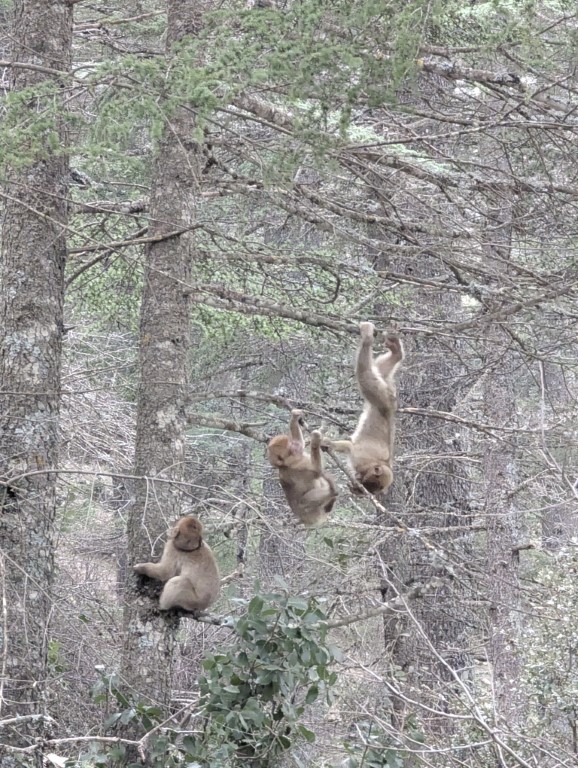
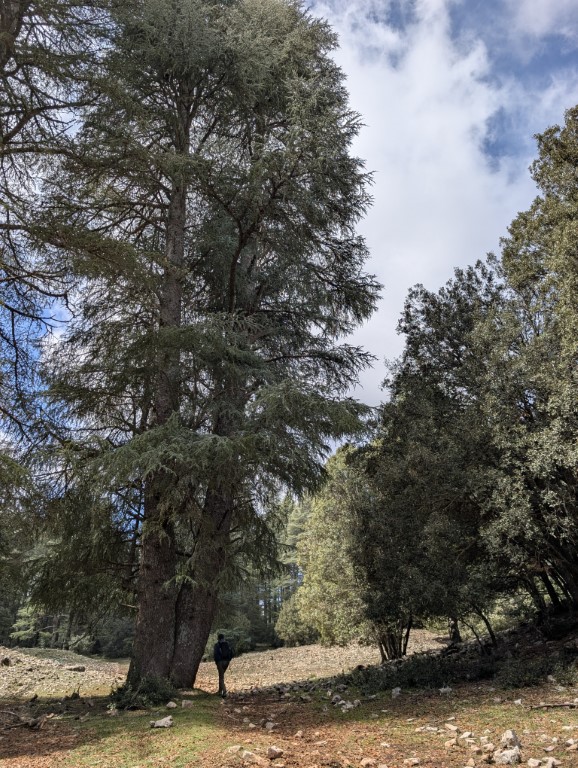
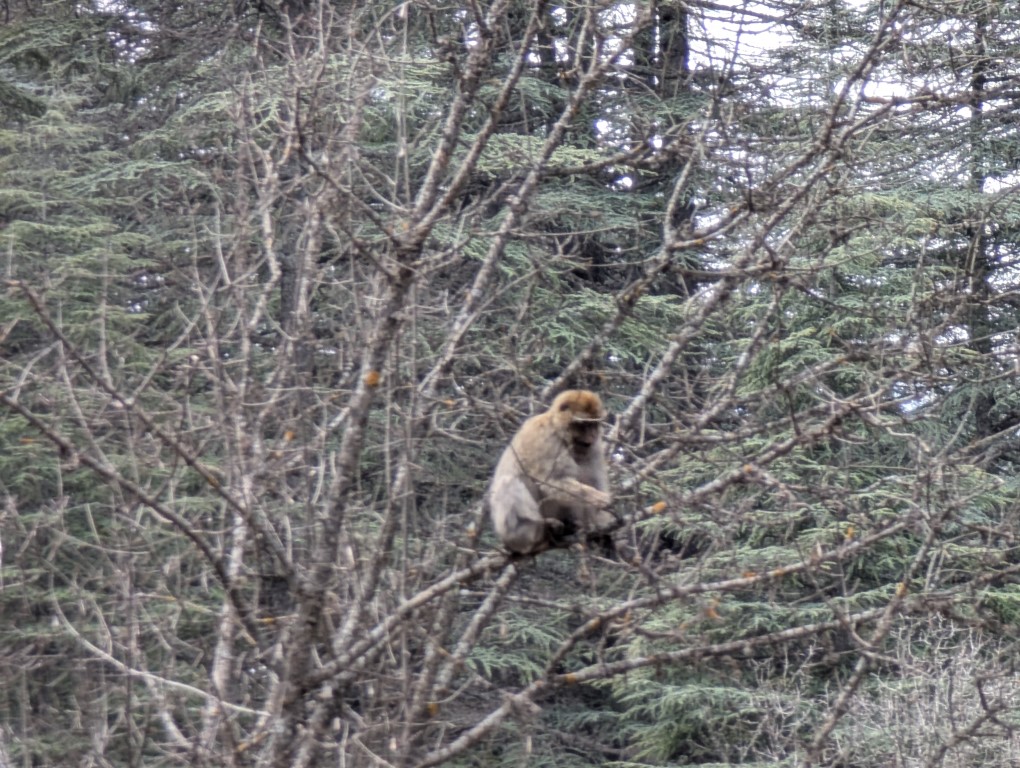
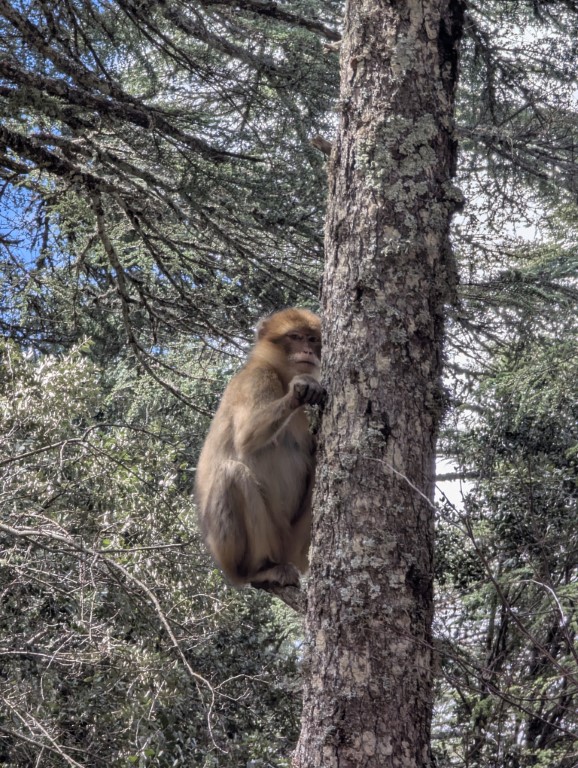
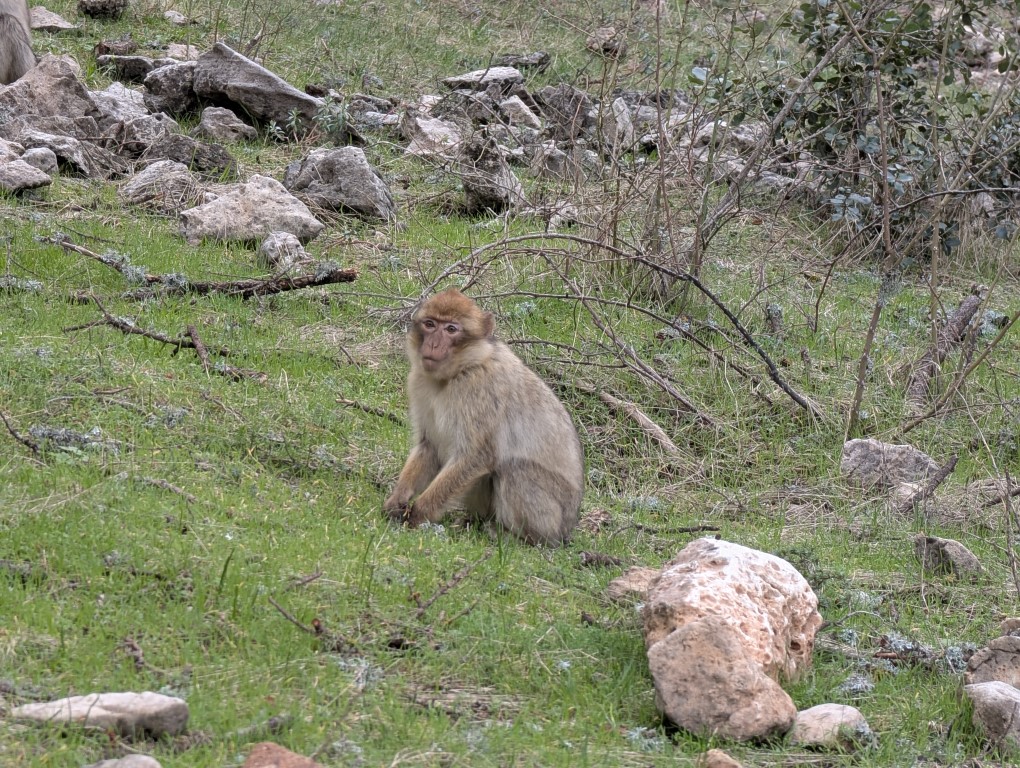
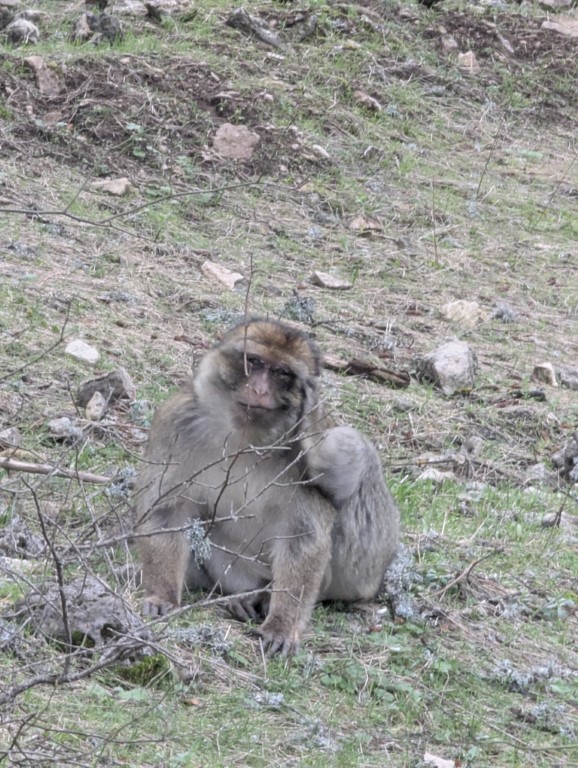
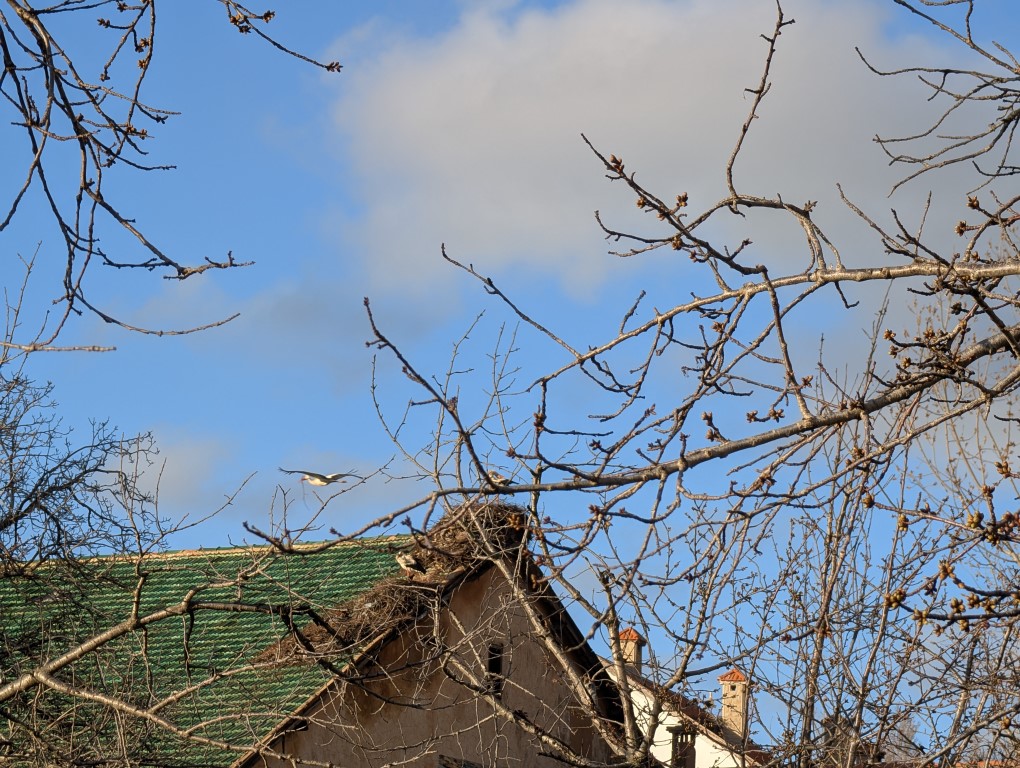
Ifrane National Park protects large, old cedar trees and the macaque apes. We camped in a cherry grove and did a full day hike the next day right from there which I love to do. Since there had been a recent light snowfall, locals from Rabat were driving up to the mountains to see it and to toss a few snowballs at each other. We saw a group of macaque’s in a very wild place on the trail just doing their own thing, playing, browsing and looking at us. It is also a place where the storks live. When they trim the cherry trees, they leave the branches piled up and the storks come and take them for their nests. All day long there’s a constant procession of storks passing over carrying branches and tucking them into their big nests. And I love the sound of their bills clacking away at each other. Moroccans call them laq-laqs which is what they call that sound. You can even hear it at night. I saw a video on a little town in Germany where the storks are their summer tourist business. They call them “high builders” and I guess they have a point because they build on power lines, buildings and mosque towers.
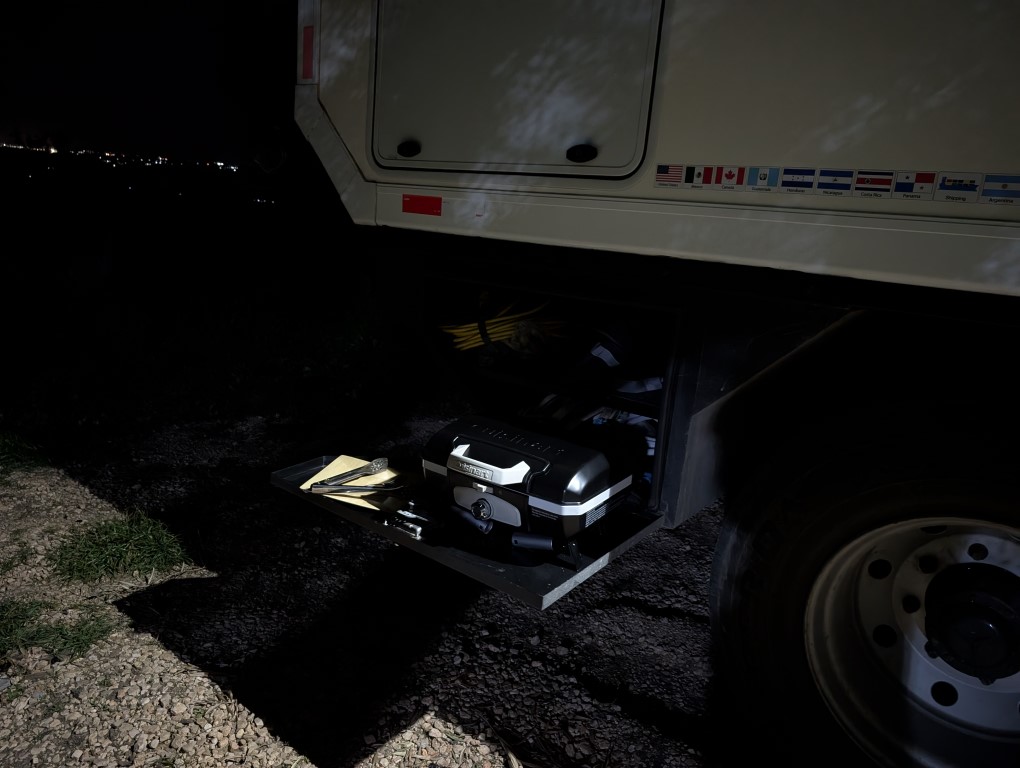
In contrast to when we traveled Morocco in 2017, there are now really nice Carrefour grocery stores sprinkled around the country. So we’re eating well and loving the new grill. We’re trying to make some new and interesting recipes and Jon is currently on a meatball streak. Tonight’s were Korean style even though we’re in Morocco.
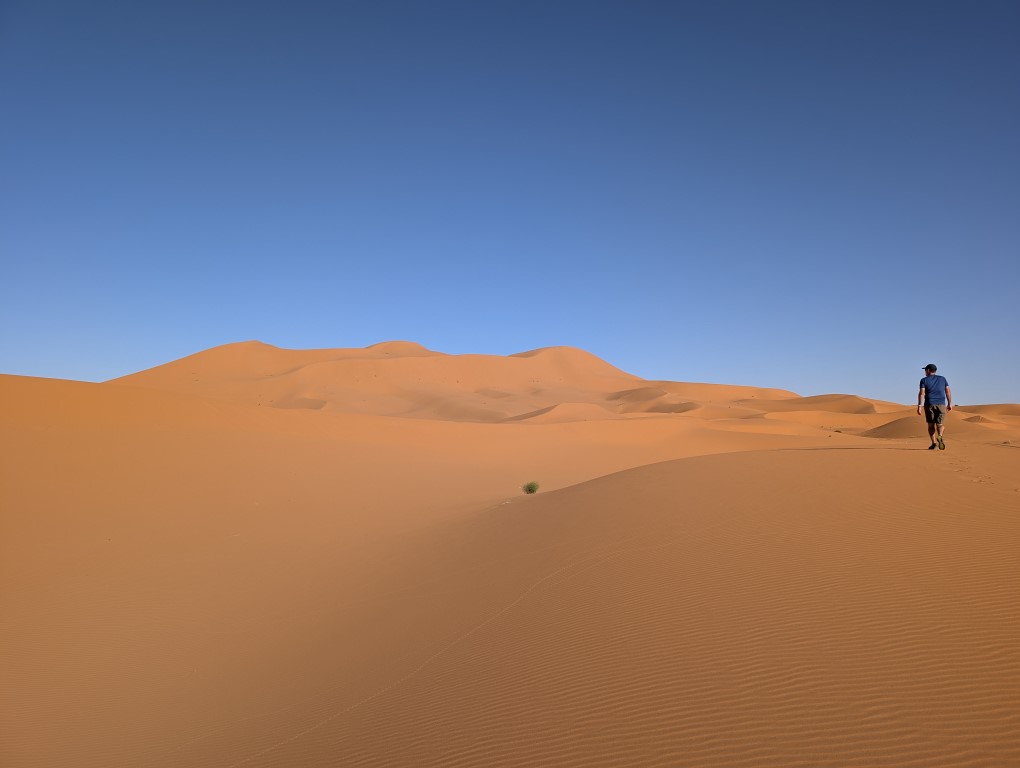
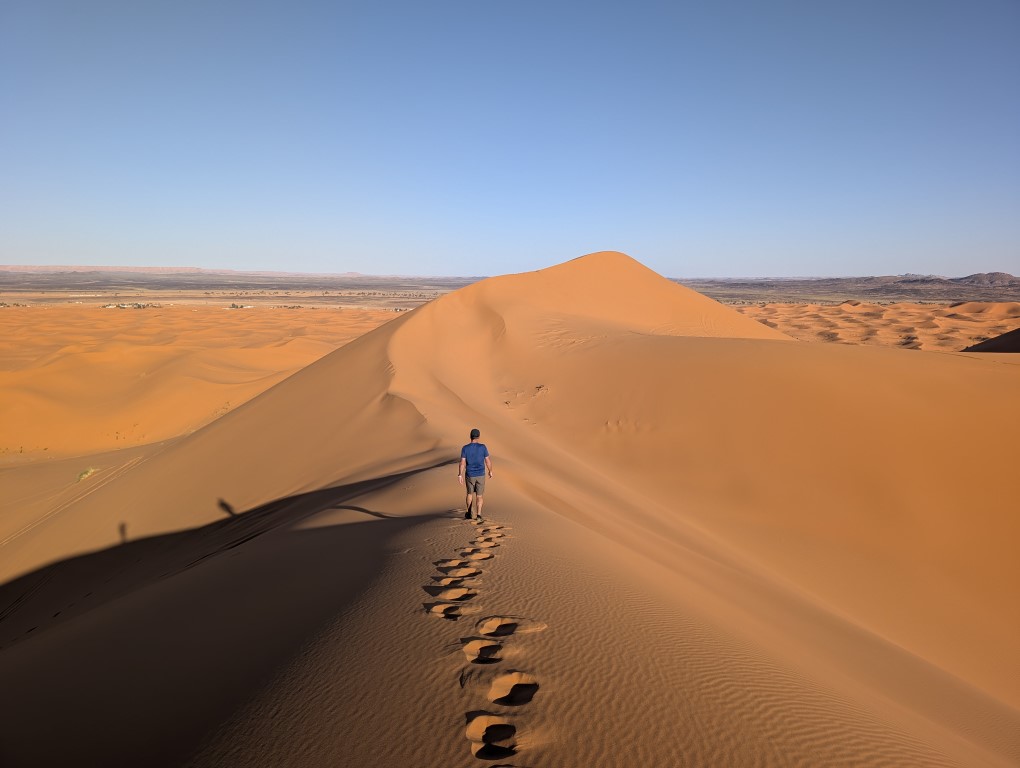
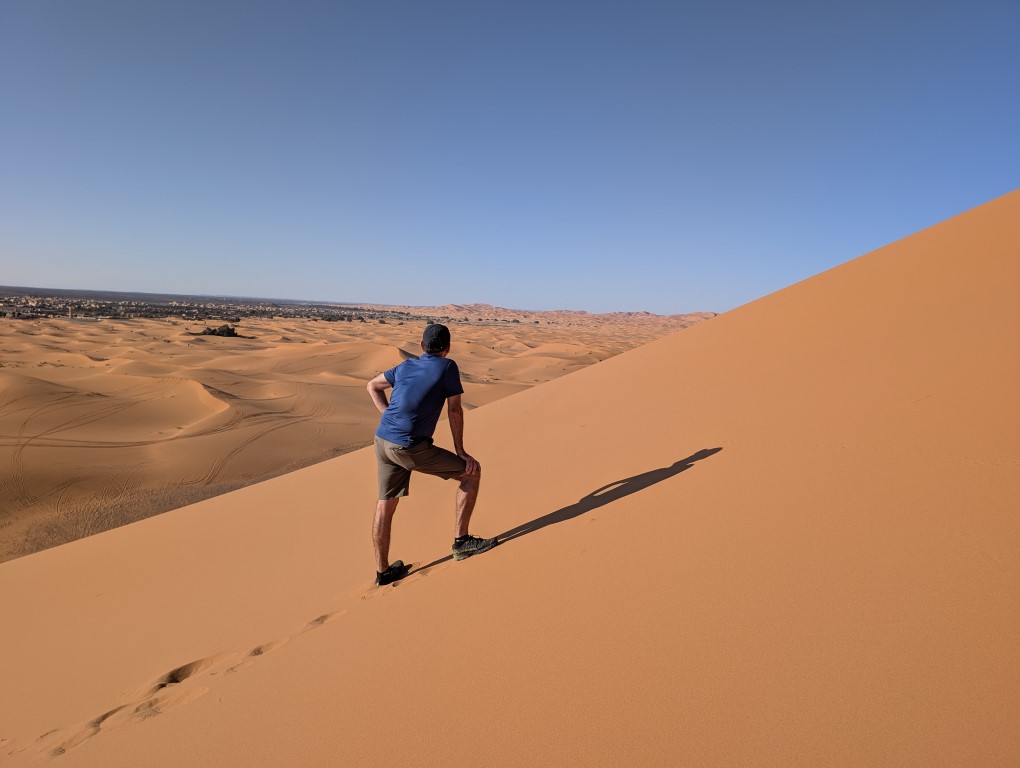
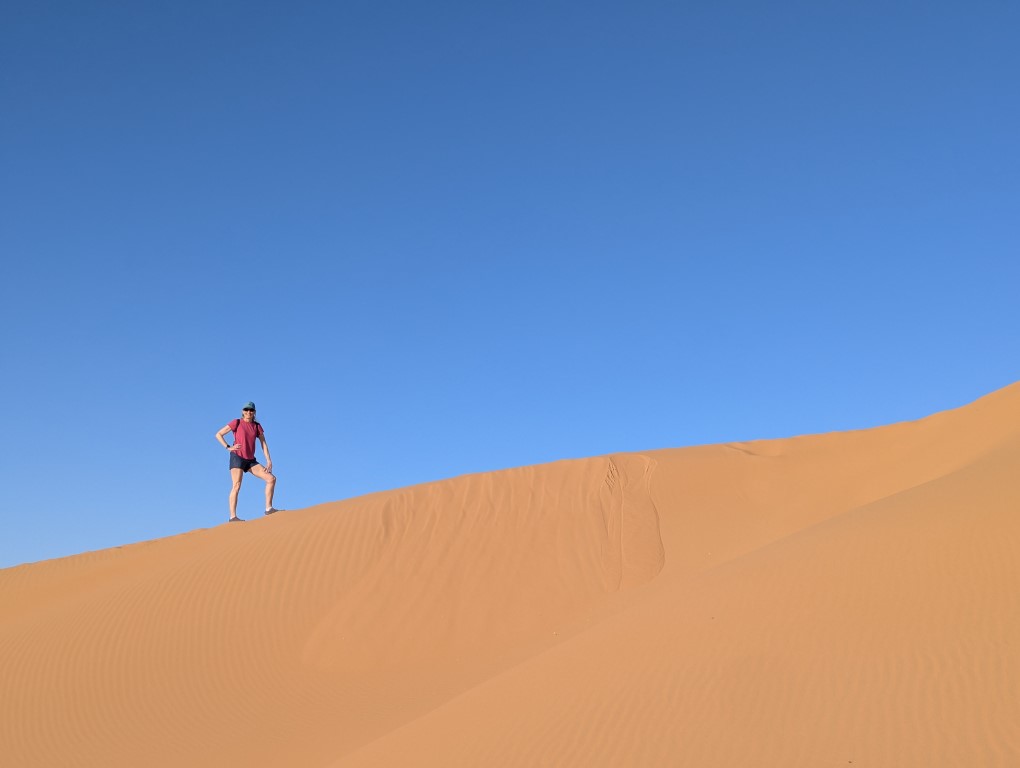
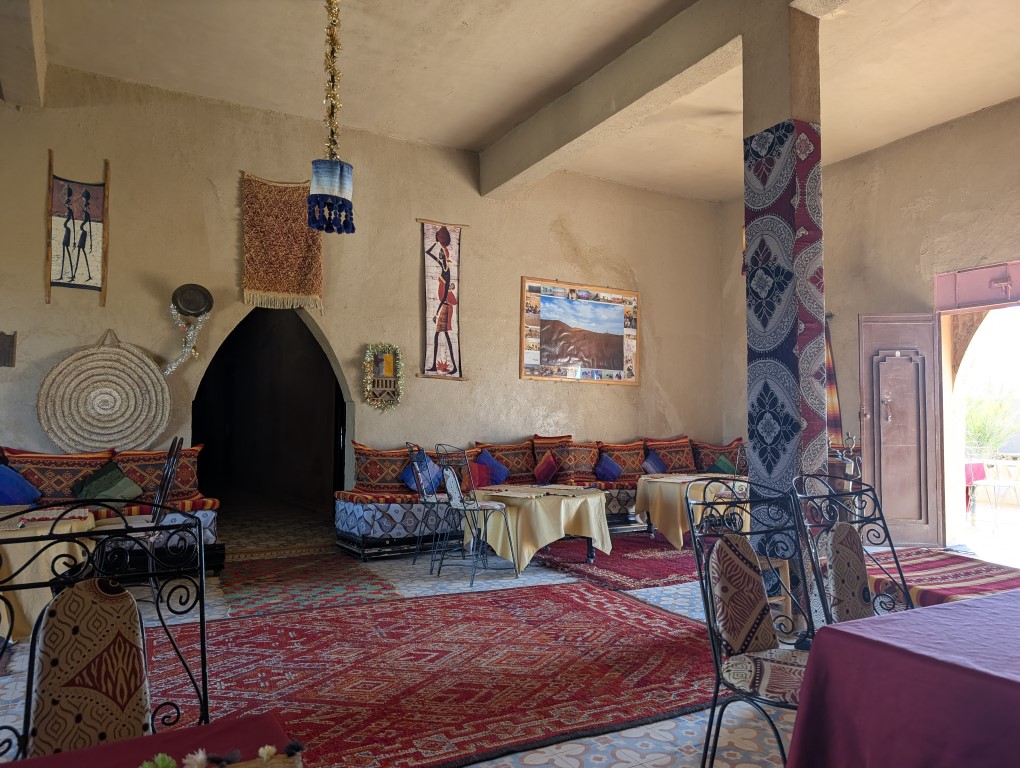
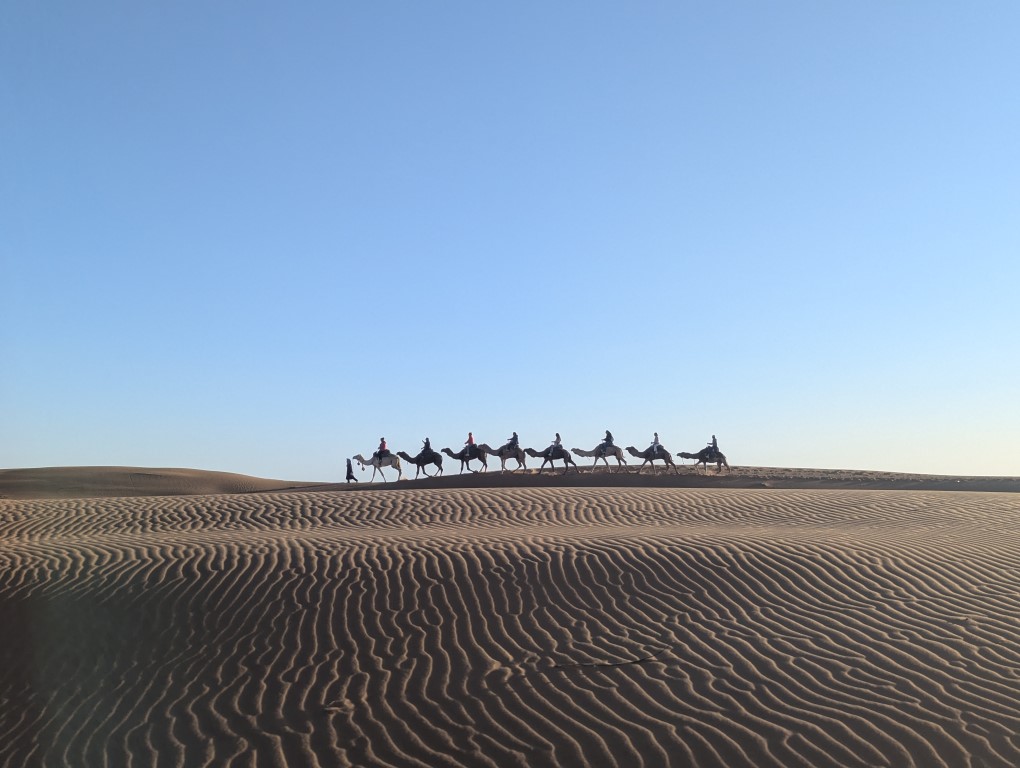
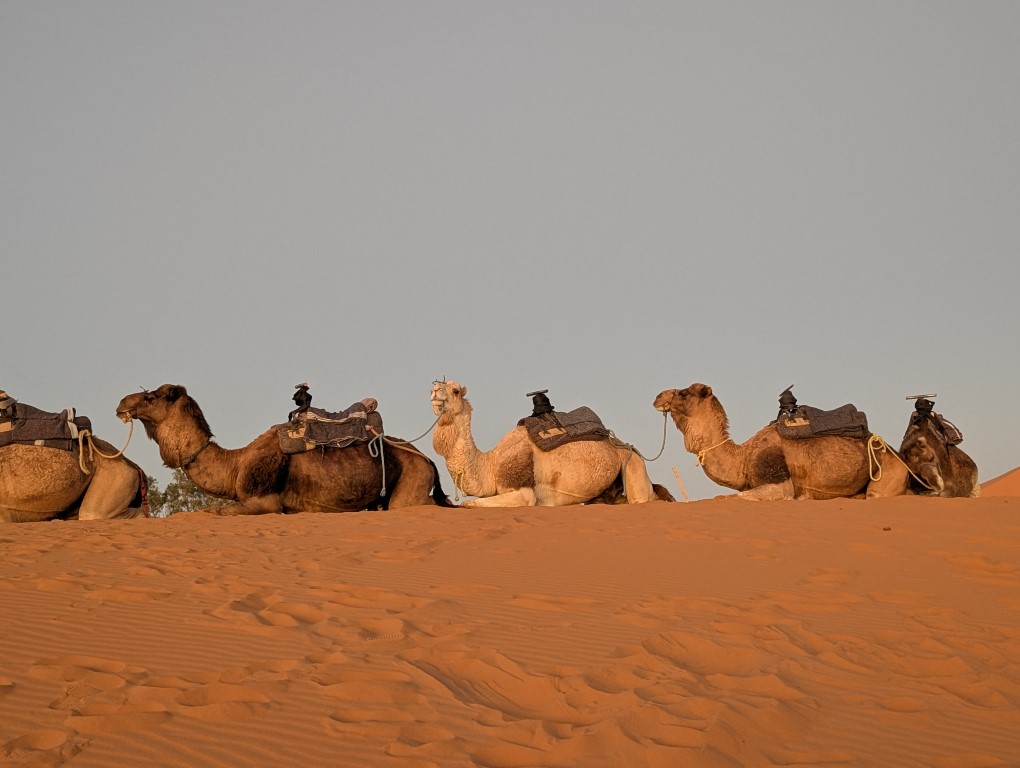
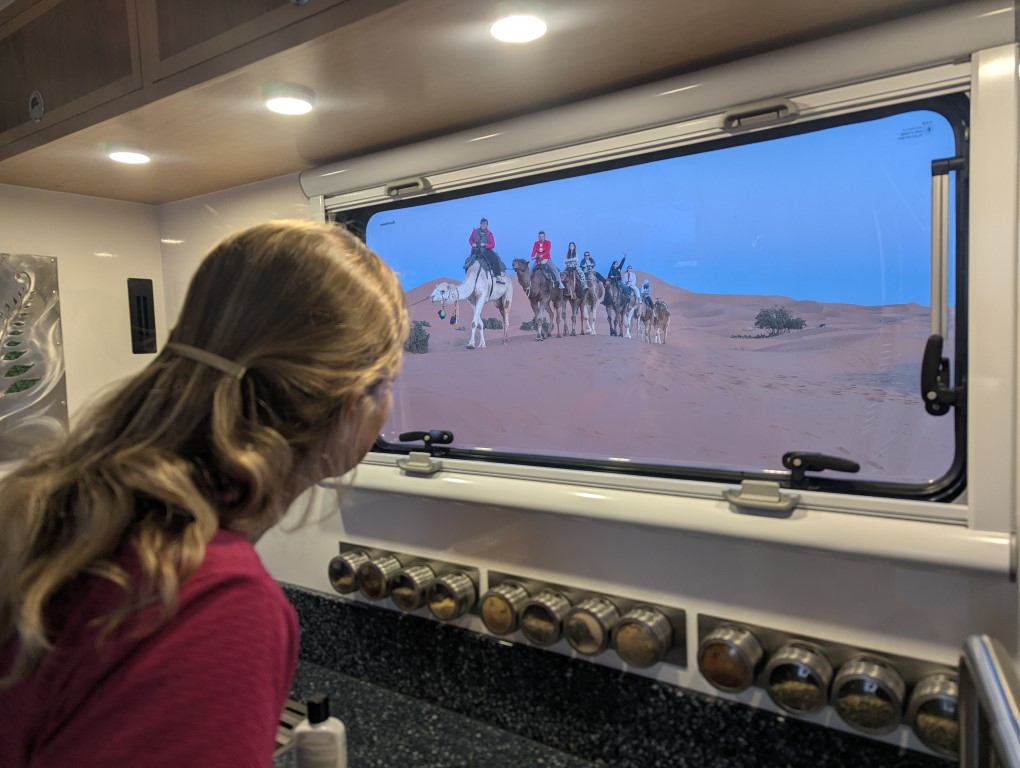
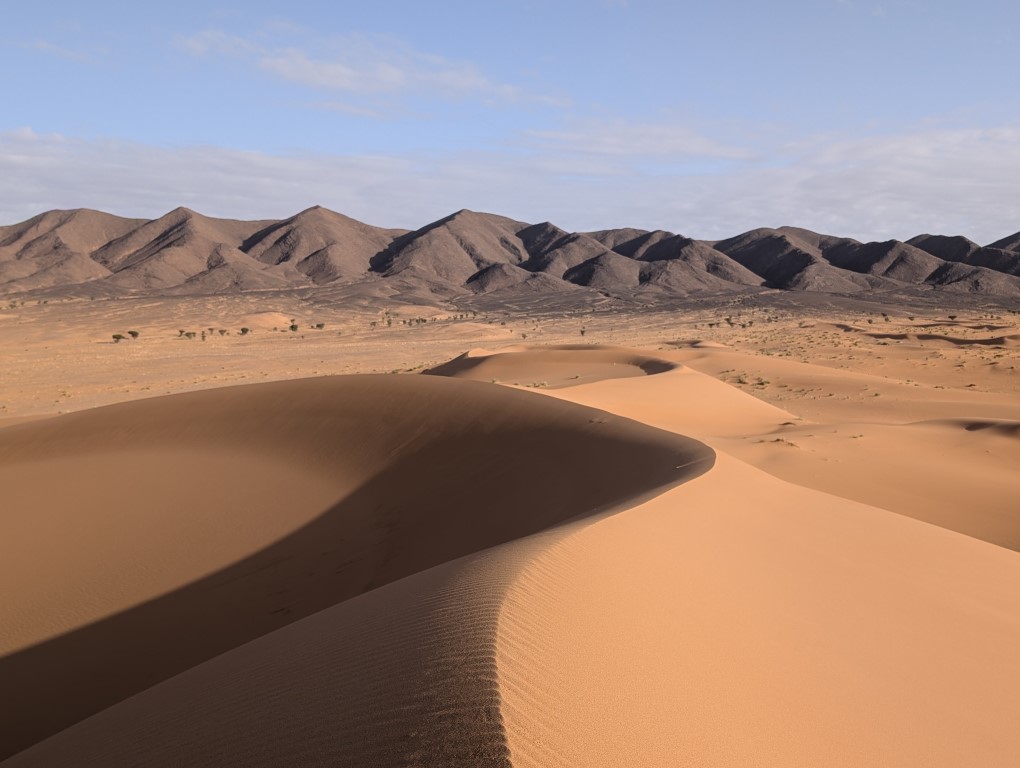
We were excited to get to the desert and the southern oases. Doing some offroad pistes is a popular thing with the right vehicle. Going back to Merzouga at the edge of the Erg Chebbi was something we’d thought about since our last visit. These are the tallest cluster of dunes in Morocco. I loved the camel ride into them to stay the night. We climbed all over the peaks in this photo but what you don’t see & hear is all the motorbikes and side by sides. We quickly lost interest because the whole area had changed. To be riding a camel with all that going on is not our thing. It still had beautiful dunes however and we drove around the backside of them after climbing to the tops of all of the ones in the pic. We drove south to Ouzina to a lovely riad instead.
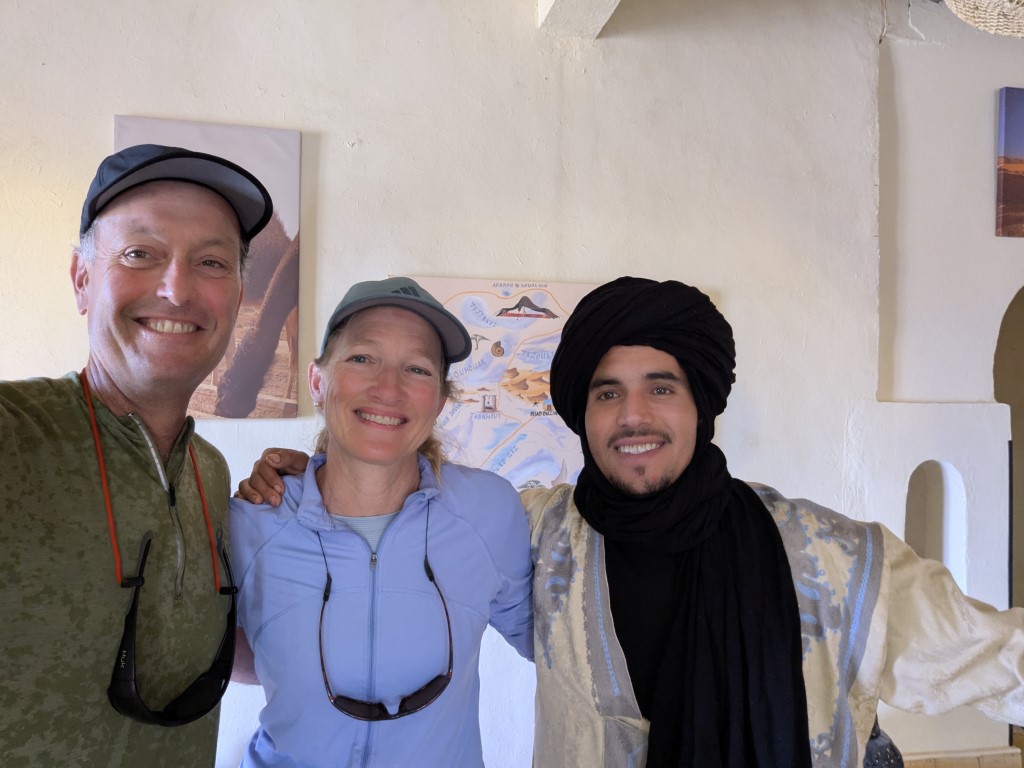
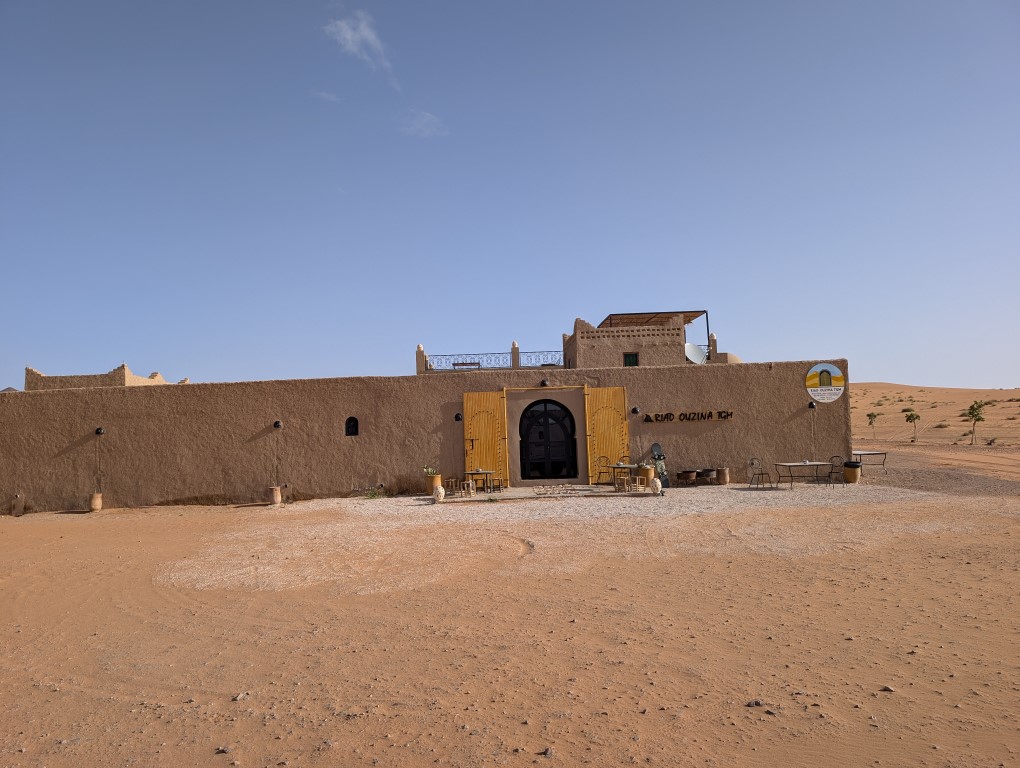
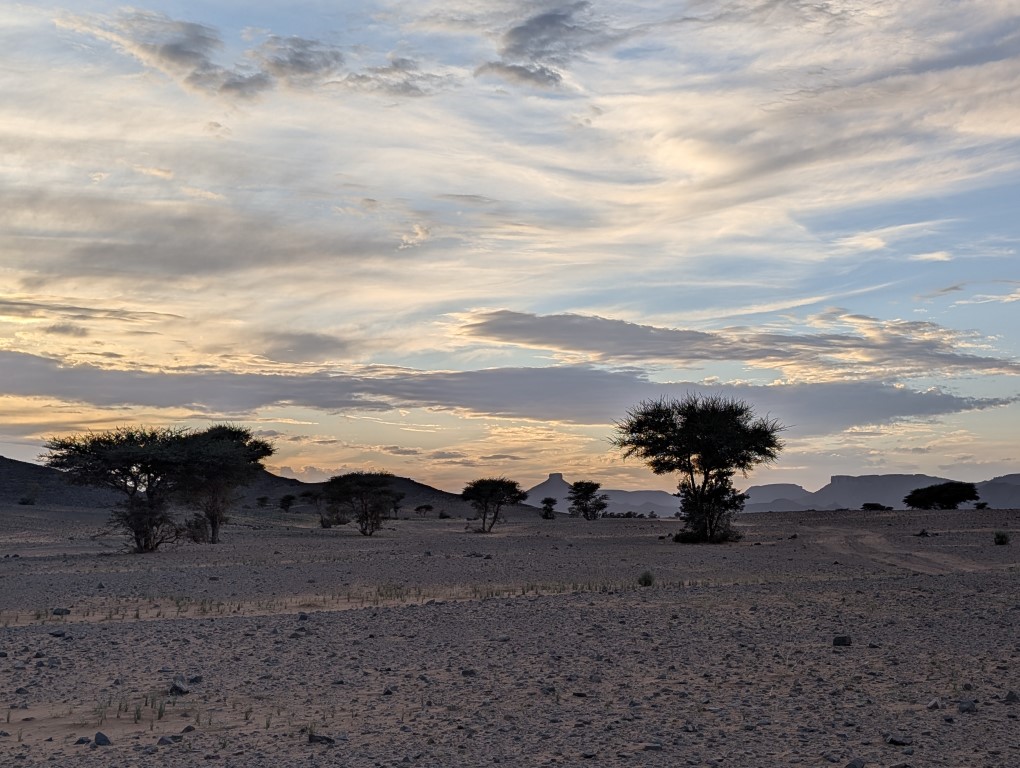
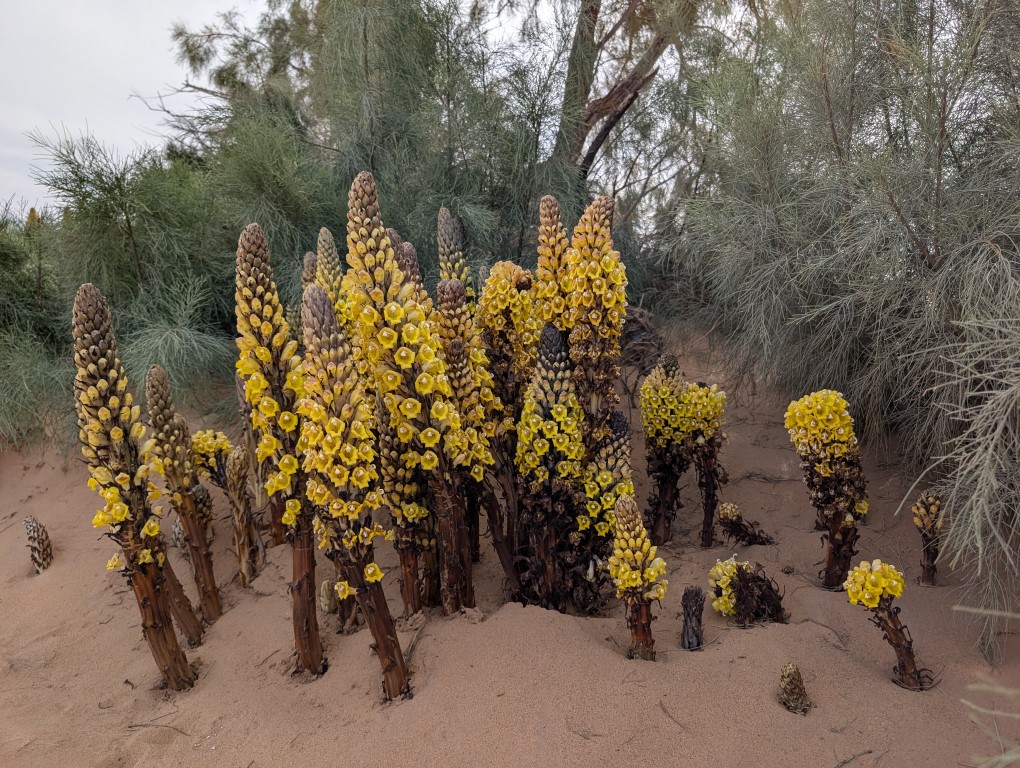
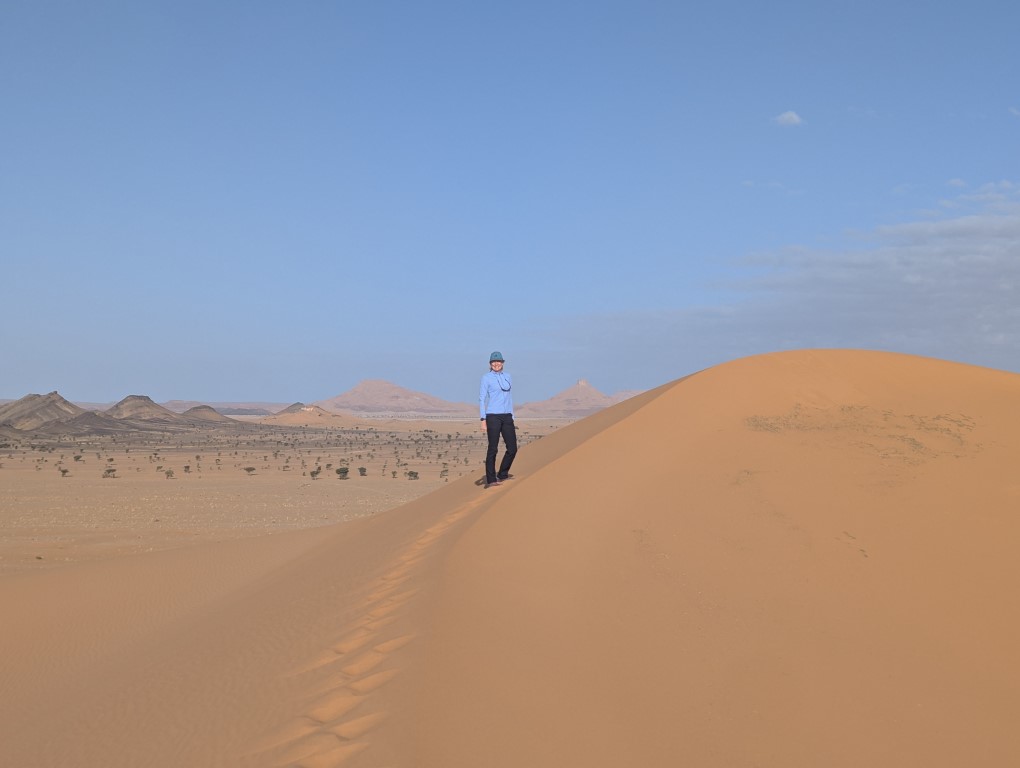
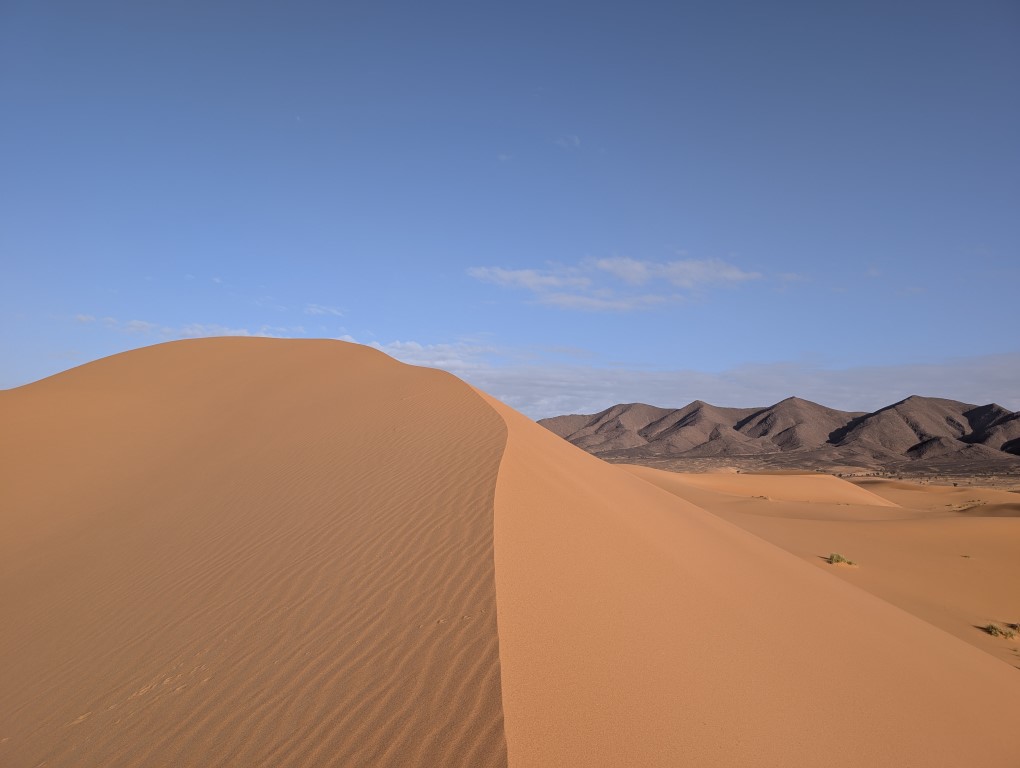
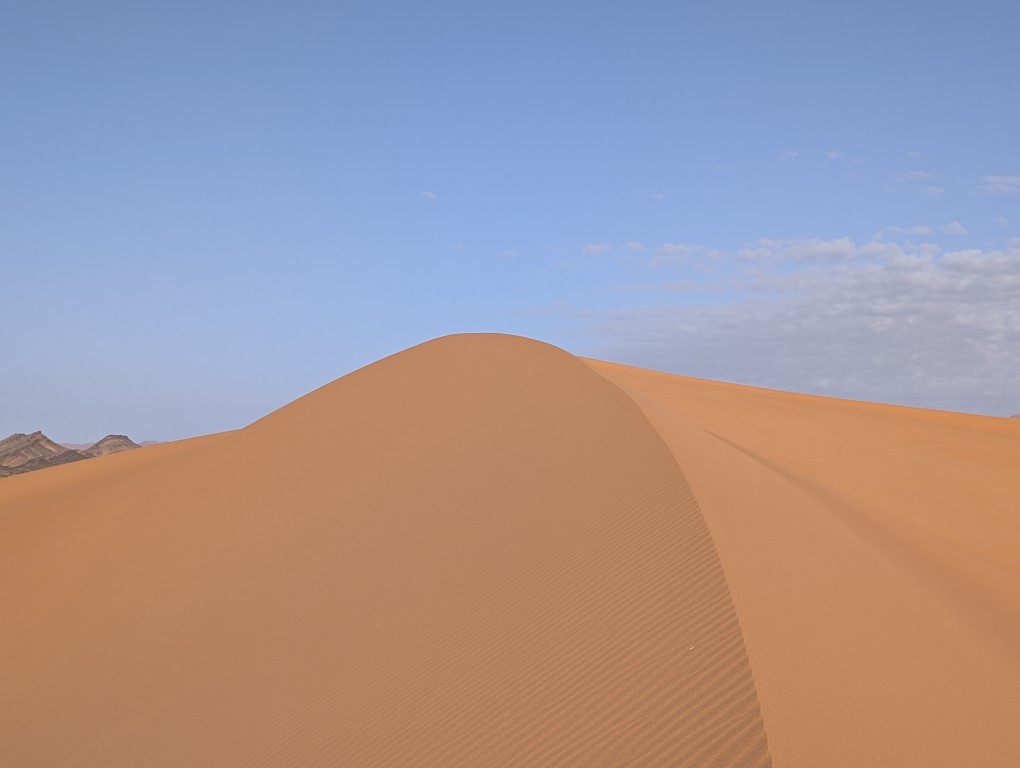
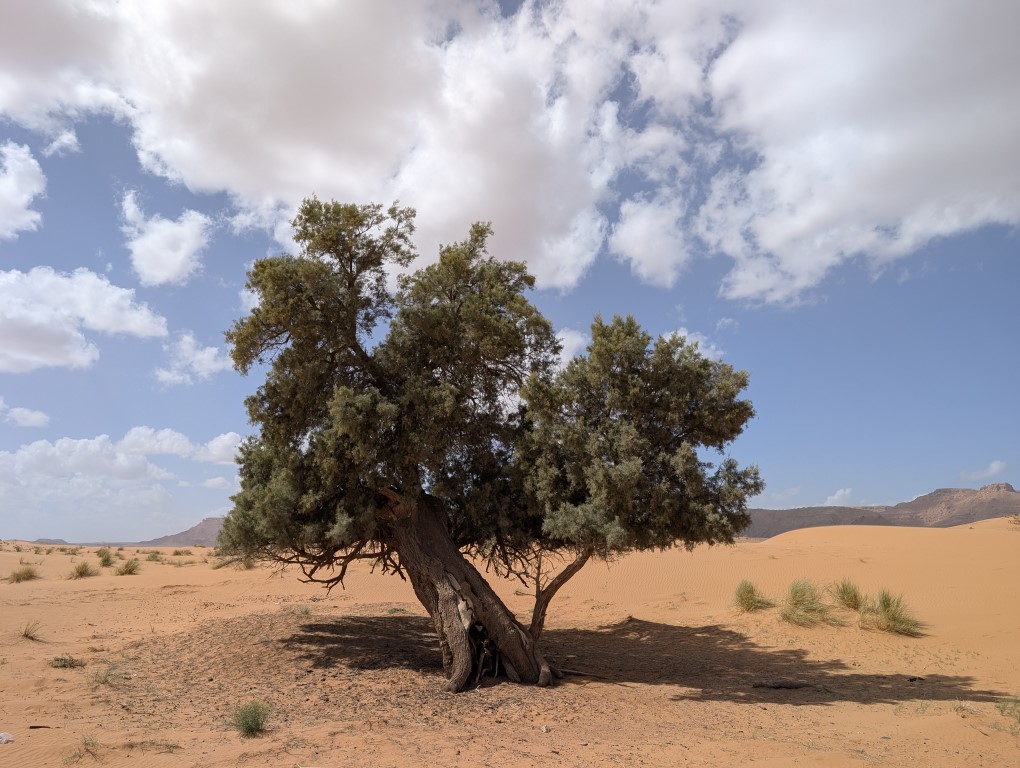
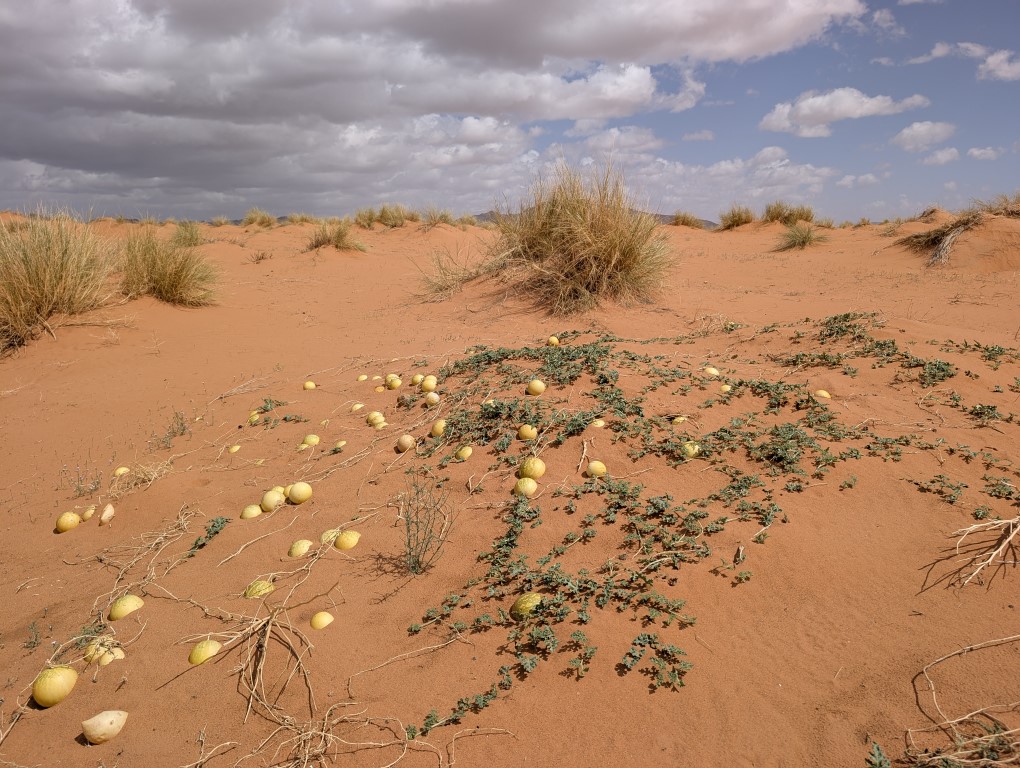
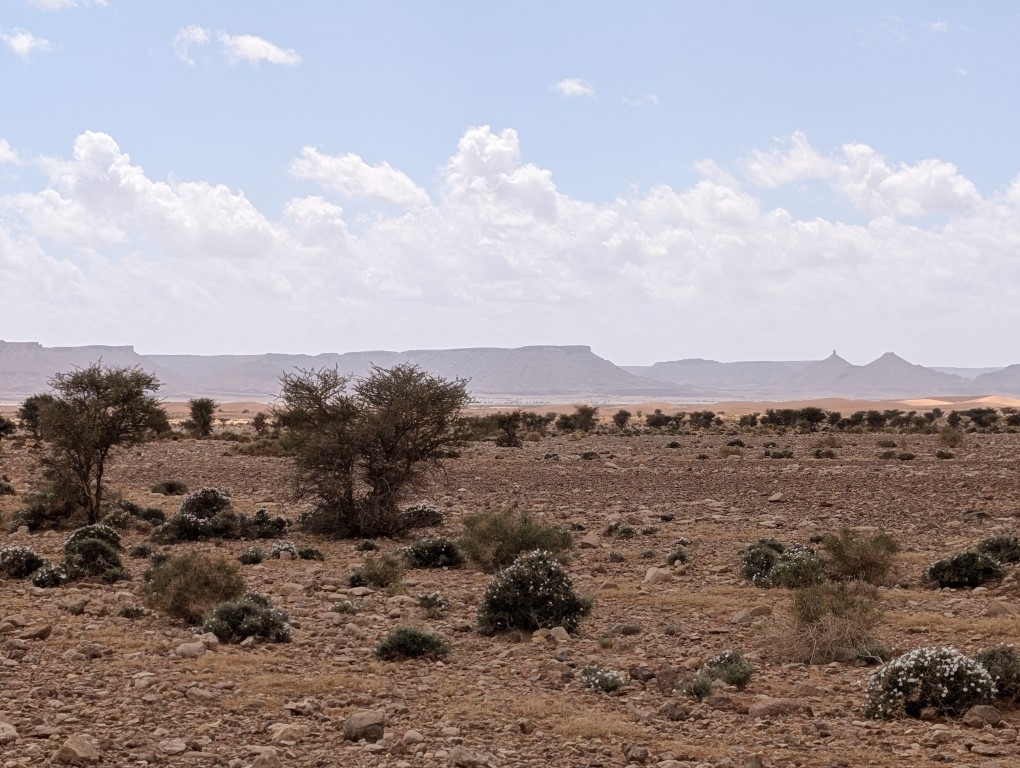
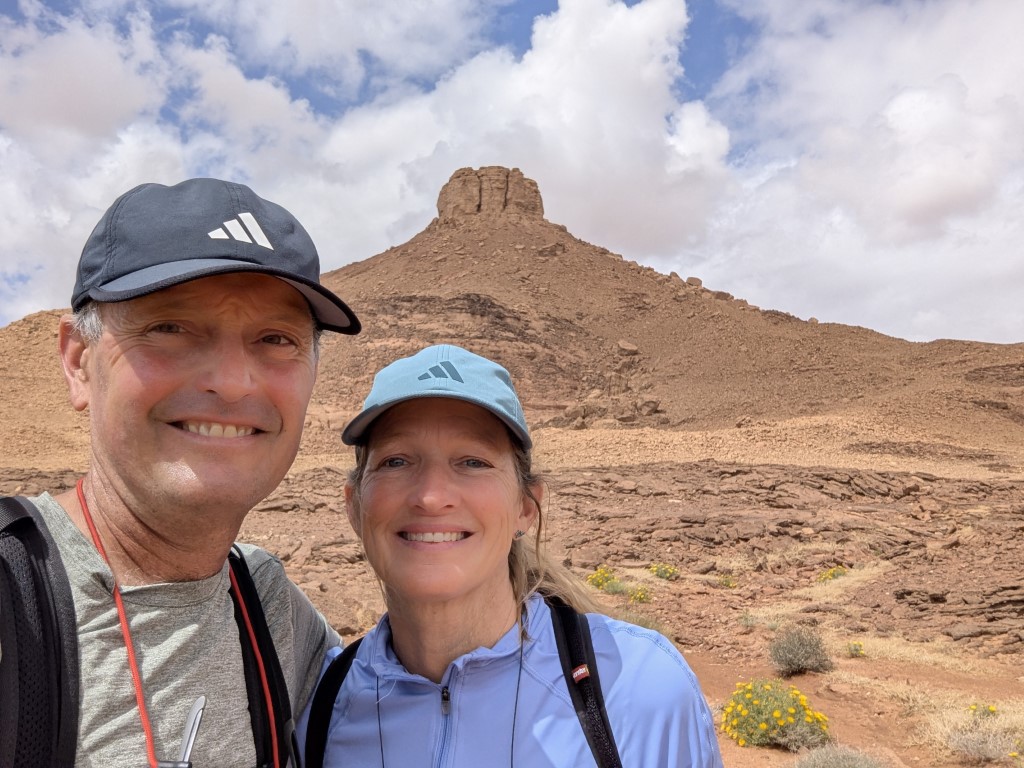
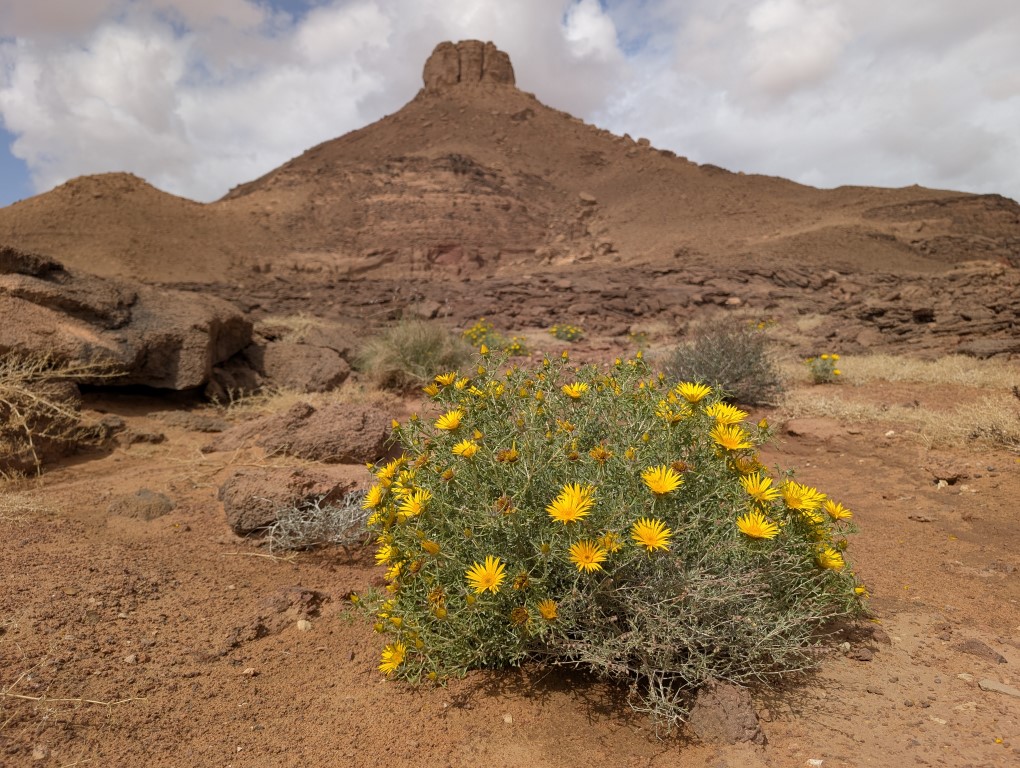
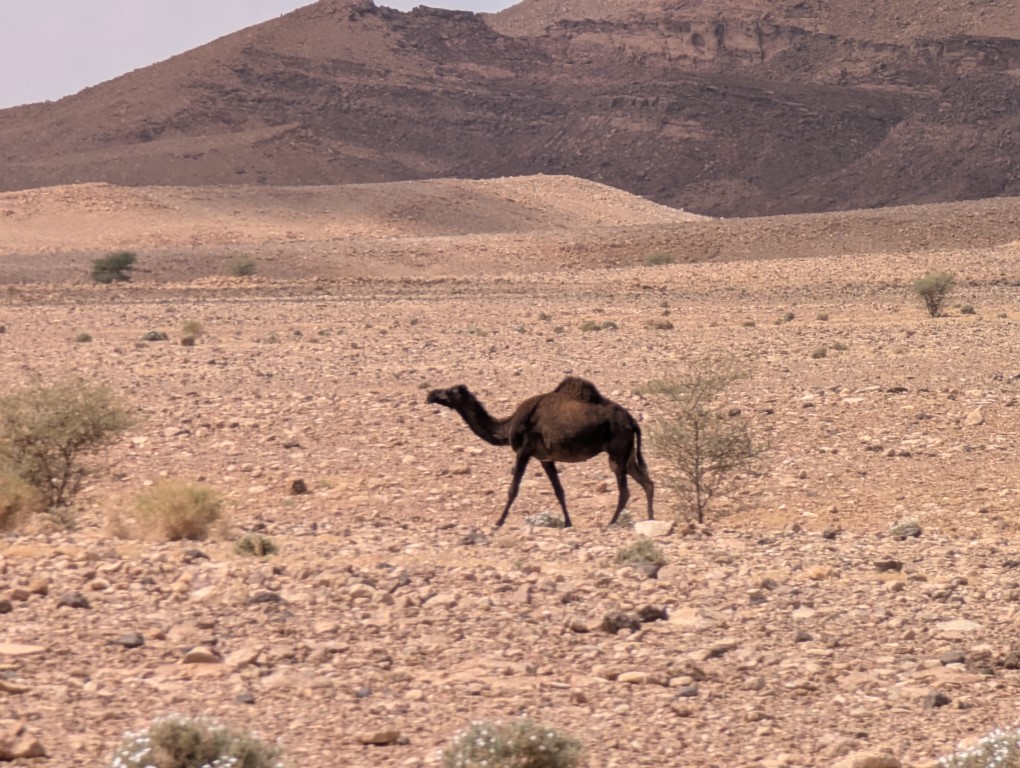
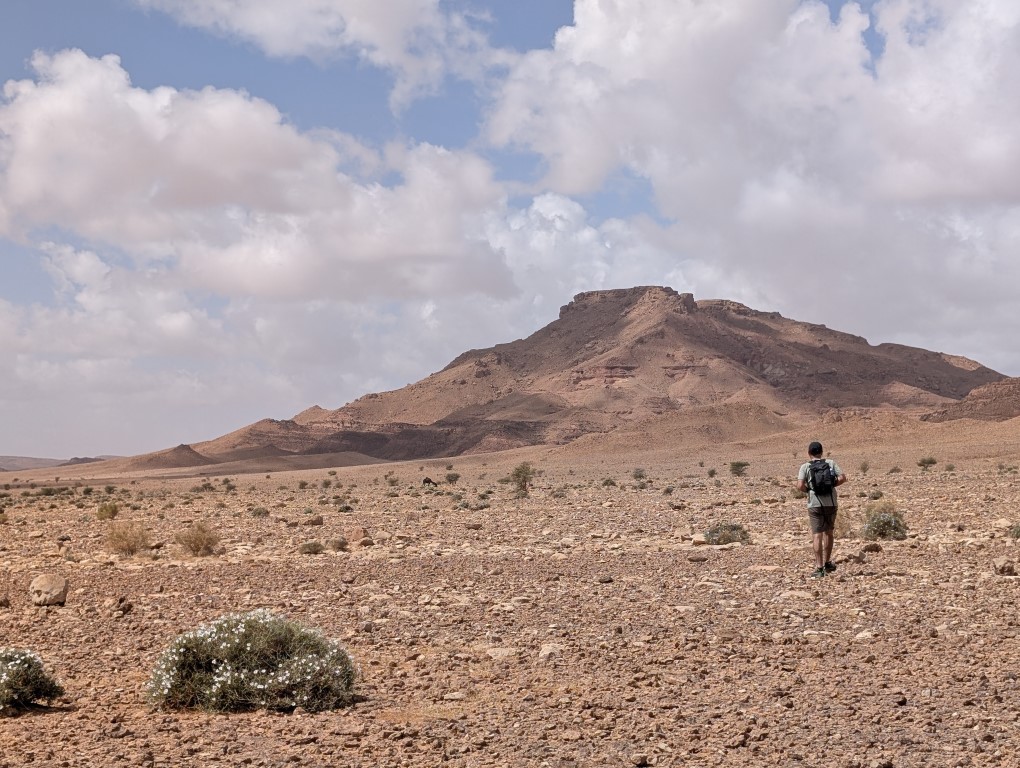
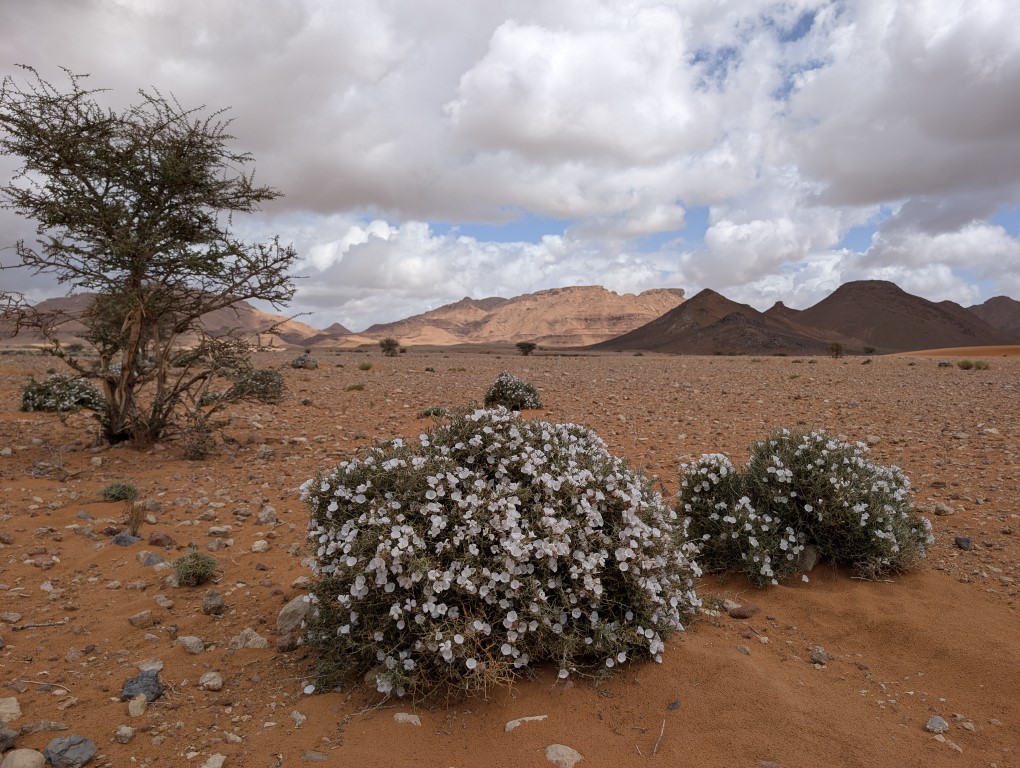
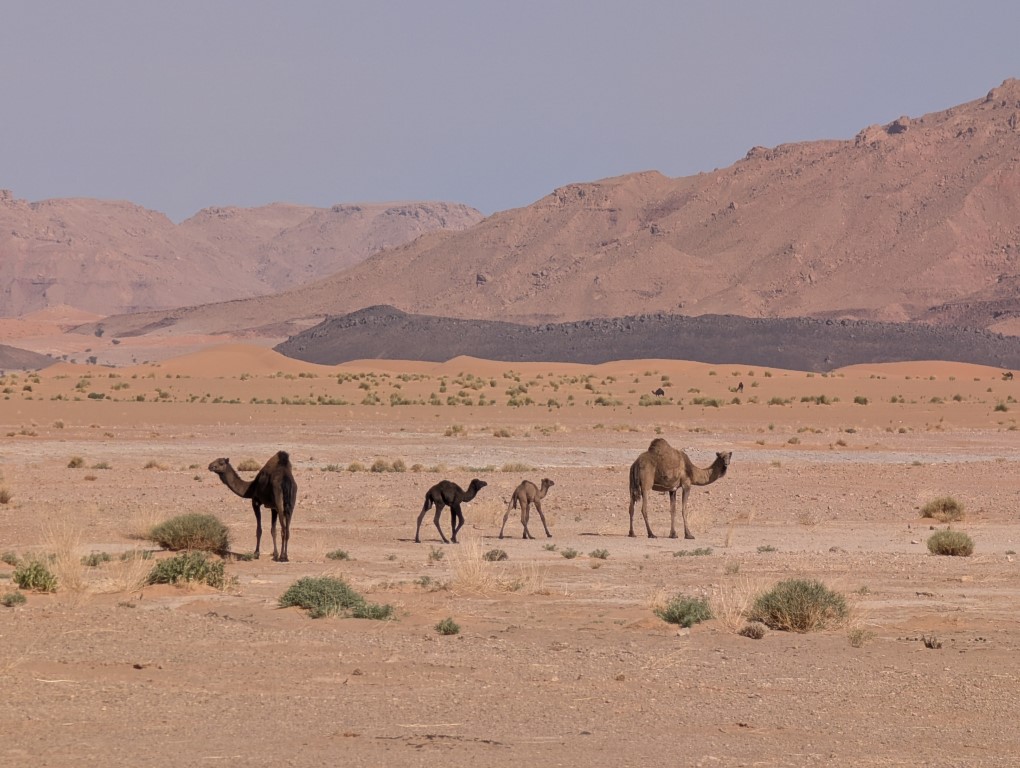
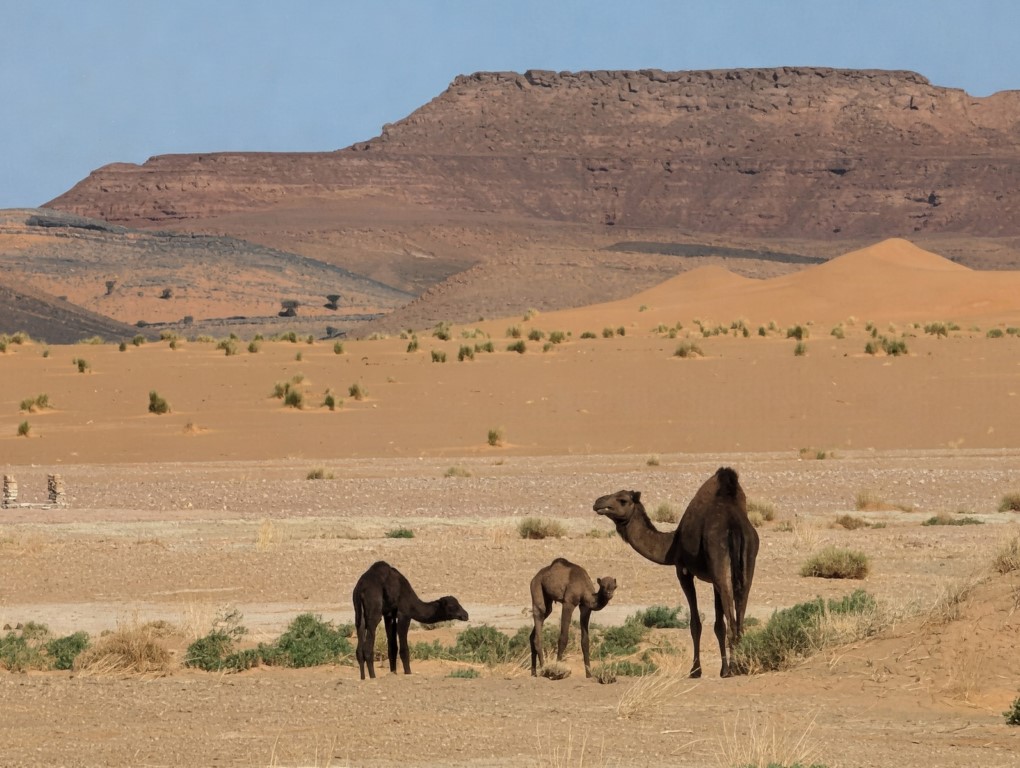
This would be the start of the 2 day off road route to Zagora but we wanted to stay a day first to hike. From the rooftop deck we were told the triangular mountain in the distance was Tagine mountain. So we decided to walk to it across the desert. We saw wild camels, lots of wildflowers, nomadic Amazigh tending their herd, interesting gourds that grow wild and a lot of beautiful scenery. It was as we estimated, a 20km trek through the desert which meant it was a great day. The dunes right behind the Riad were beautiful with long dips and swirls.
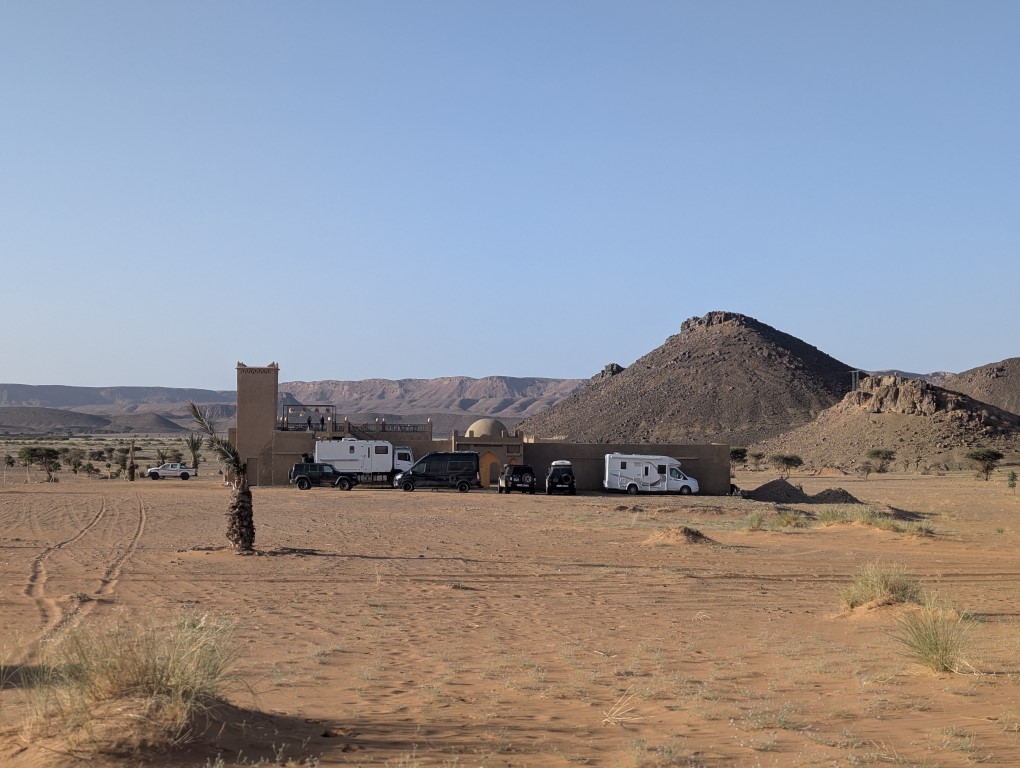
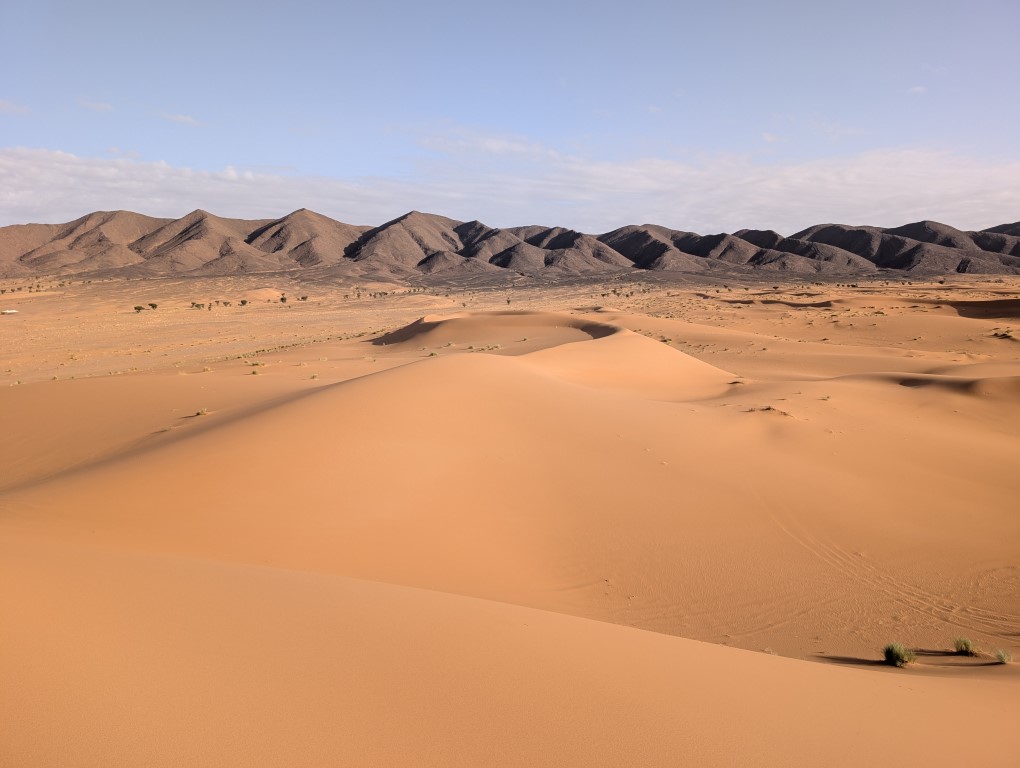
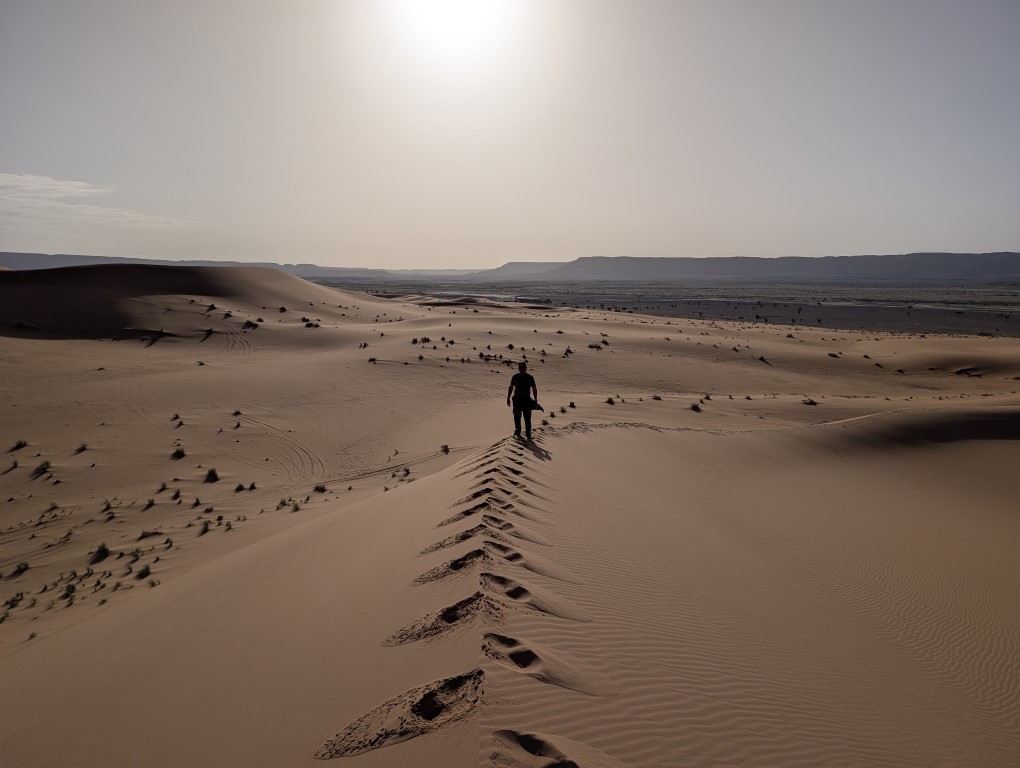
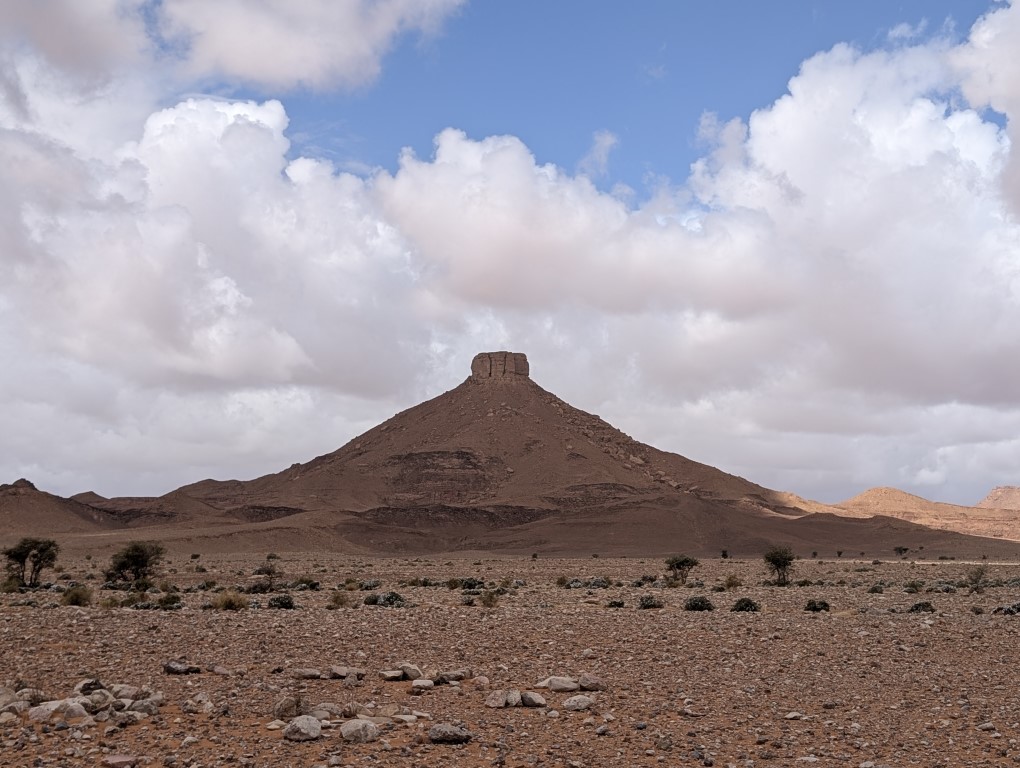
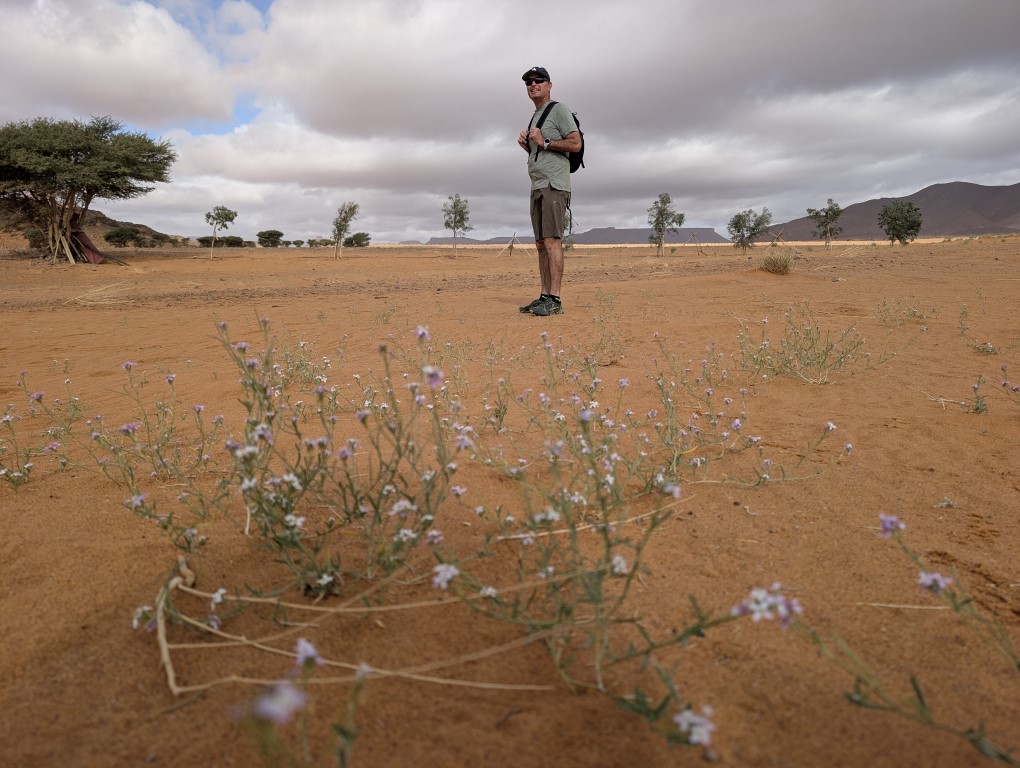
Part of the hospitality when you stay somewhere is they start out giving you a pot of mint tea, peanuts and cookies. Then later some soup. Then in the morning some crepes and or bread. You can also order meals if that isn’t enough. So we had a nice 4 course dinner there too. We stay at campgrounds when there’s something nearby that we’re trying to do or when we want to make sure the truck is safe. Not that we feel unsafe, it’s just nice to leave it as best we can. Plus it helps support the locals if we do stay at places. We’ve been met with nothing but kindness here and hearty hellos. We arrived in Morocco during Ramadan. I didn’t realize that along with not eating during daylight hours, part of the fast means also no water during the day either. It is supposedly a time to look at oneself and strive to be better, to give to those less fortunate and to celebrate family & friends along with practice religion as a whole. I find the call to prayer here less intense than other countries we’ve been in which is nice. It wafts across the landscape rather than dominates it. And when it does, most Moroccans drop to their knees and pray.
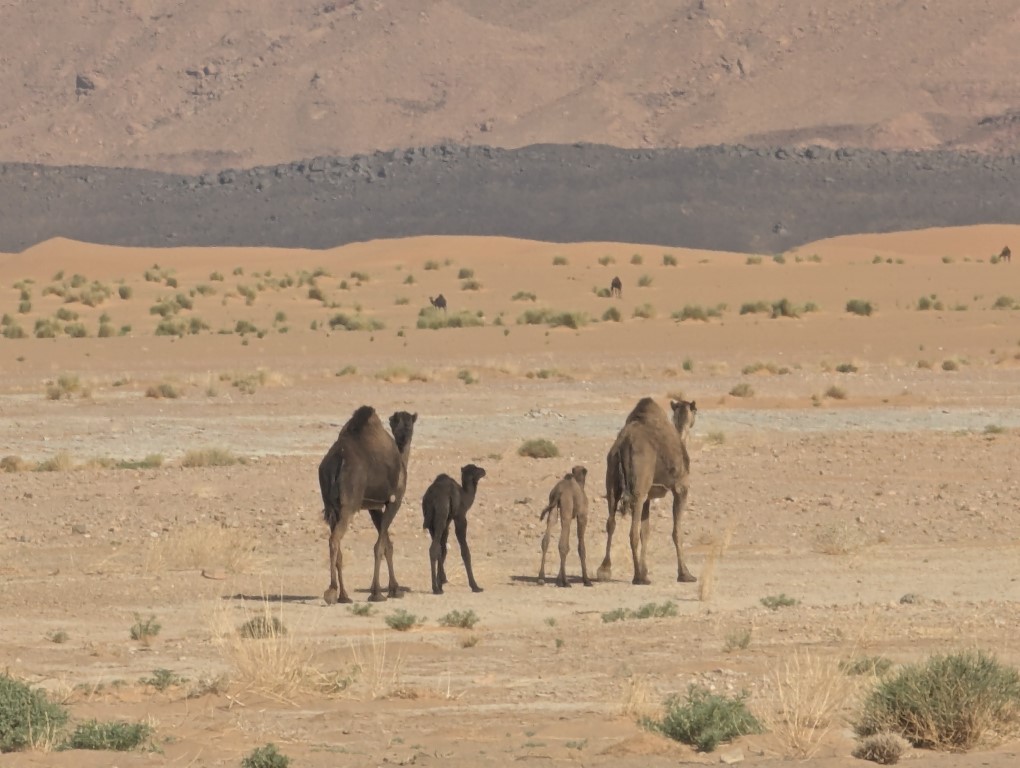
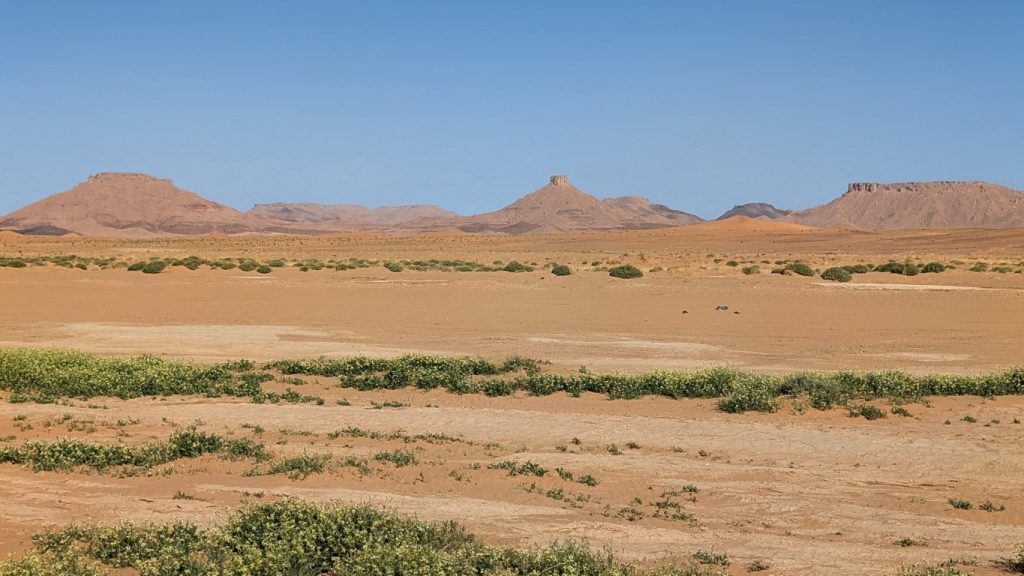
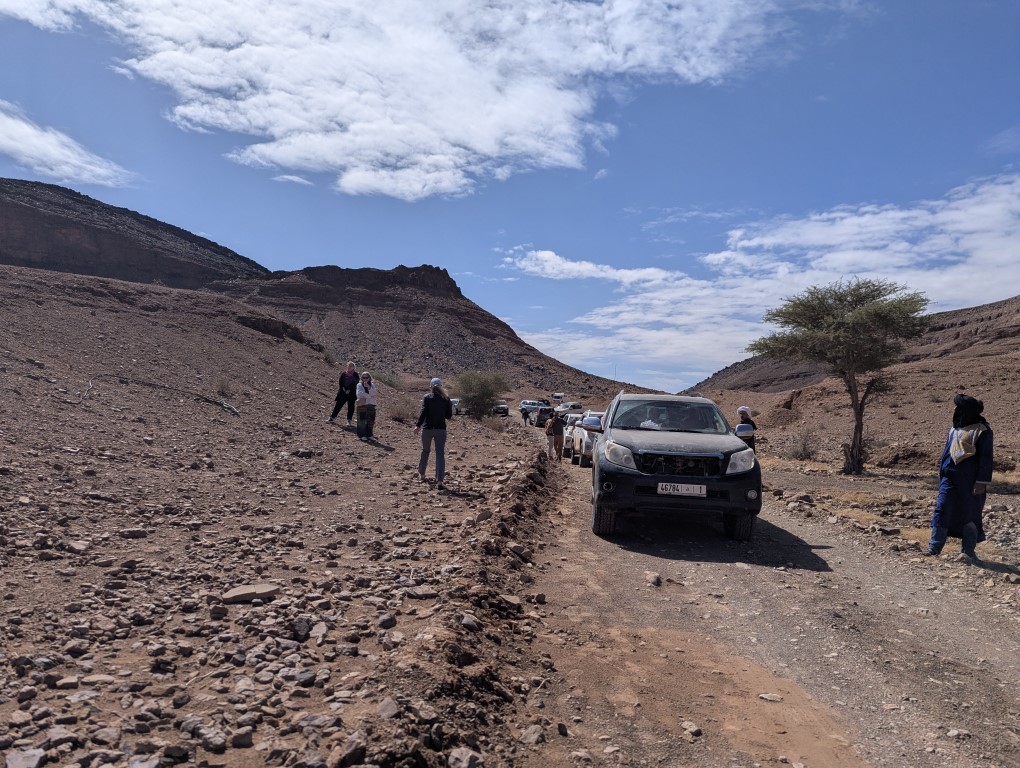
We were ready to start the 2 day offroad piste from Ouzina to Zagora. We aired the tires down to be better in sand and got ready to spend most of the day driving slow and we knew there would be a difficut area around a wash called Ramlia. Well it started out just fine with lots of wild camels, wildflowers and desert scenery. Then we got to Ramlia. As there had been a fair amount of rain this year, the locals re-routed the path recently to get around the worst of the mud in their farm plots. While we were sitting there trying to figure out which way to go, a local came up on his motorbike to show us the way. When I get stressed out I don’t take pics or videos but I should since he had us going through drifts and piles of sand over knolls where there was so evidence of a path whatsoever. When it looked like there was a path he would take us a different way and we started wondering if he was actually trying to get us stuck! I tipped him big as I didn’t have any smaller bills because this country is like the others – no one has change for even the smallest amount…. and eventually we popped out onto a sandy path and could continue on feeling more at ease. It really was funny to be powering through all these big piles of sand, sometimes having to get out to look over the small dunes to see what was on the other side. I can’t say as I enjoyed this part because I was stressed out. We had low range and both lockers on and did fine but had we stopped in some of the spots I’m not sure what would have happened. I like to keep moving and I don’t like to get stuck anywhere, like for days. We continued along following the Algerian border and stopped mid afternoon because the wind really piped up. We got shelter within the adobe walls of an unattractive family compound and took a walk from there to see some pretty desert plants and rock formations and came back with our eyes full of grit. When its windy like that, it’s really hard to keep sand out of things. In a second of opening a window or door, a lot can come in fast.
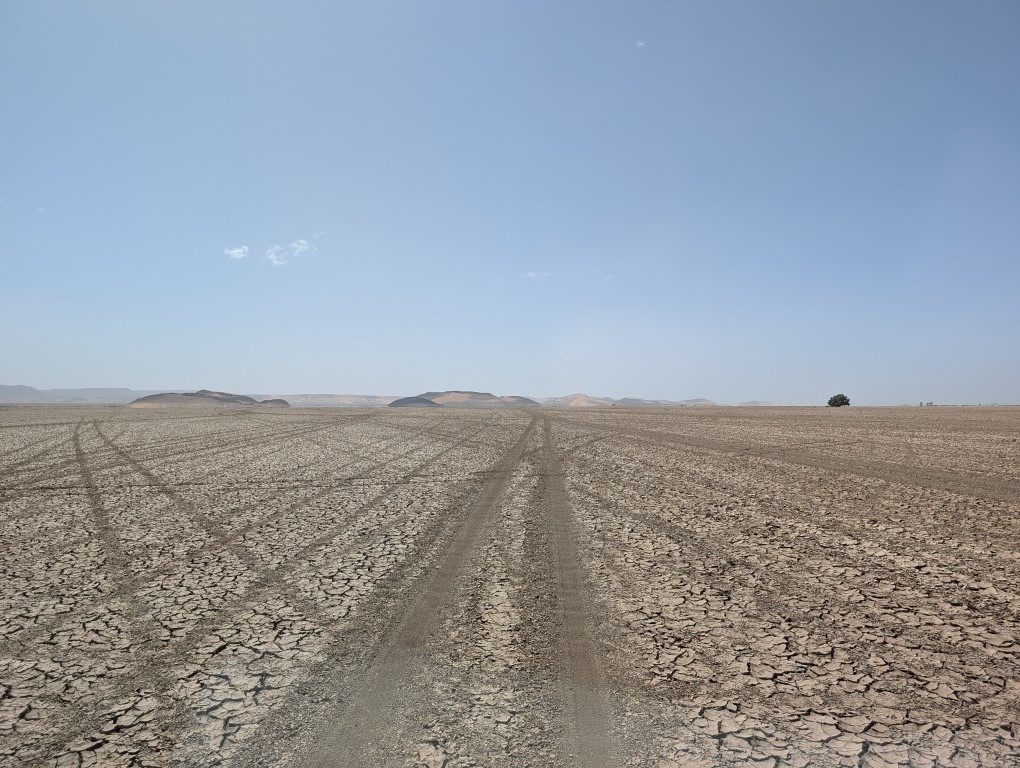
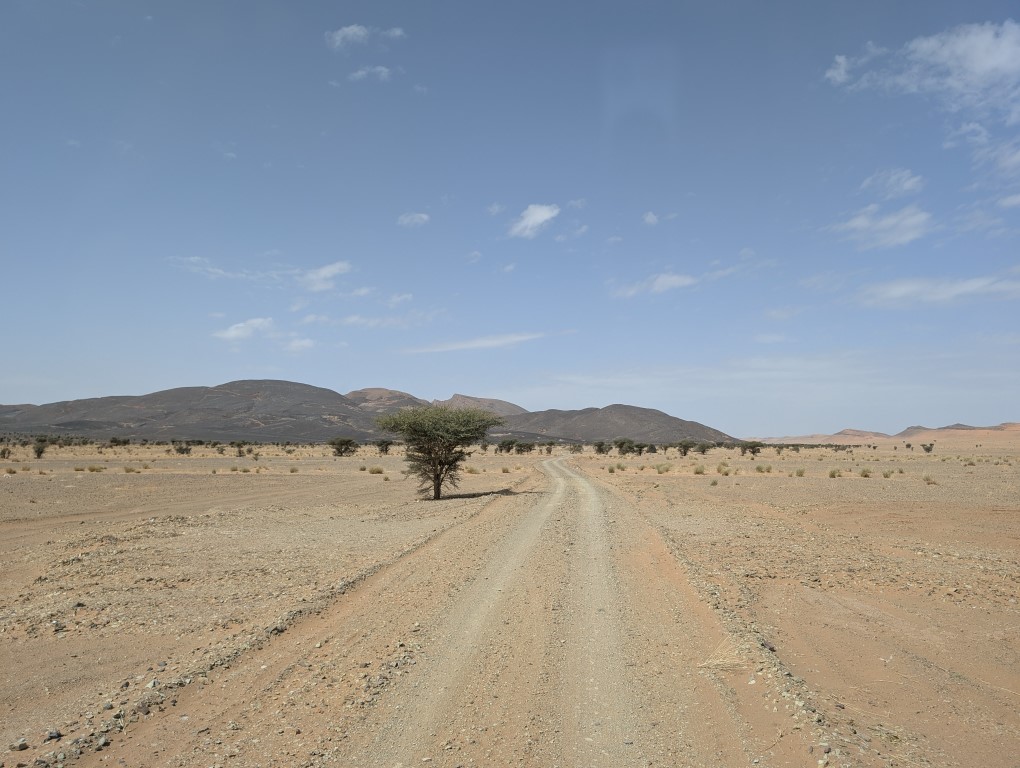
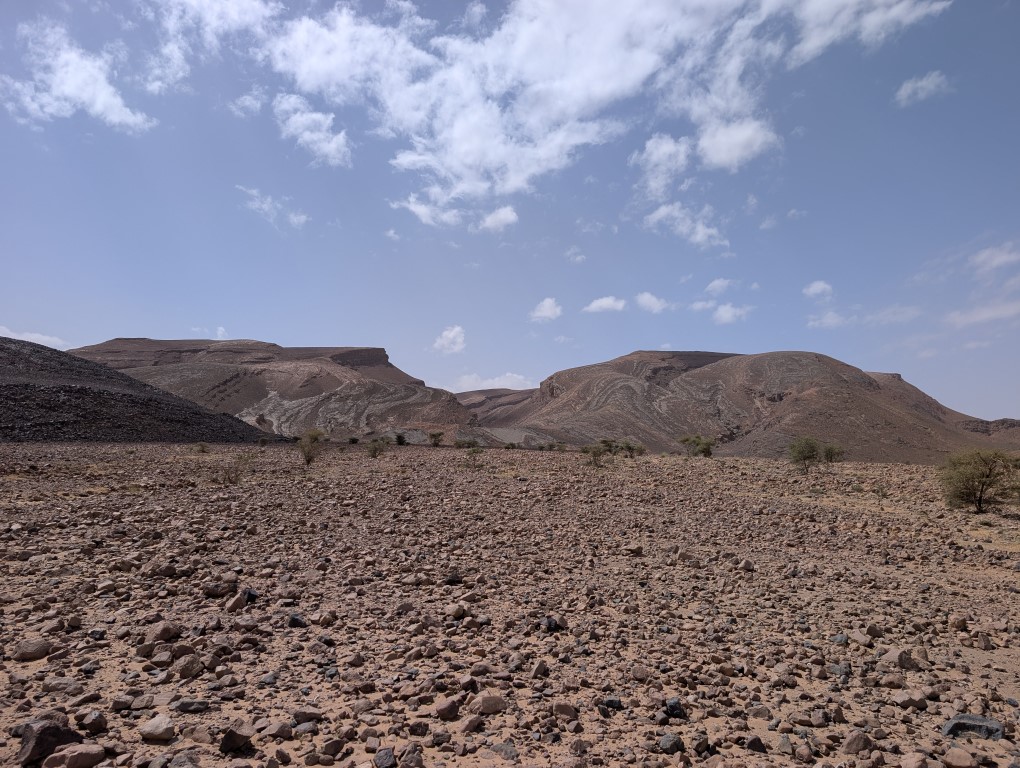
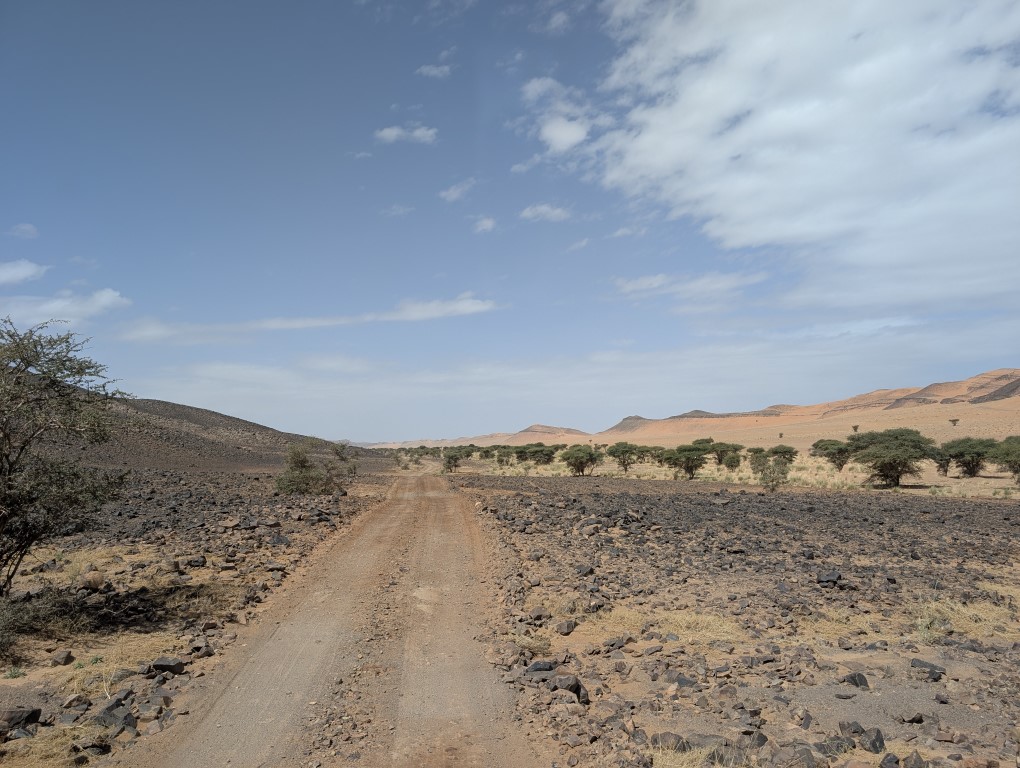
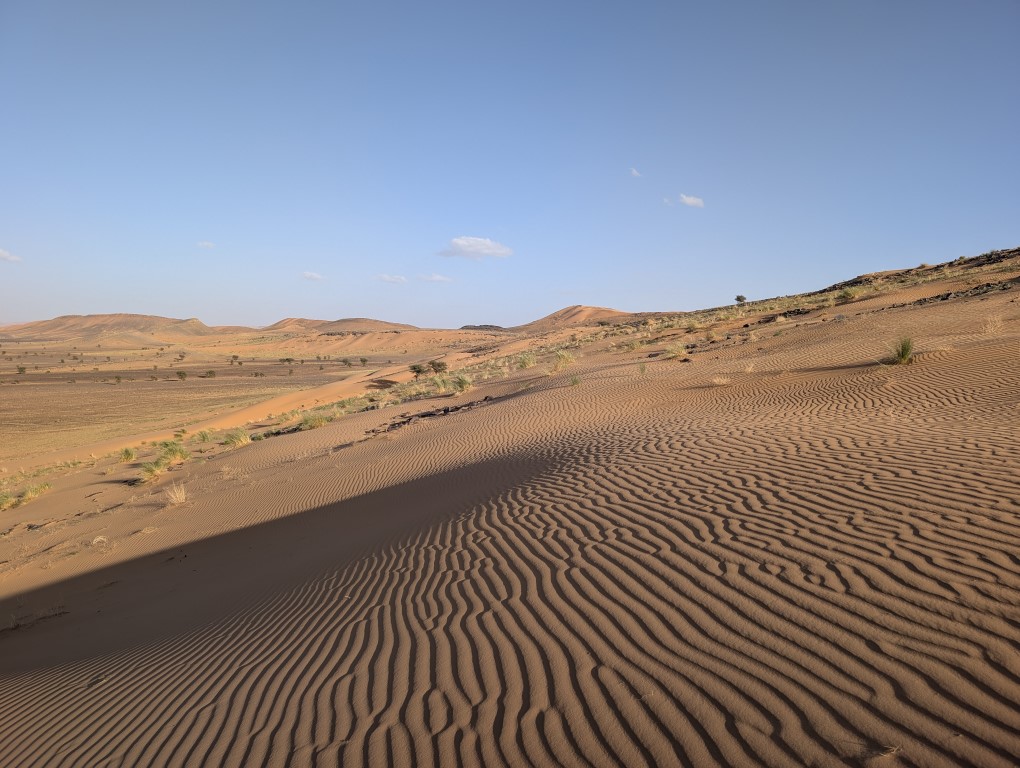
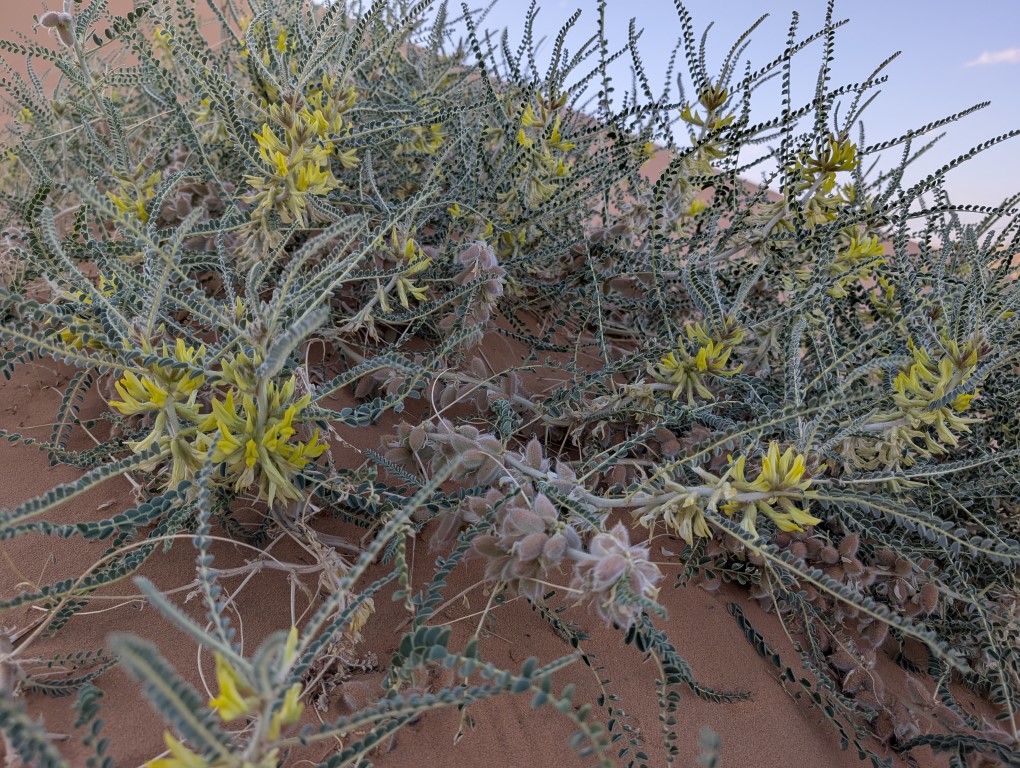
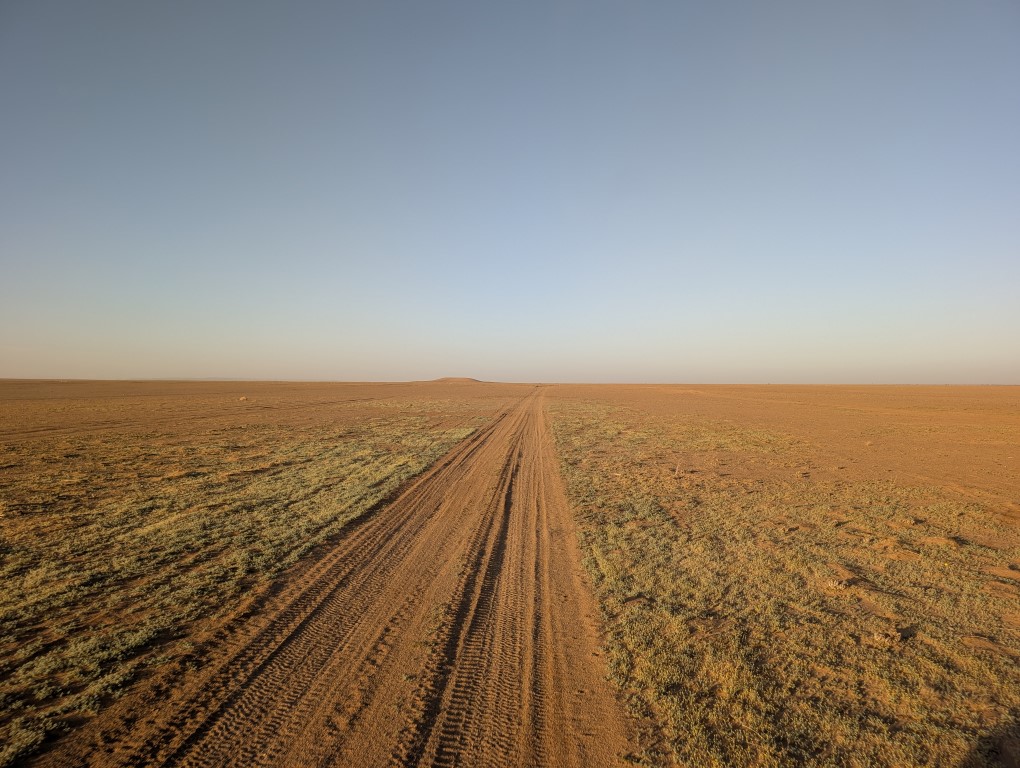
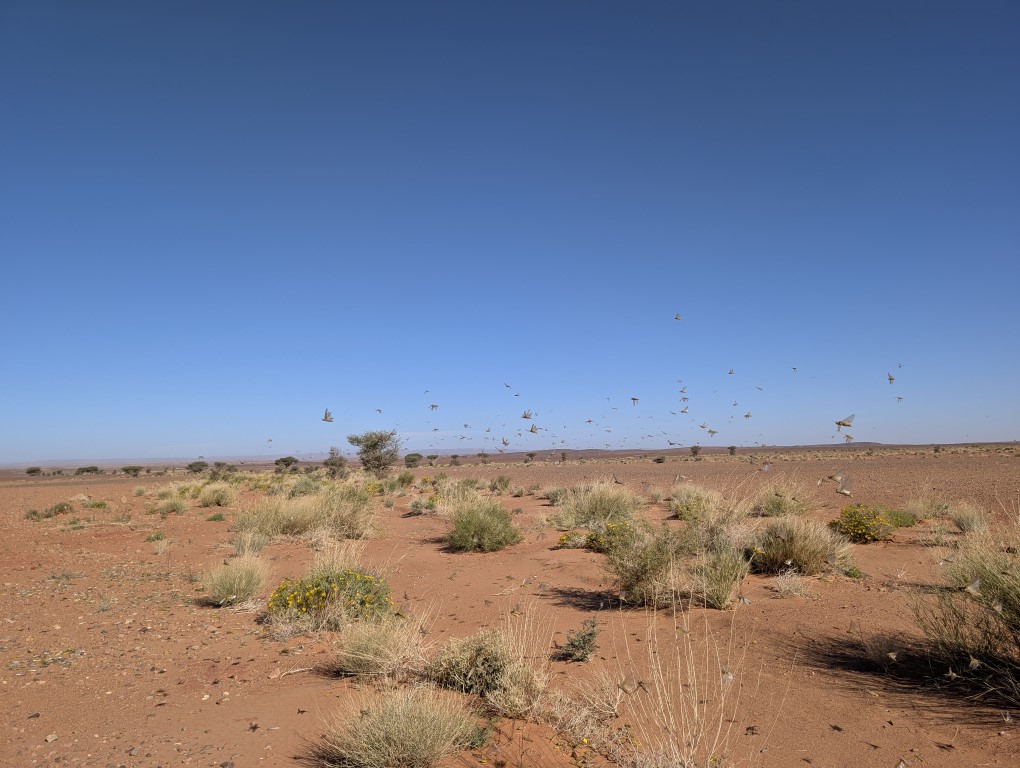
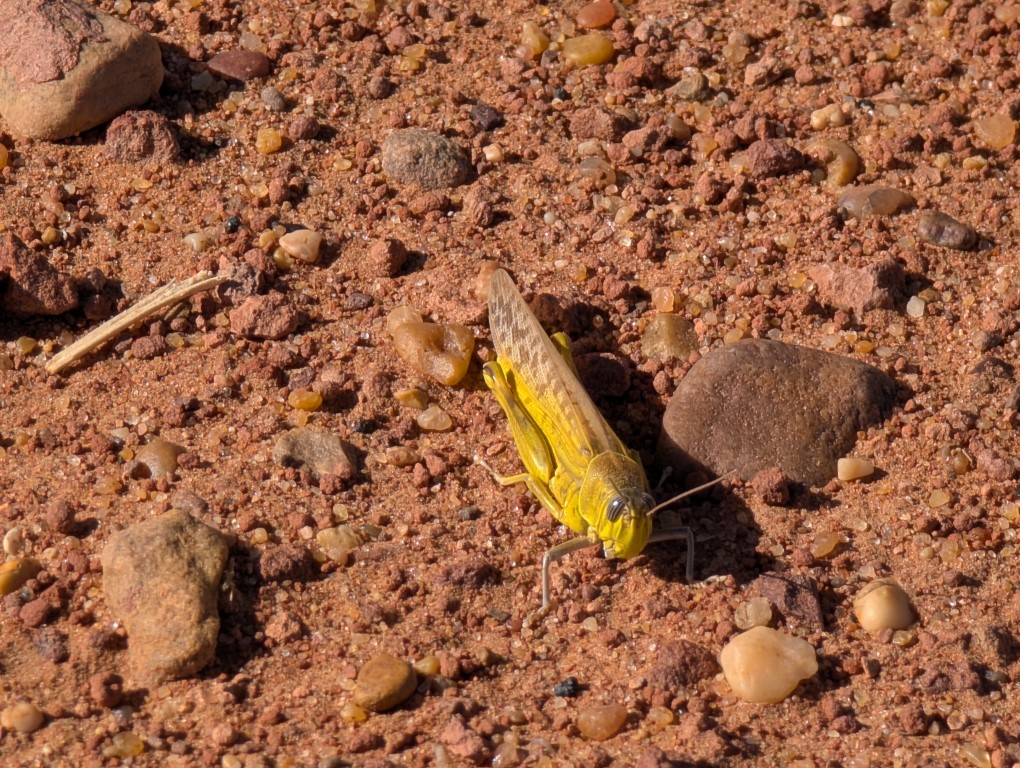
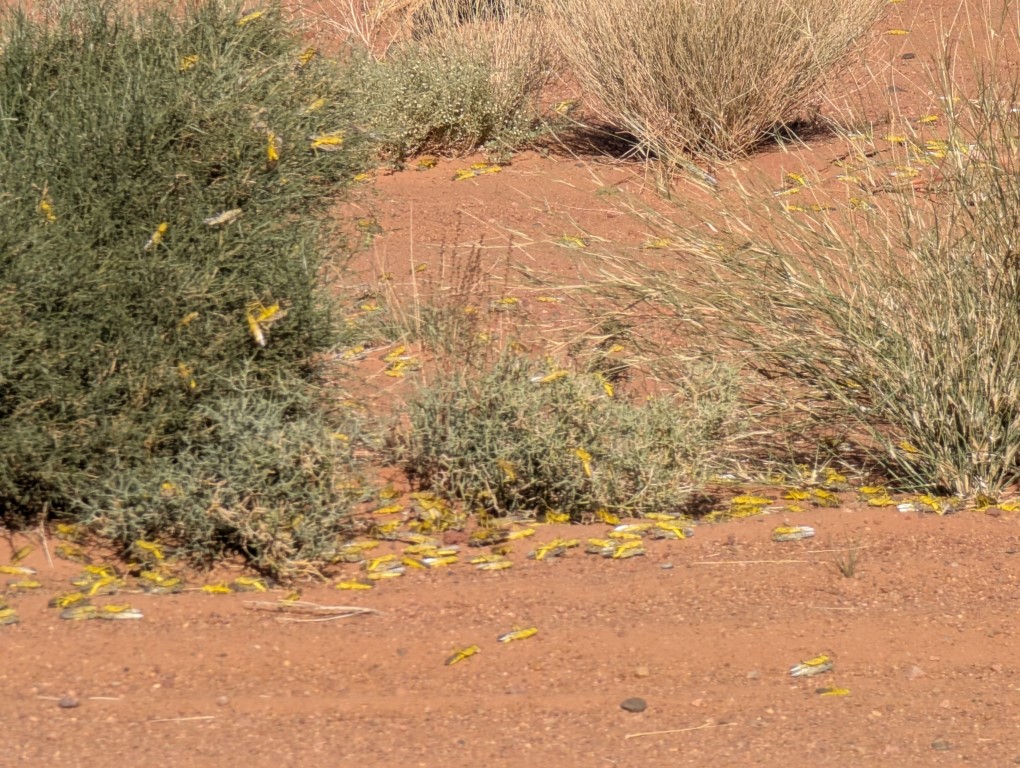
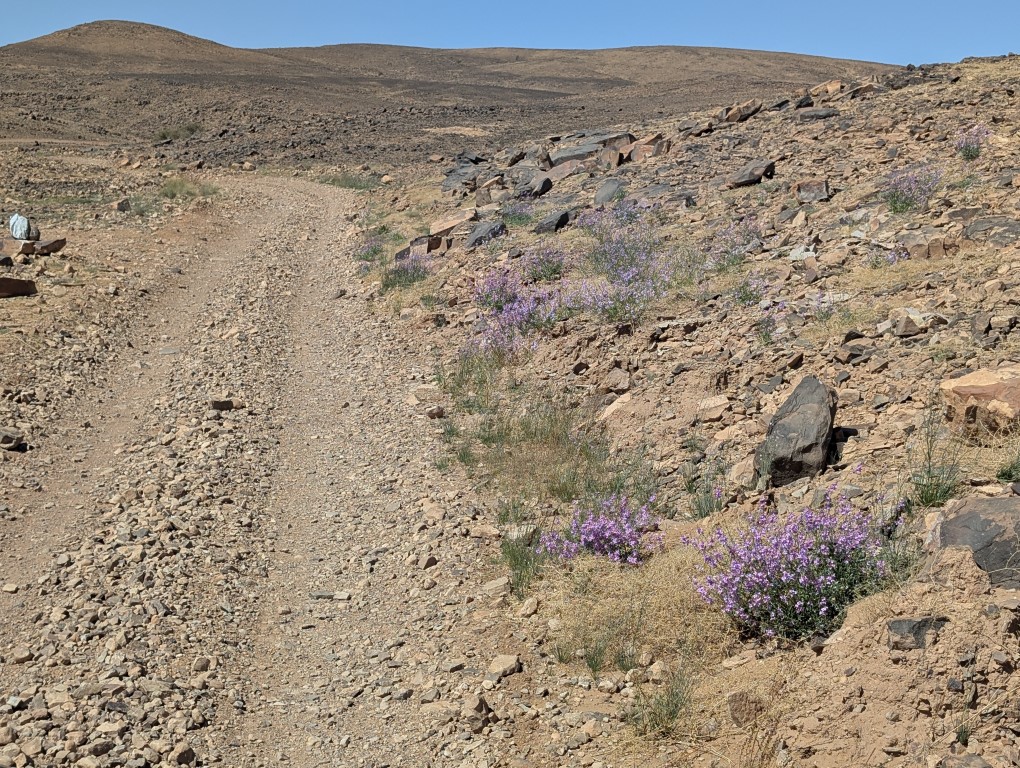
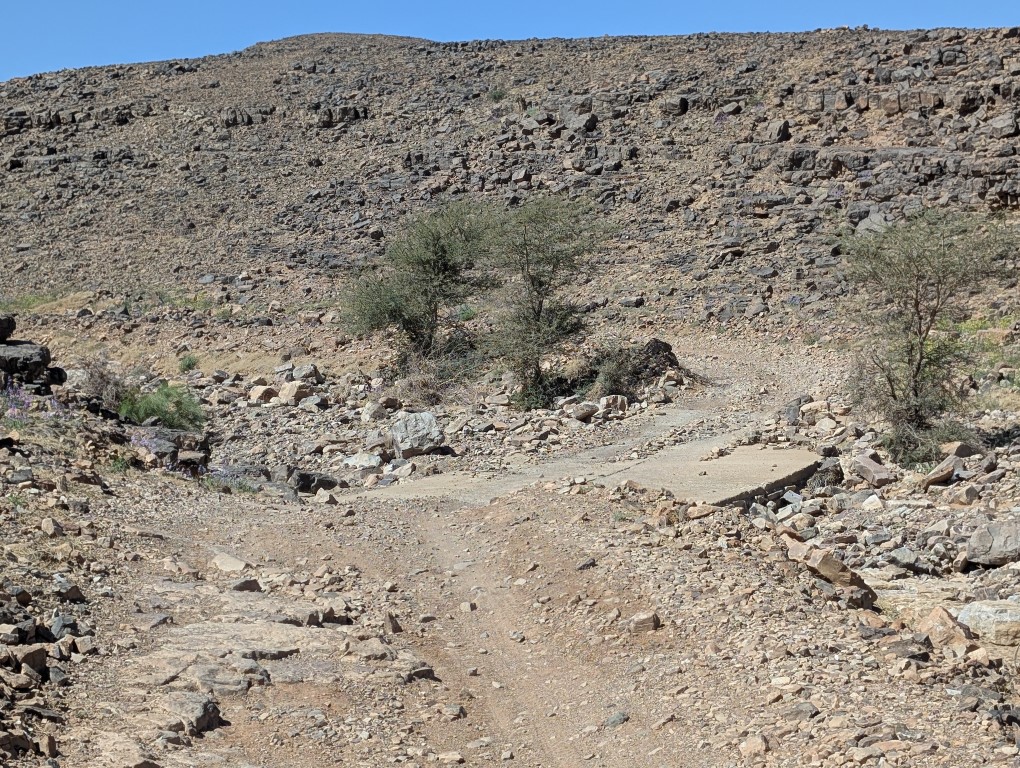
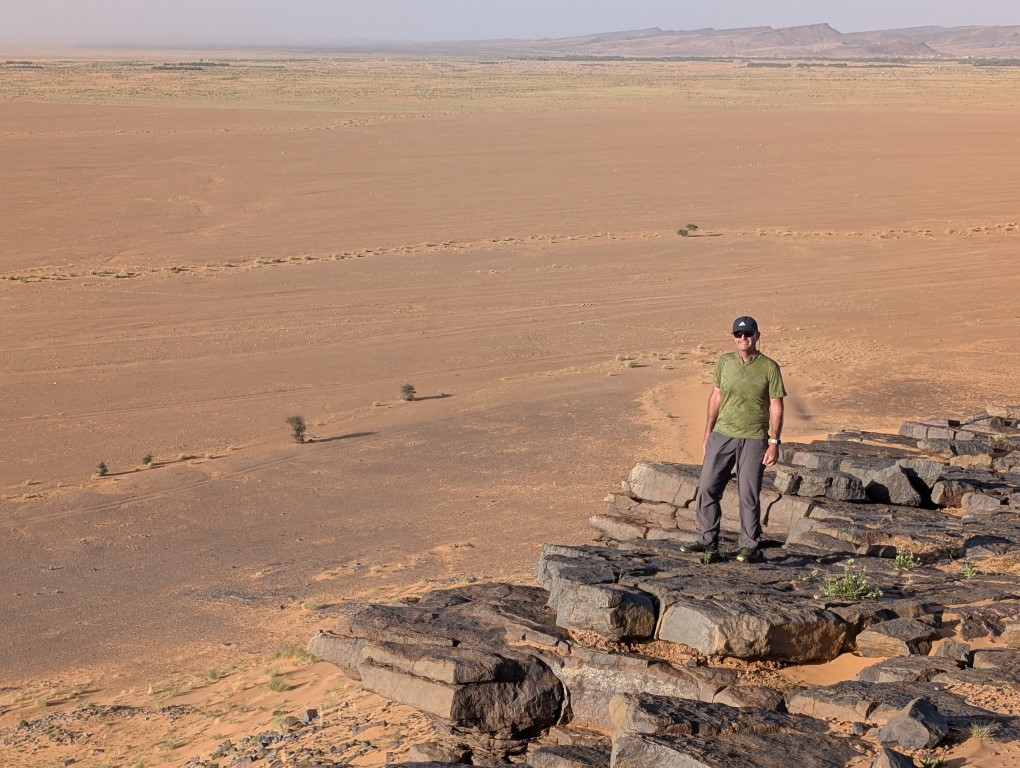
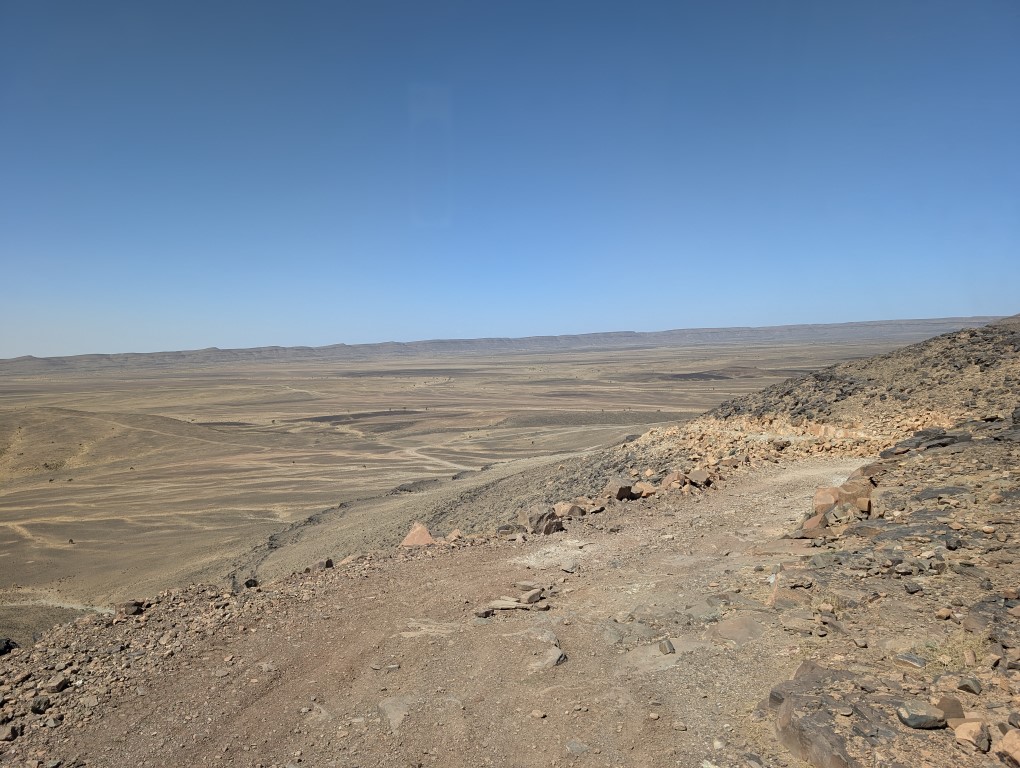
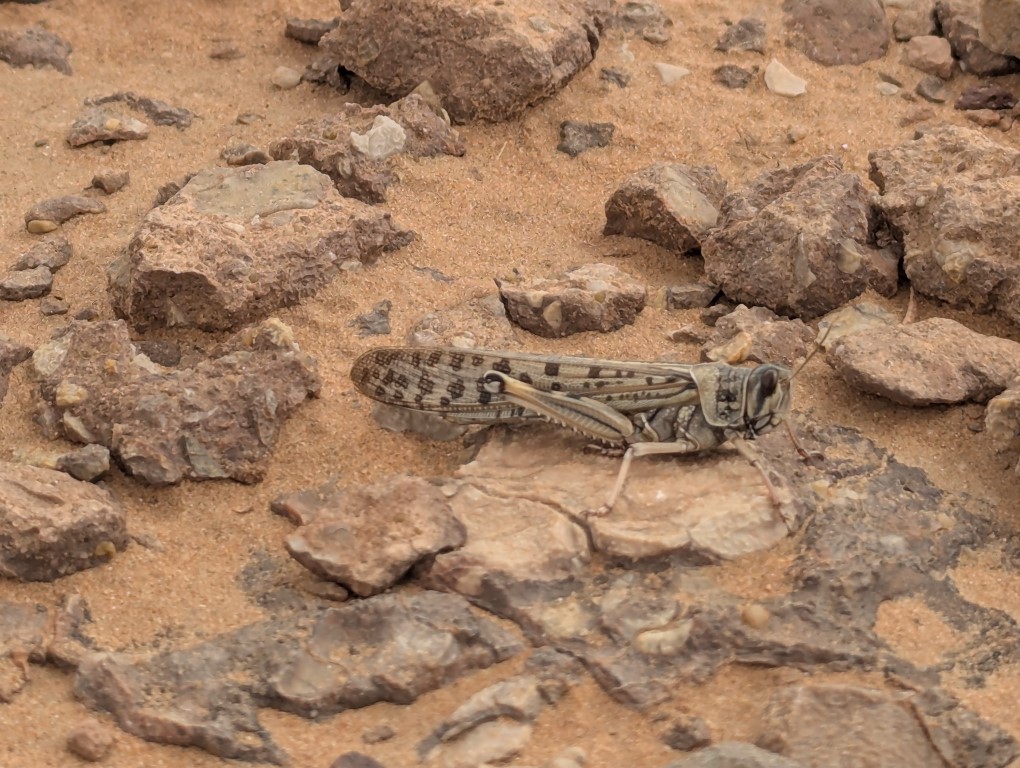
We left at sunrise the next day to beat the wind and make sure we completed the road in daylight. Along the way, we saw a locust swarm. I guess these yellow grasshopper loooking insects wreak havoc on crops. It’s hard to see in the photos but they were everywhere. The Algerian border is a huge, flat plain, with lookout towers every km or so. We passed a couple of Moroccan military checkpoints but everyone waved us through. That’s what we’ve found in Morocco so far- we are waved through all checkpoints. Then the day’s challenge was that we had to cross 2 rocky passes. With the truck being at the outer edge of what size can comfortably make the switchback turns and the narrowness & steepness of the rocky road, we were a bit on edge covering that part, because we really were indeed on the edge of the drop-off. But it was really pretty. We popped out onto pavement and enjoyed the smoothness of it and the fact that we had come off of the piste with no real drama.
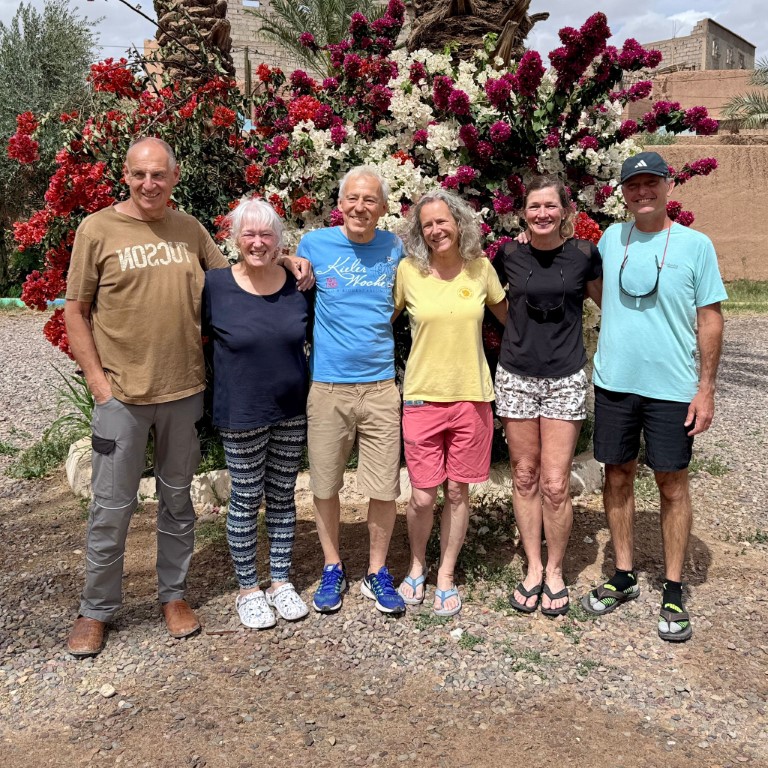
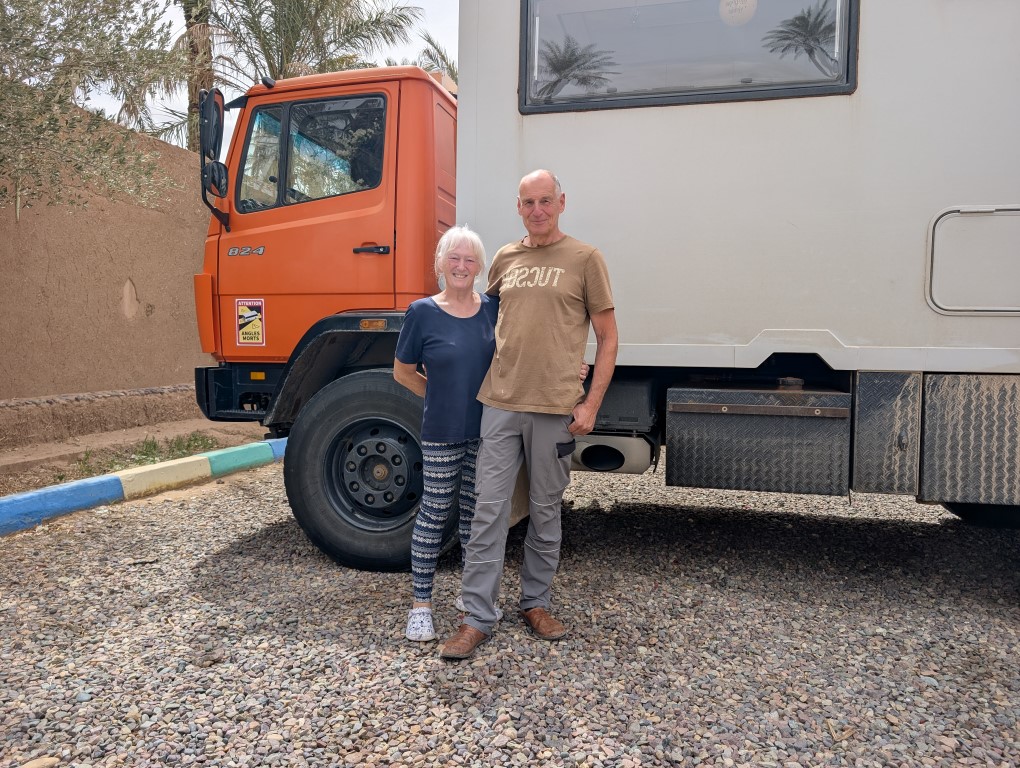
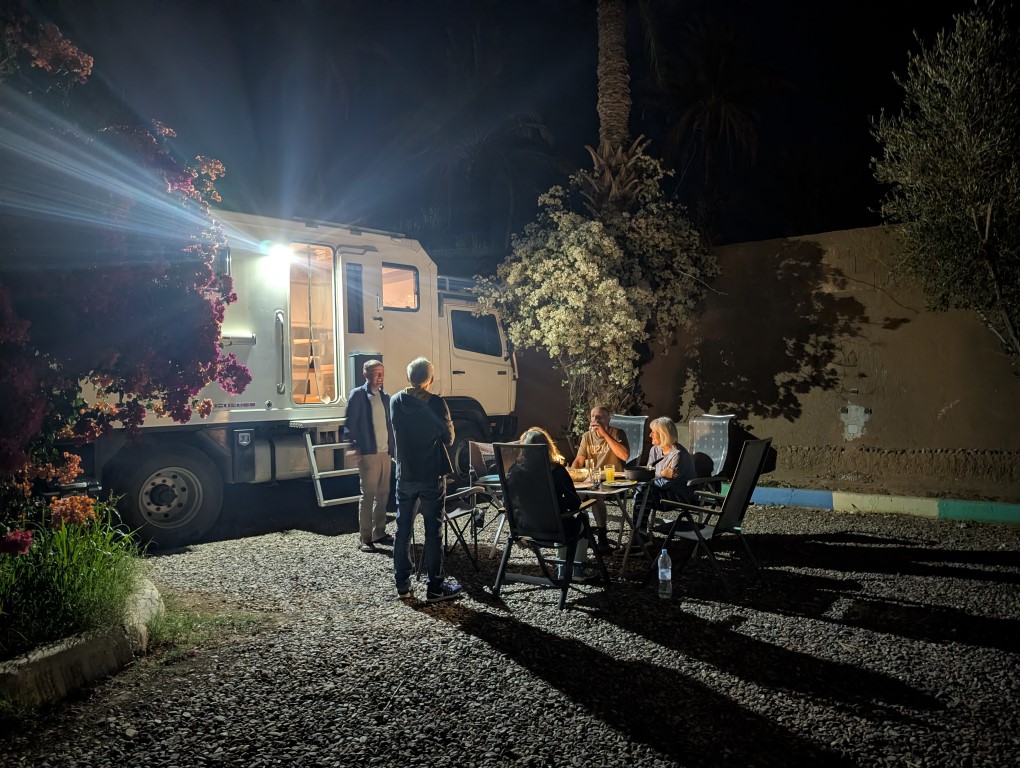
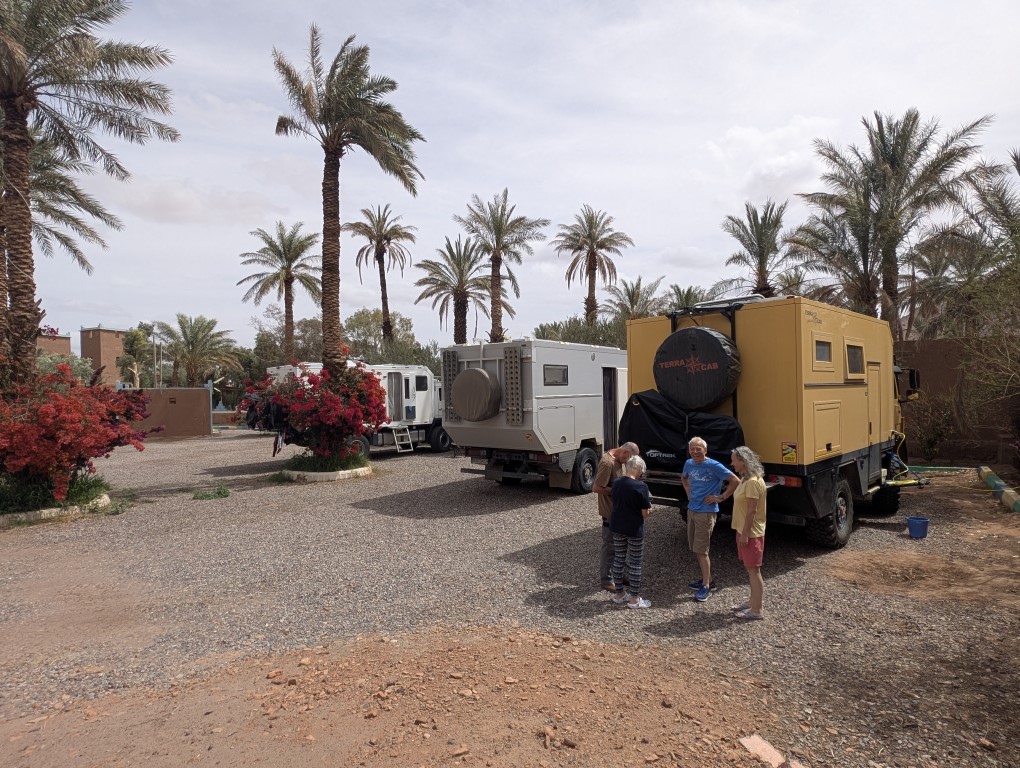
For several years now, we have received incredible advice and troubleshooting for our old fire truck from a German man named Stefan who worked with Mercedes mechanics for much of his career and he’s also a member of the LN2 forum- what these trucks are. He’s helped us during crises, with troubleshooting and just general advice. And now we finally were going to get an opportunity to meet him and his wife Hiltrud because they are traveling Morocco this winter in their truck. So we met up at a pretty campground in Zagora and spent 2 days hanging out together with them and their friends. On that first night we tried to go to dinner, it happened to be the end of Ramadan. We learned that in that case, all the locals are in celebration mode and the restaurants aren’t open except maybe one really yucky one! Well, we ate there and tried to forget. It was great to finally put a face with a name and see the person behind all the great advice. Now we’re more thankful for the friendship than the advice! And it was fun to hang out with other travelers. Although we’ve seen several expedition trucks here, we haven’t really been able to talk with many of them. It has to be said that many Europeans travel here in the winter and the fact that we are from ___ isn’t a real conversation starter. Stefan told us that the US was tremendously helpful to Germany post WWII because of the way they helped them to rebuild their country and economy for the good of all. It happened in Japan too. It fostered a lot of good will. It is a shame to be from that place that fosters bad feelings and constant turmoil now.
We said goodbye and then spent 2 more days in the campground doing truck maintenance and fixing broken crap. From oil change and lube to painting and waxing, fixing the winch for the spare tire (this would prove handy) and other stuff, we made the most of these project days.
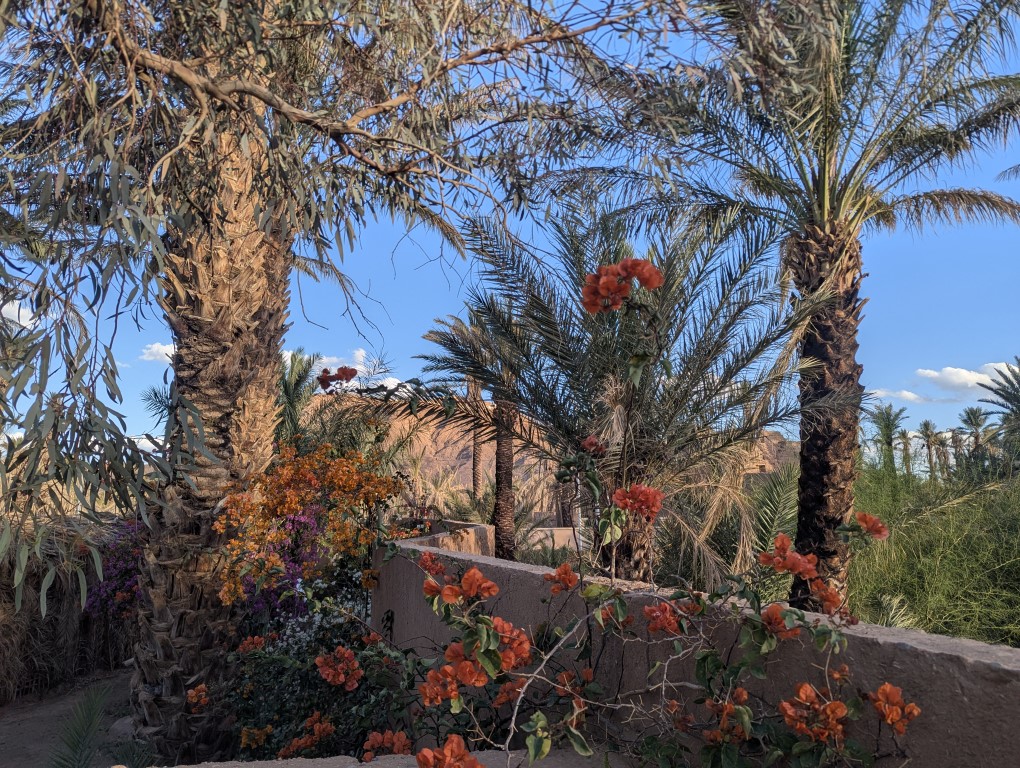
Then it was back off to the desert again- this time the Erg Chigaga dunes via the dusty town of M’Hamid. While we’d thought doing a camel trek from this town would be much better, we abandoned that idea when the wind & blowing sand was so bad we could hardly keep our eyes open. I would have gotten pics of that but didn’t want the sand in our phones it was that bad. We moved to a campground on a big hill to get above the blowing sand and had a nice big tagine dinner there before hitting the road the next morning.
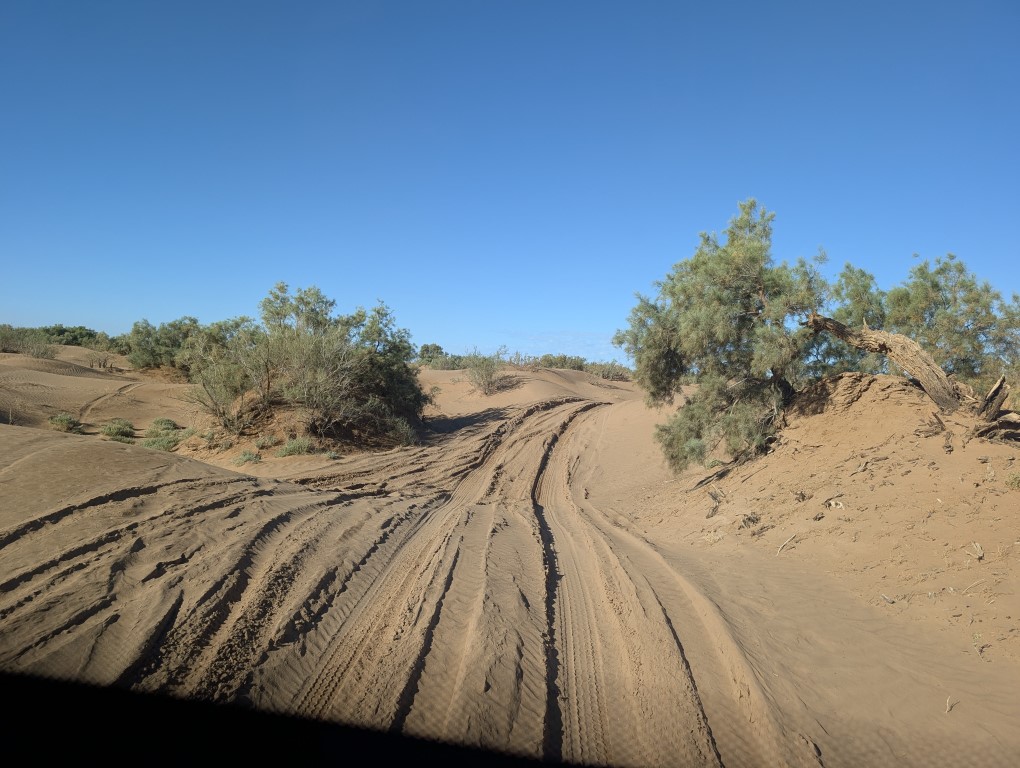
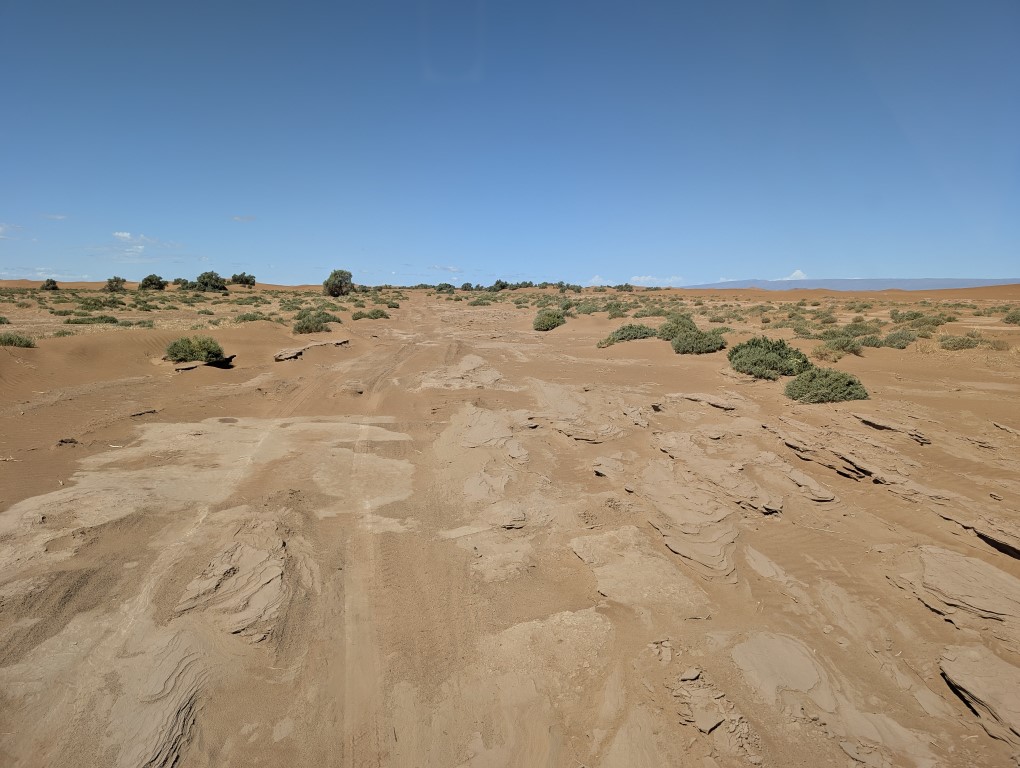
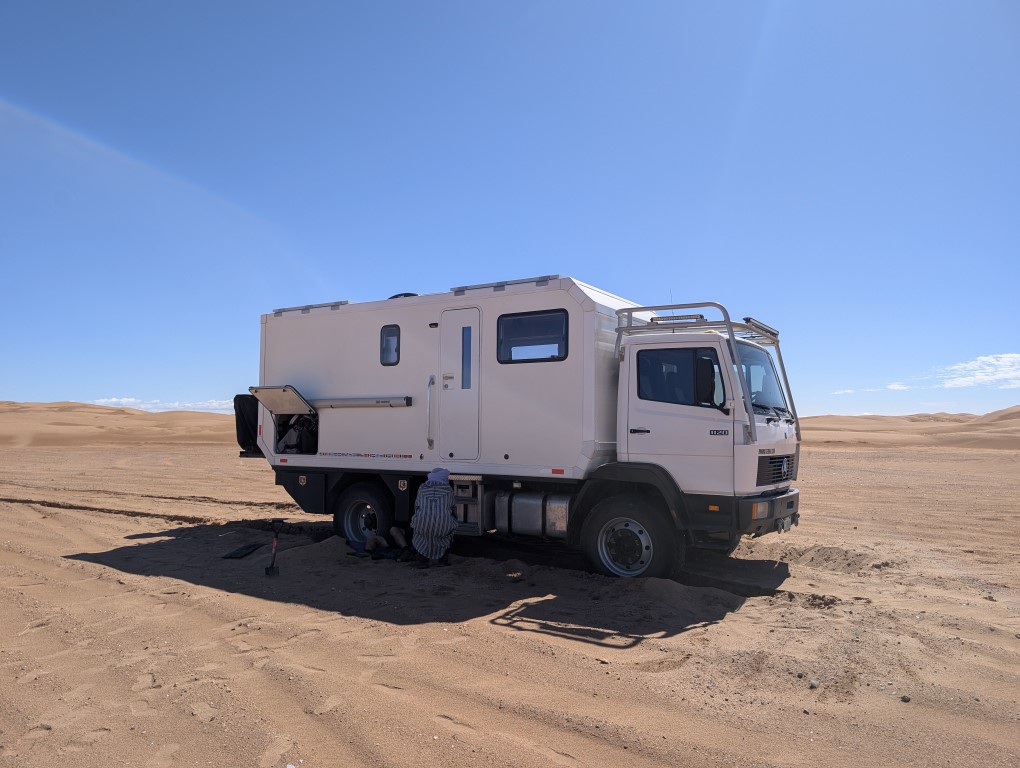
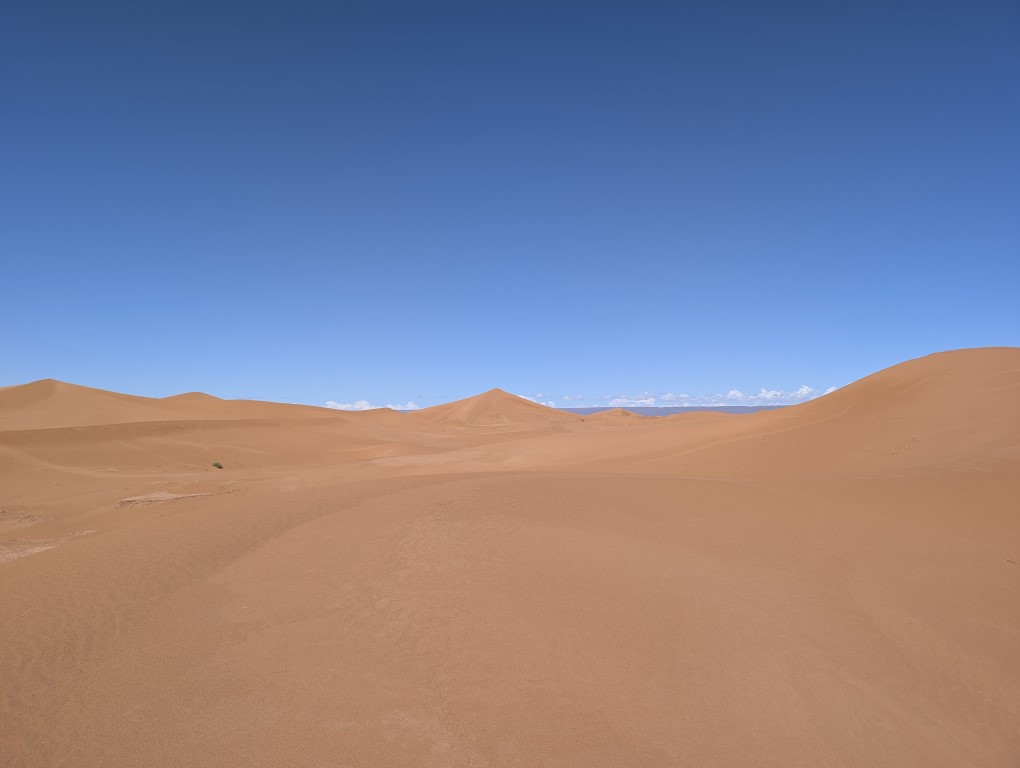
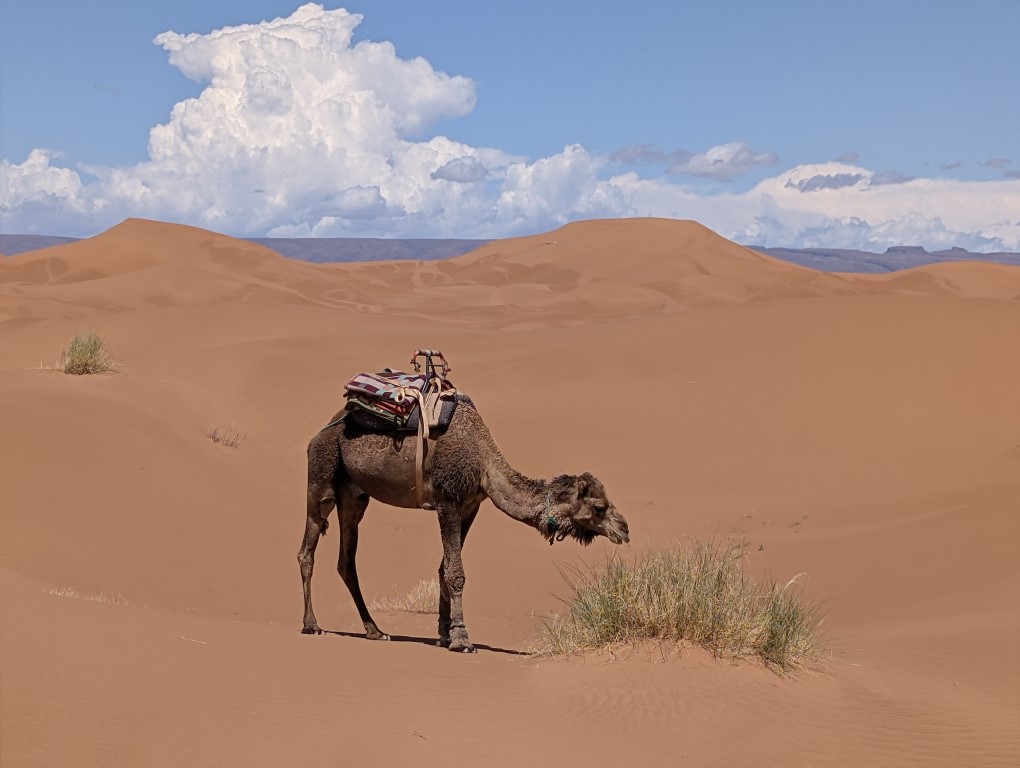
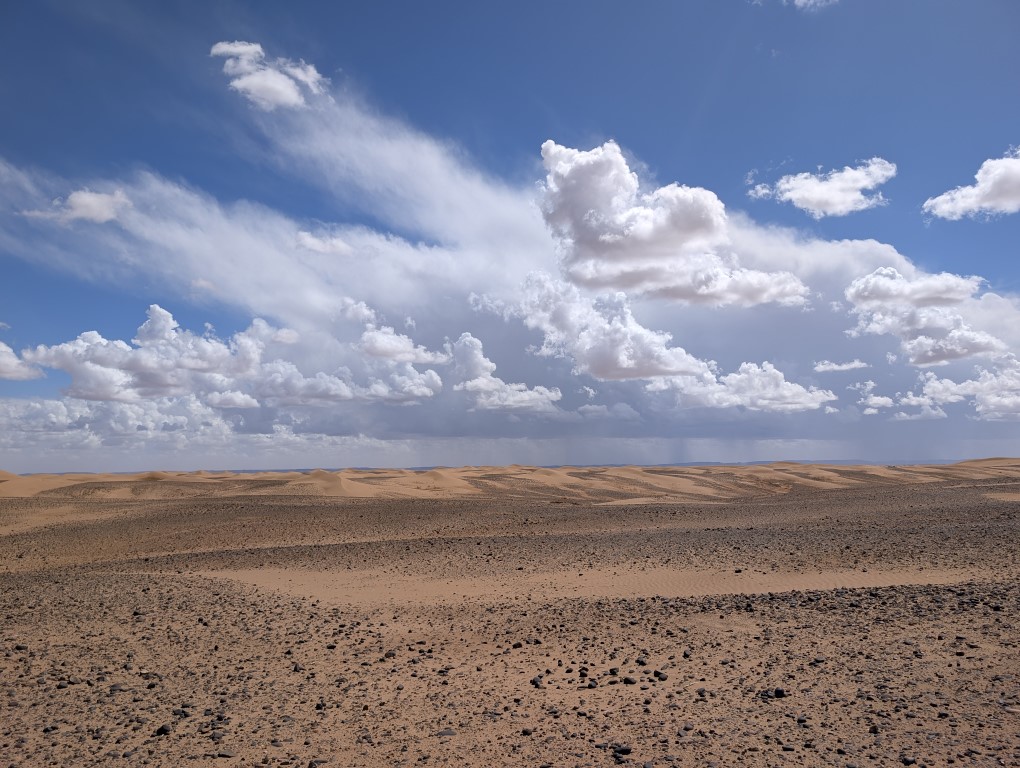
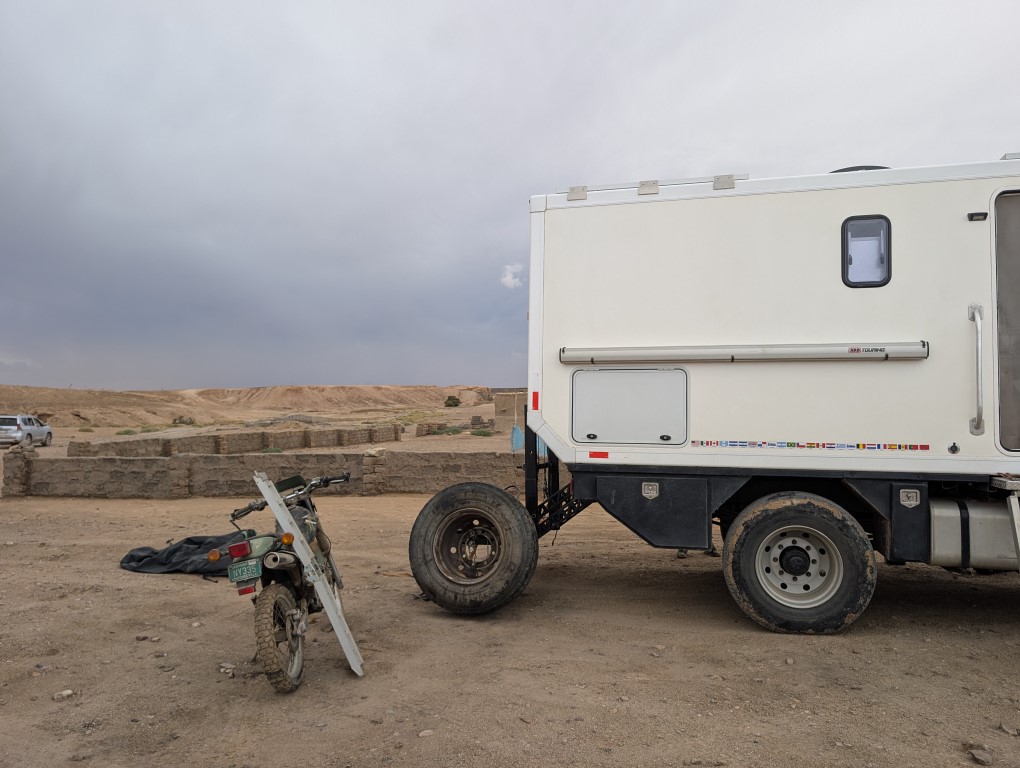
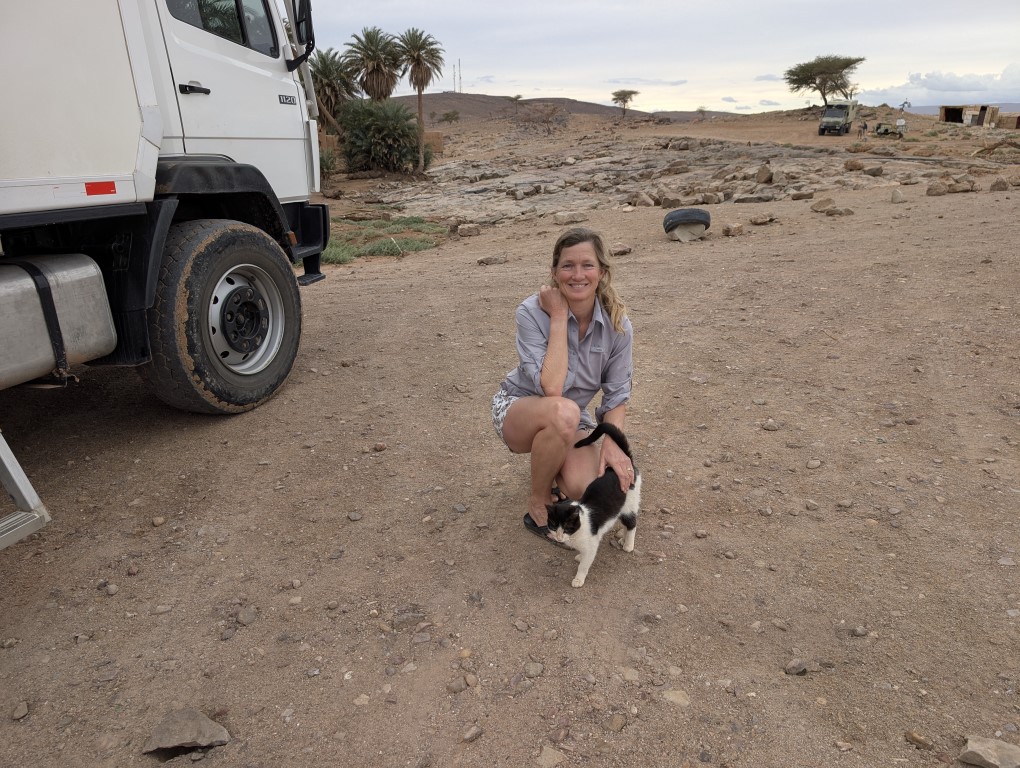
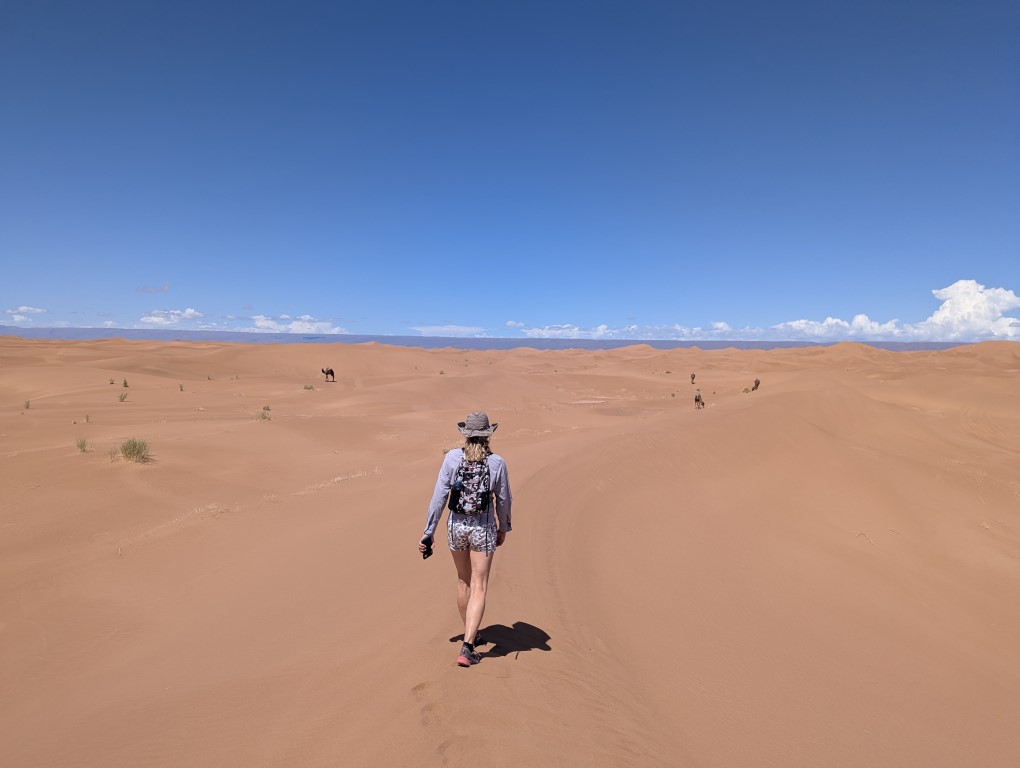
We set out through the sand toward the Chigaga dunes on a windless morning knowing that there had been rain in the mountains and more rain coming that could make things sketchy as roads can become flooded and paths out harder to come by, but we were going to sort of hurry. On the way, it’s hard to see which way to go as there are paths leading every which version of the direction you want to go and they change around every corner. At one point we chose a lower path and ended up in deeper sand and lost momentum. When Jon stopped to put the lockers on we got a little stuck and had to air down more and dig a path out to higher ground. No problem, we got right out and continued to the dunes. The Erg Chigaga dunes are not as tall as Merzouga but they cover more area and are like a sea of dunes stretching before you. You get the best pics of that phenomena at sunset. We took a nice walk and then resumed. It would have been nice to stay overnight in them but the weather wasn’t going to hold. Then the path turned rocky and we didn’t air back up at that point as we should have. A little bit later I started hearing air come from the rear tire with each rotation. We had a sidewall puncture from the rocky bit. We kept airing it back up until we could get to the oasis where we were headed. It was a little hard to actually get there because there was water and mud around from the rains. Then Jon went about changing the tire as the skies blackened around us. The winch is necessary and we were so glad we’d had those project days to get it fixed. It was sunset when we finished so we stayed the night there. All night, there was thunder and sprinkles of rain. We got going again before sunrise trying to get out of the desert before the forecasted rains got worse and now, having no spare tire, we knew we needed to be careful. It was 44km back to M’Hamid via a higher road and the nice thing was we were headed toward the one bright spot in the sky where the sun was rising. It started out really good and we were making decent progress on harder washboard road. Then we arrived to the first of several flooded areas with brisk running water. As we were walking around and wading into it trying to see if we could cross it, about a dozen SUV’s carrying tourists out of the desert came up and found a way. When they got to the other side over 3 separate streams of water, they all stopped and watched us come through. Oh brother! As we plunged into a deeper part, our front grill was in the water and we were pointing downward briefly because of the cab angle and then the next thing we’re pointing upward climbing out of that rut in the river. We came out onto the bank to applause from all the guides and tourists videoing the show. It reminded me of sailing when everyone in the anchorage is watching you come through a reef strewn pass. One of the understorage boxes took in water in the upstream flow. One thing that we do is look at the satellite imagery to see what the road and dry washes look like but in these instances with flooding, you really can’t see what is normal because you wouldn’t be going that way.
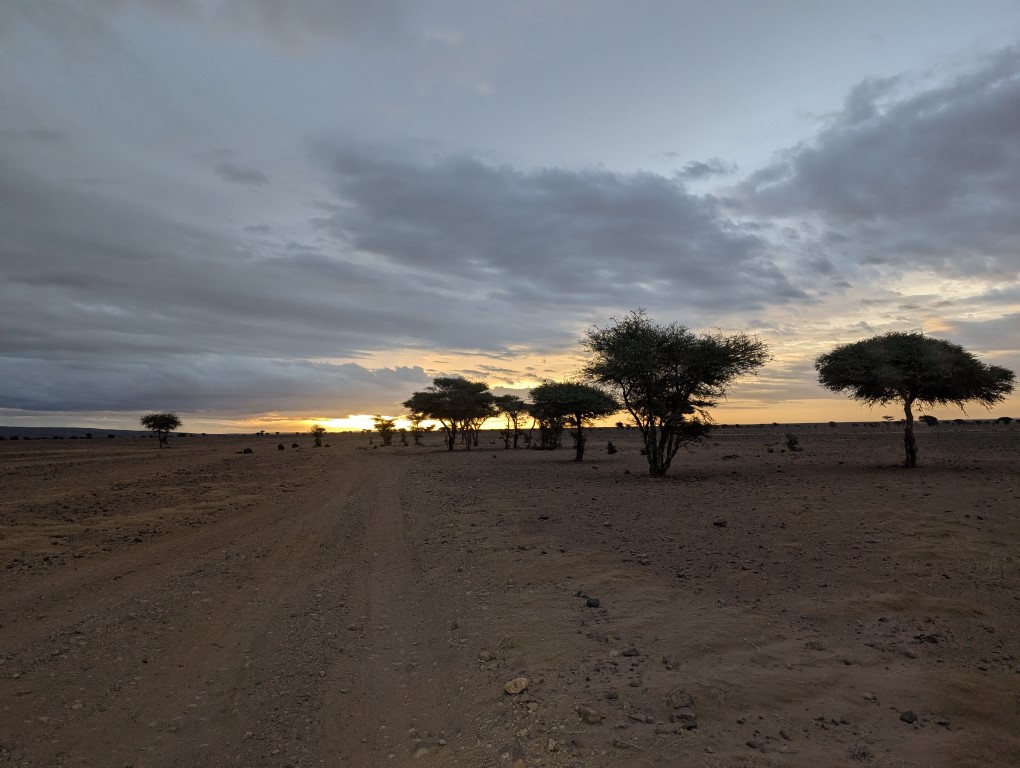
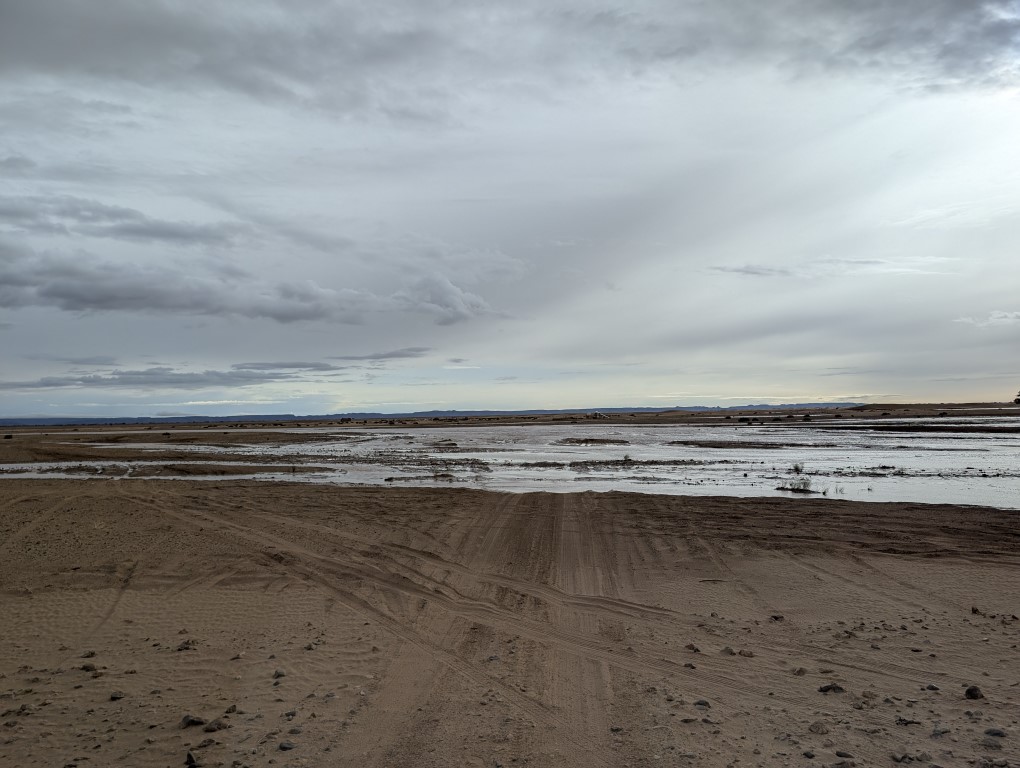
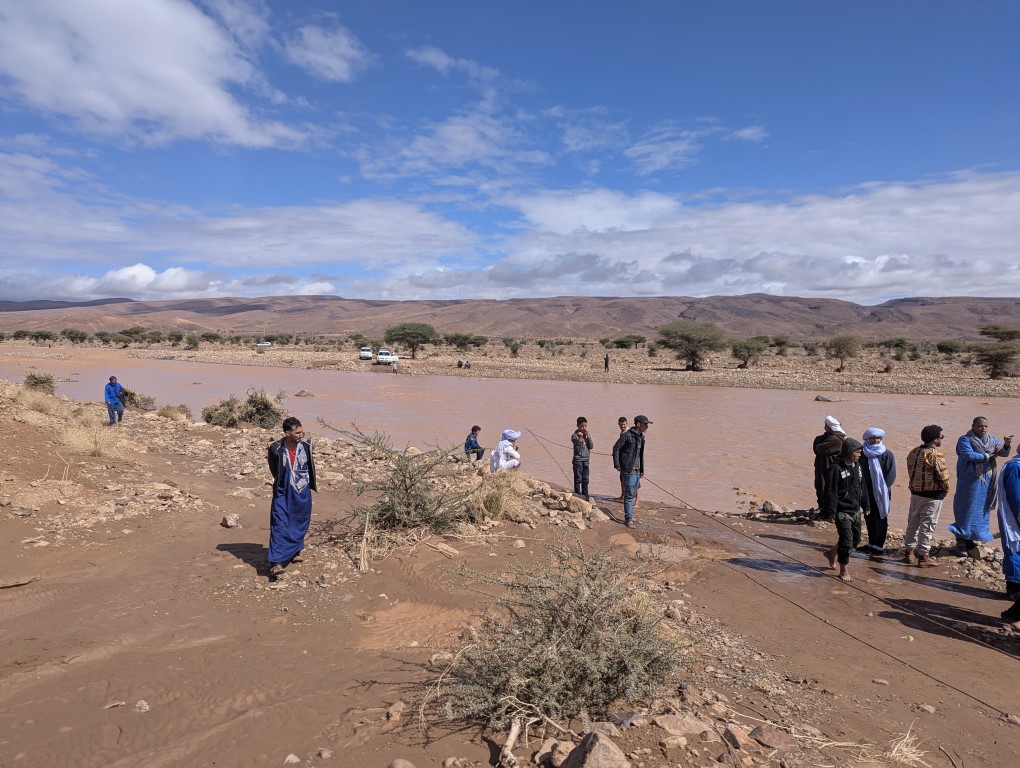
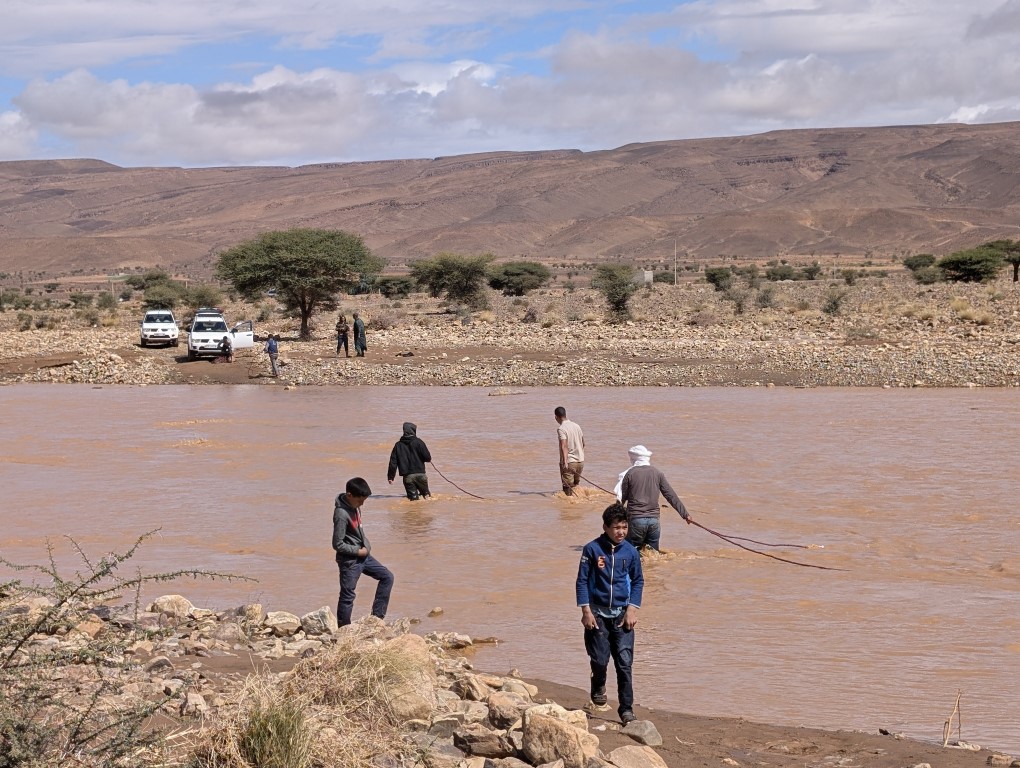
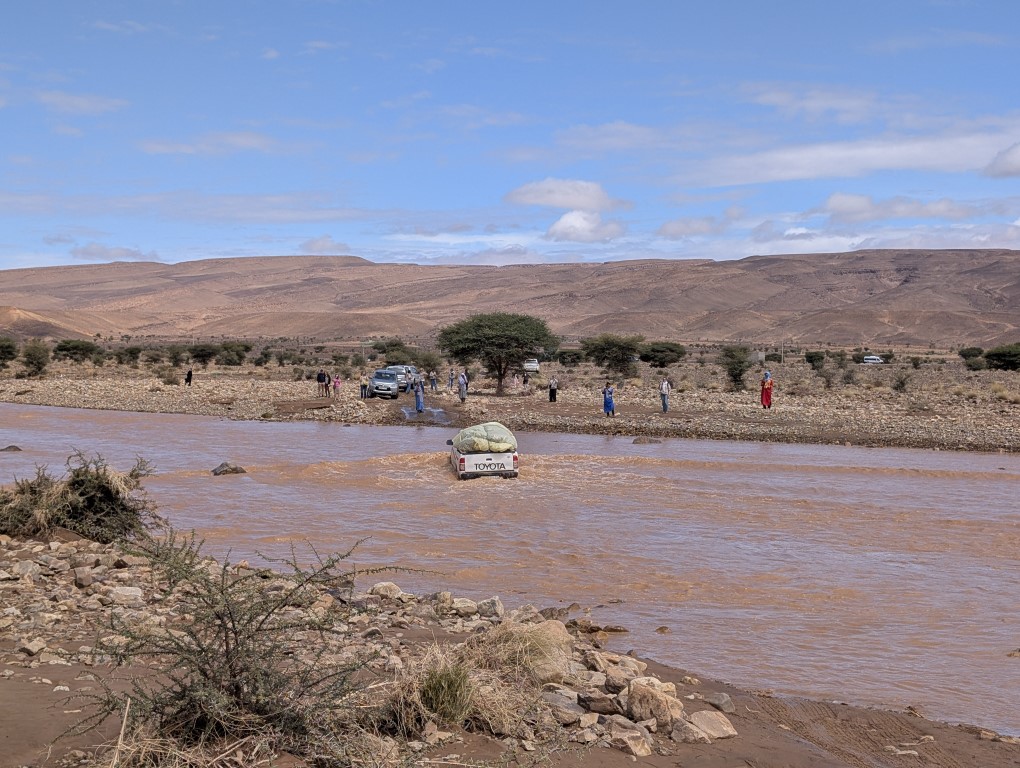
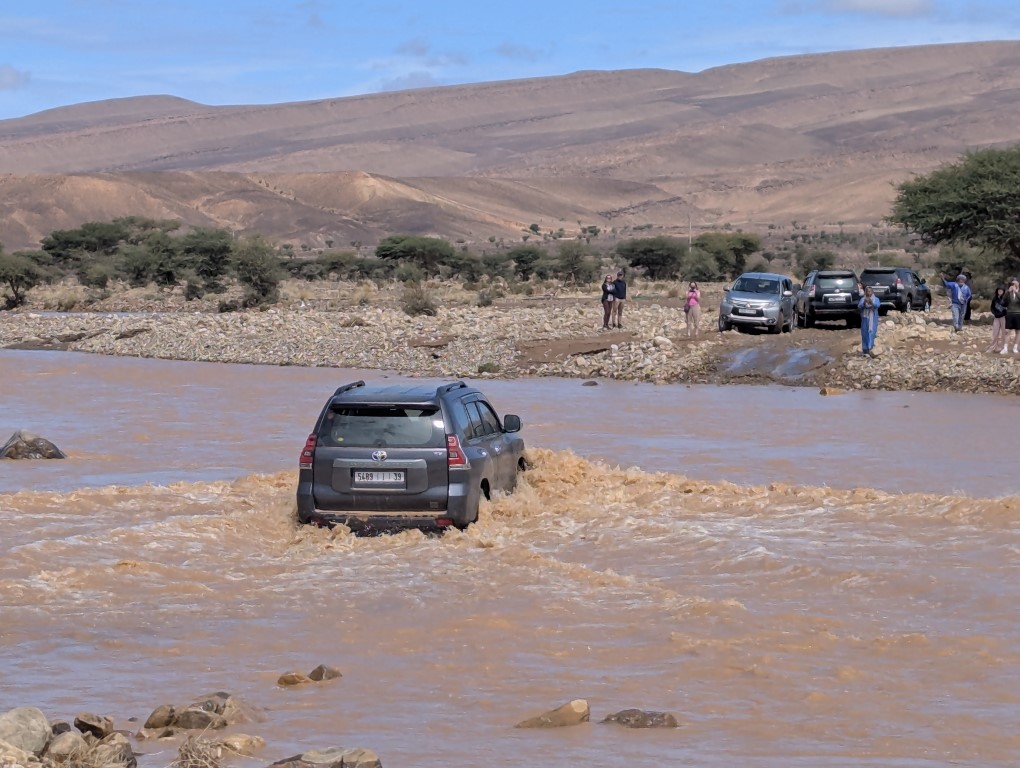
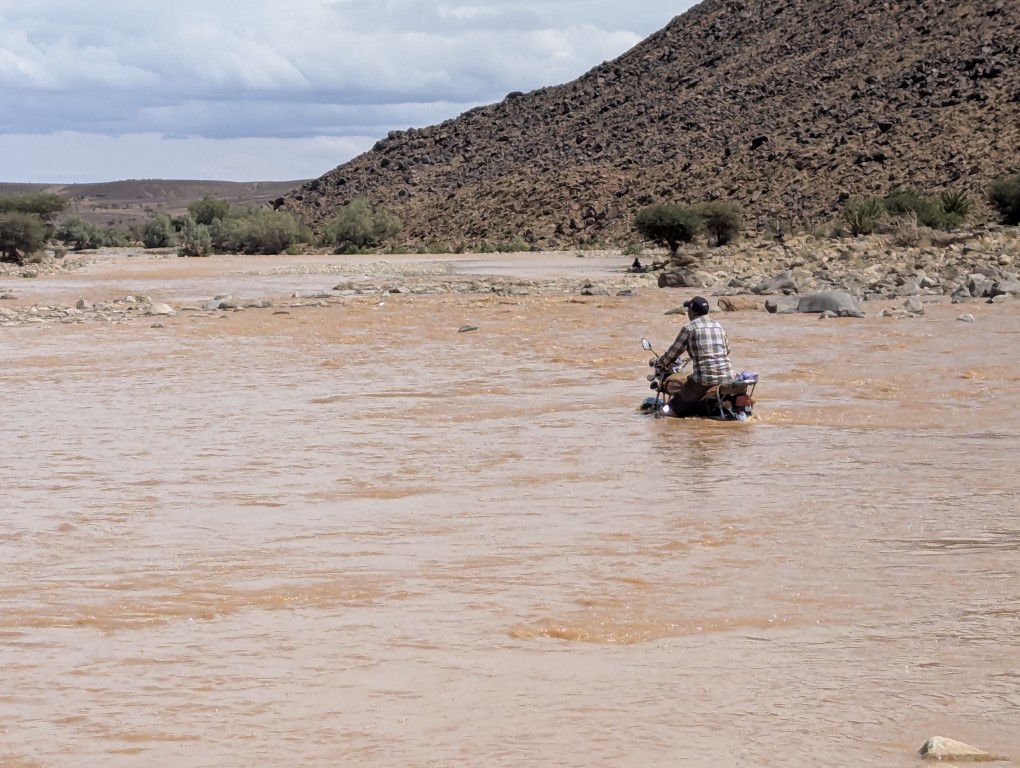
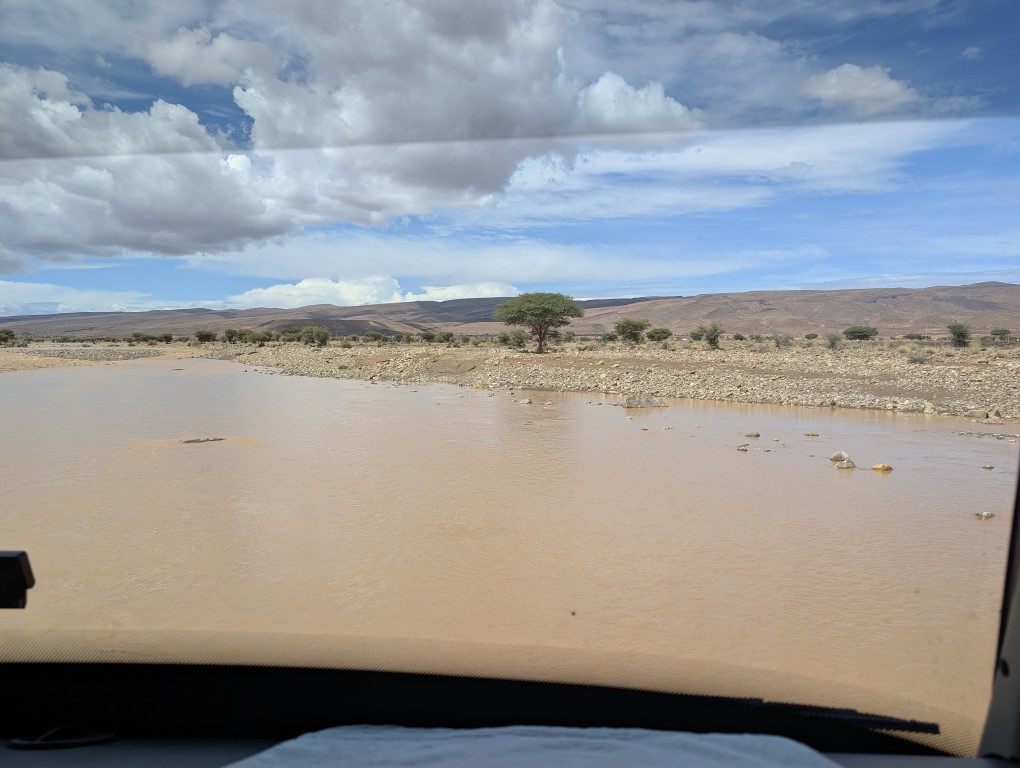
The guides then told us that the way out that we’d all planned wasn’t possible and we’d have to find another way. We started following them as best we could searching for a way out of the desert. We’d be doing ok then come to a lake that shouldn’t be there. The last point was heading north to try to get higher but there would still be a river to cross. The problem was rain in the mountains was causing flooding in the desert washes that would ordinarily be dry. Well we got to the river and there was a lot of water coming down. The guides waited for a while assessing the situation. They contemplated using a rope, the national guard was there just watching things and then finally, one by one, they started blasting across the river cheering each other on. As we could see the level getting lower by comparing photos we took over time, we waited for 3 hours and then made our crossing and it was uneventful. One thing for us is we have no deadline and we have our house with us. It also makes it stressful when you take your house across areas where there is risk and not many people can pull you out. When we got back to Zagora that evening, it poured rain and we both rejoiced that we weren’t still in the desert. The following morning, we went to a tire shop to get our spare repaired. We saw footage of an SUV that got taken down the river with tourists in it and had to be rescued. But our truck was fine and did everything it was supposed to do, and Jon did some great driving. It was nice to see those remote parts of the desert and tackle some difficult paths. Also, feeling the truck slide around in the sand dunes with lockers on is a funny sensation too. That said, we aren’t good at sitting and need our exercise so for that we will never become real off-road driving lovers unless we’re getting to some great hikes!
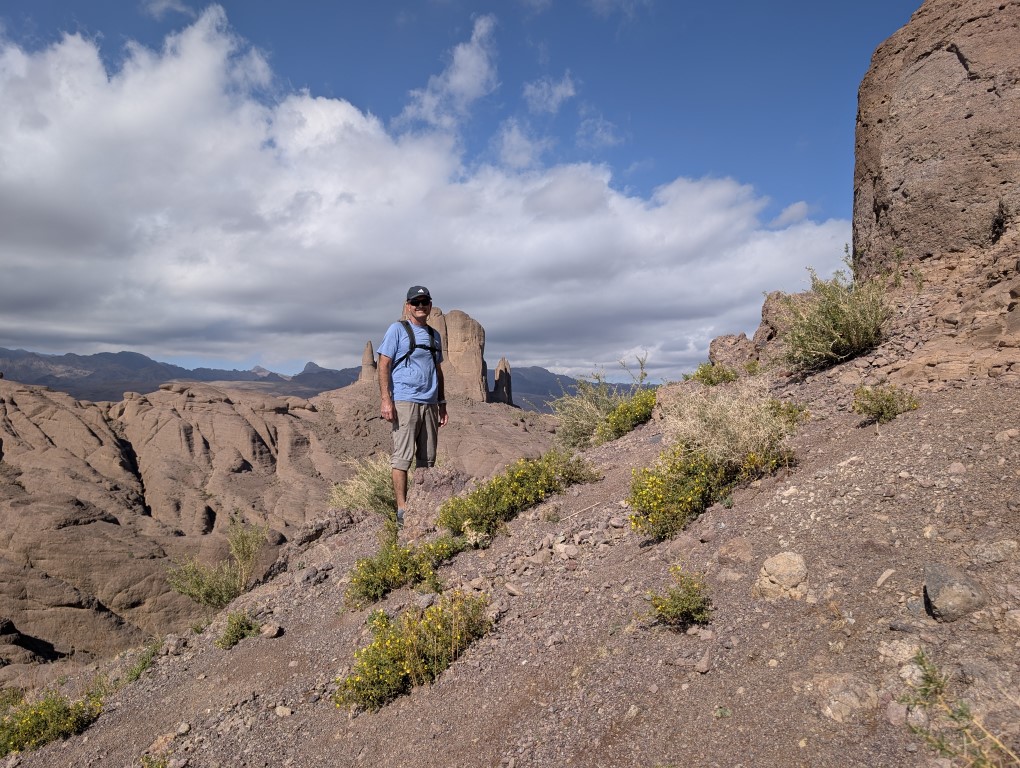
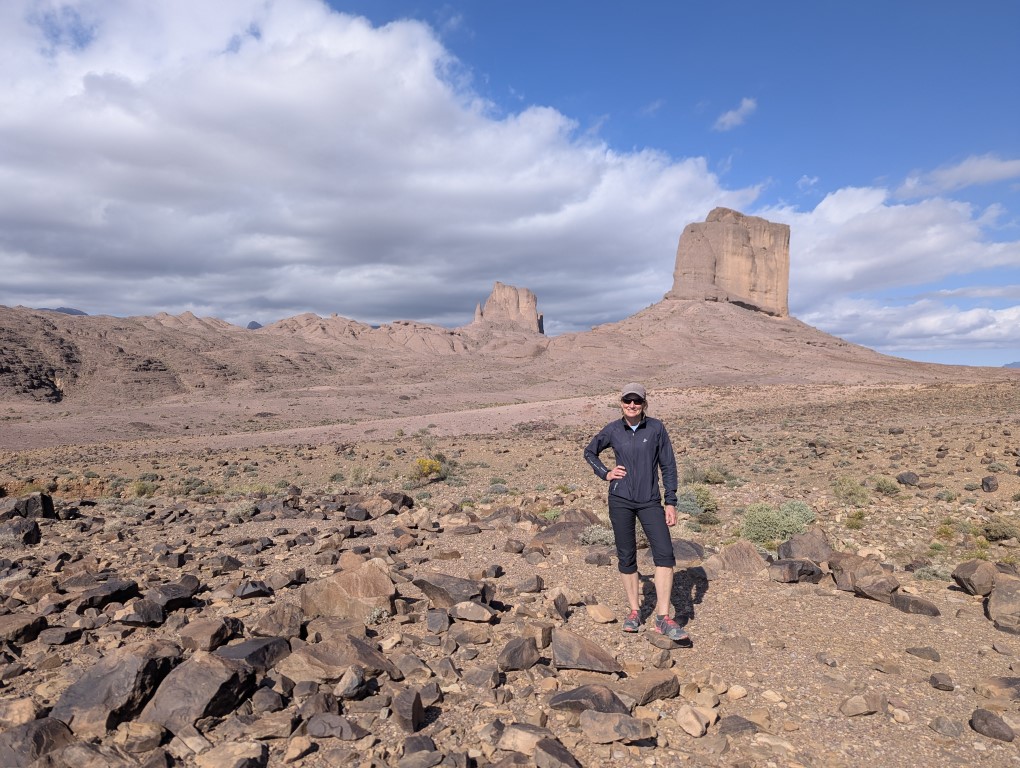
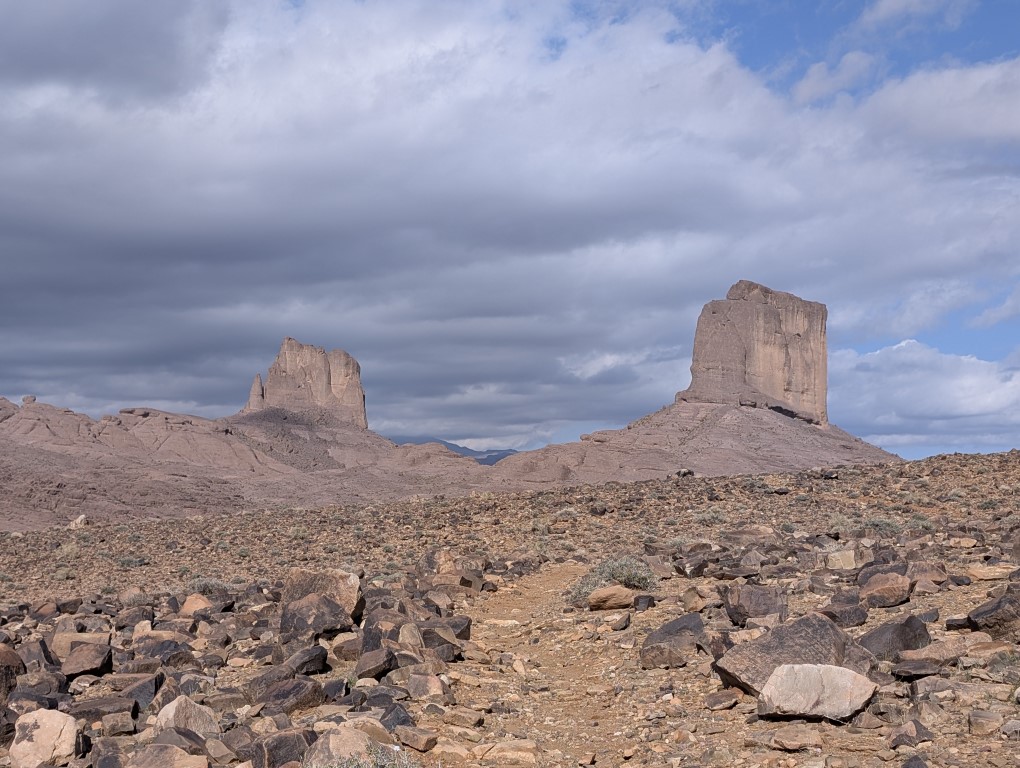
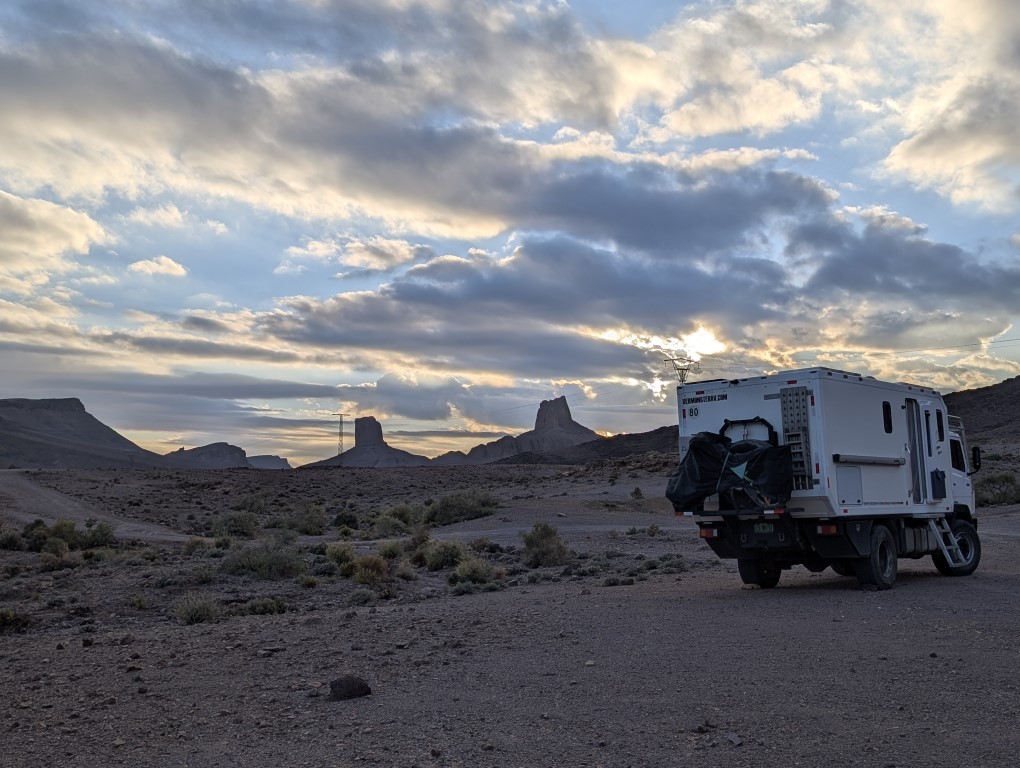
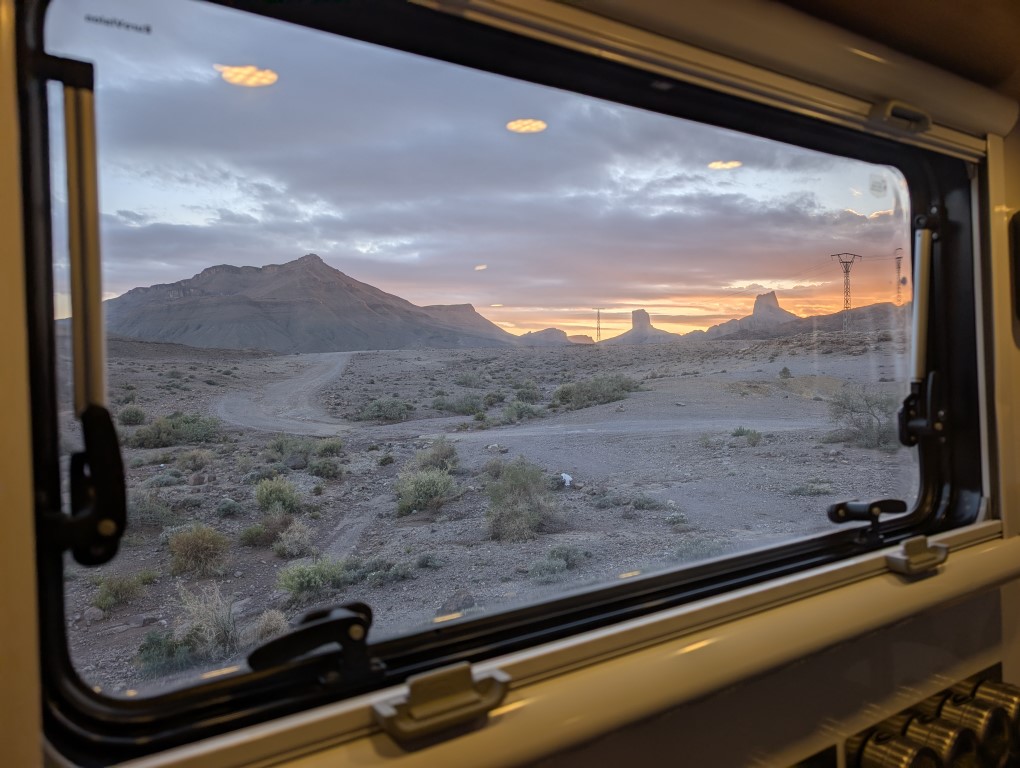
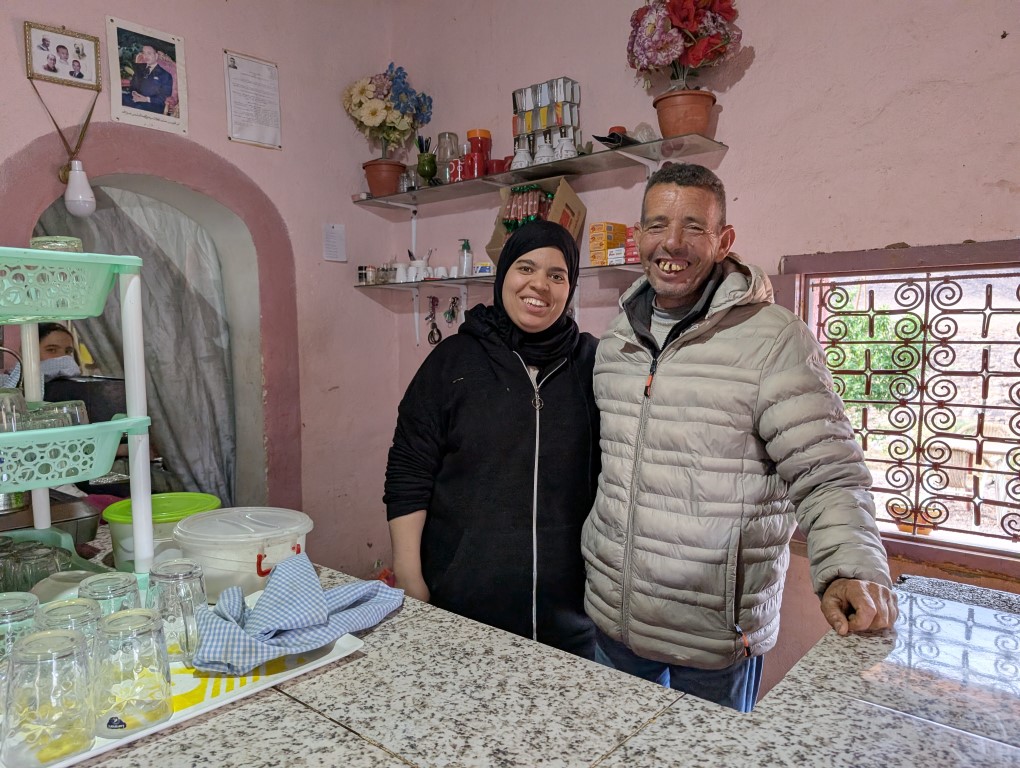
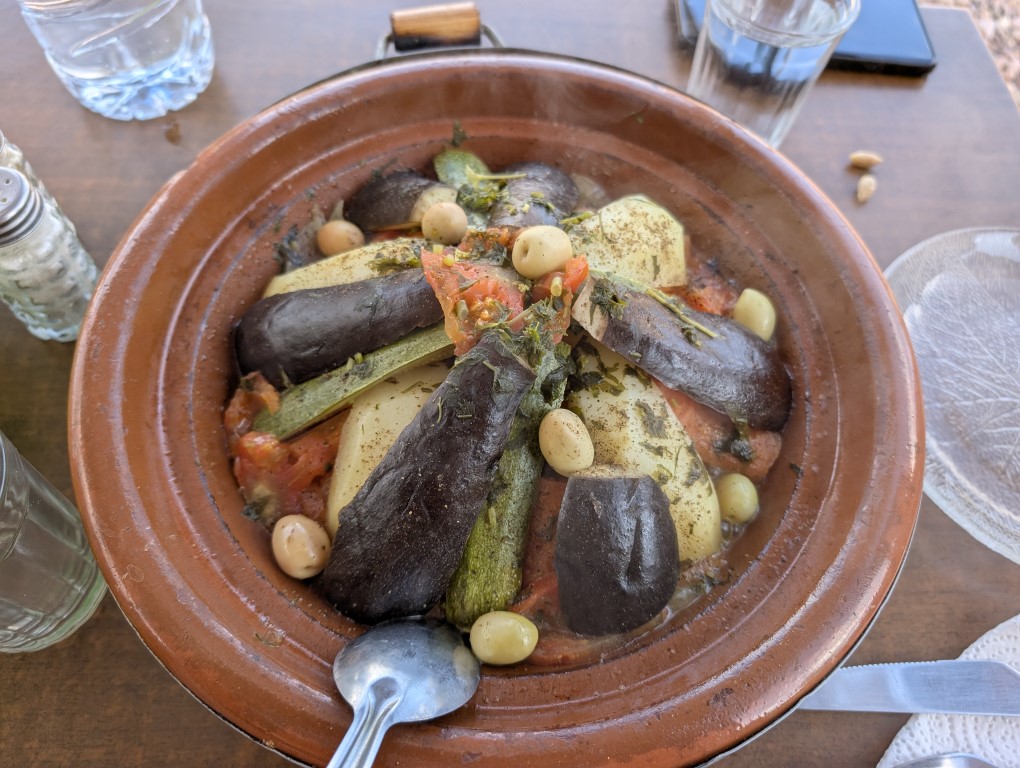
Determined to stay generally on pavement for a bit and desperate for some exercise, we headed to an area with interesting rock formations called Bab n’Ali. After hiking them, we ate at Cafe Pitons and had what other than… a tagine! But it was a really good one. And we liked the father & daughter who made it for us!
The next morning, the fresh water pump wouldn’t work. Completely dead. We’ve had it for about 4 weeks. So first thing, Jon had to install our spare. We took a hike to a pretty waterfall, then got in the truck to leave and turned the key…. nothing. Turned out it was a corroded start battery cable. We’ve certainly had a lot of rain this winter to corrode a wire! Could all the washboard on the more solid part of the road have caused the pump failure? Well, we’ll never know. Stuff is breaking all the time. It’s part of the journey. Meanwhile, Jon got it fixed and we were on our way to the next cool spot.
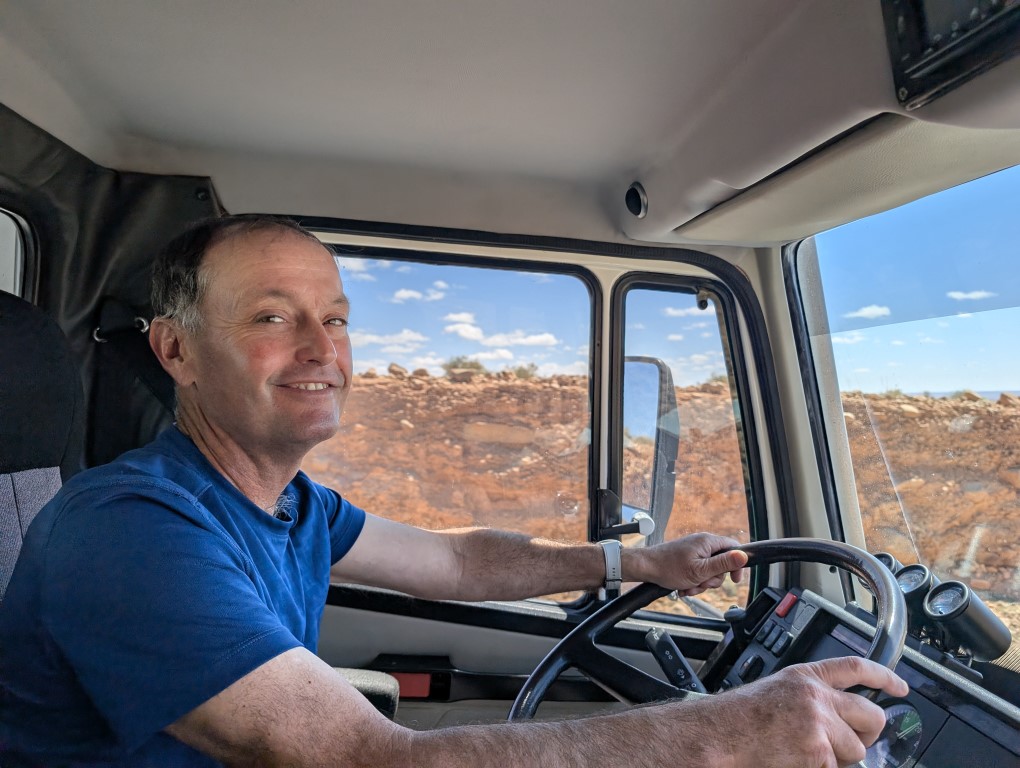
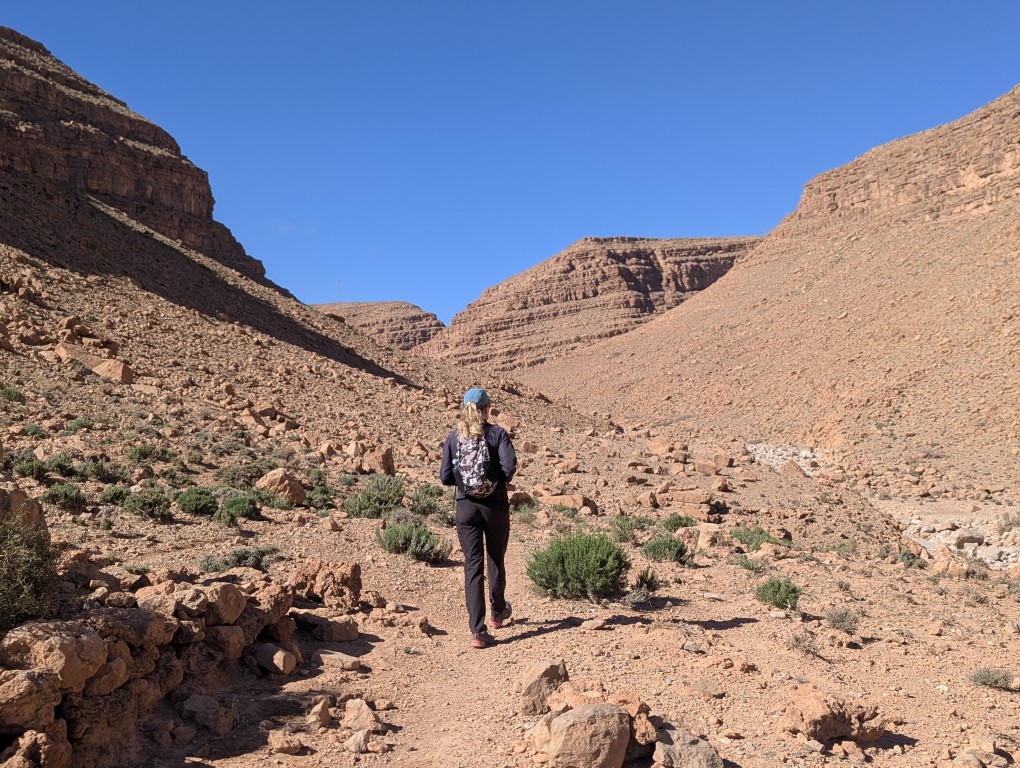
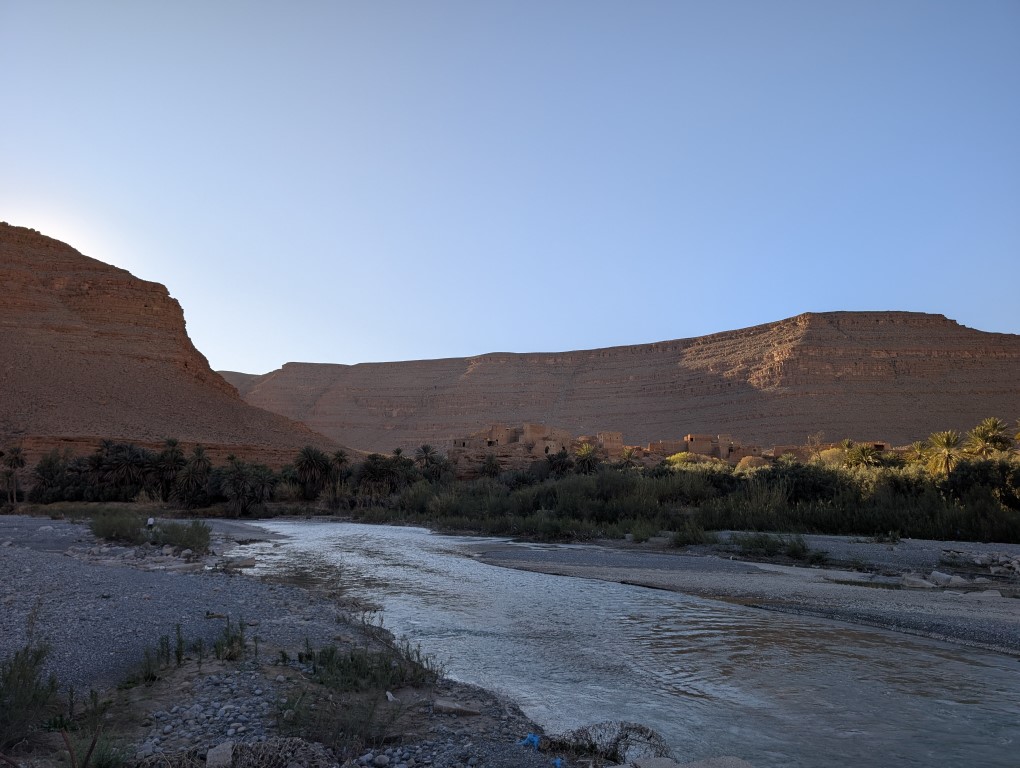
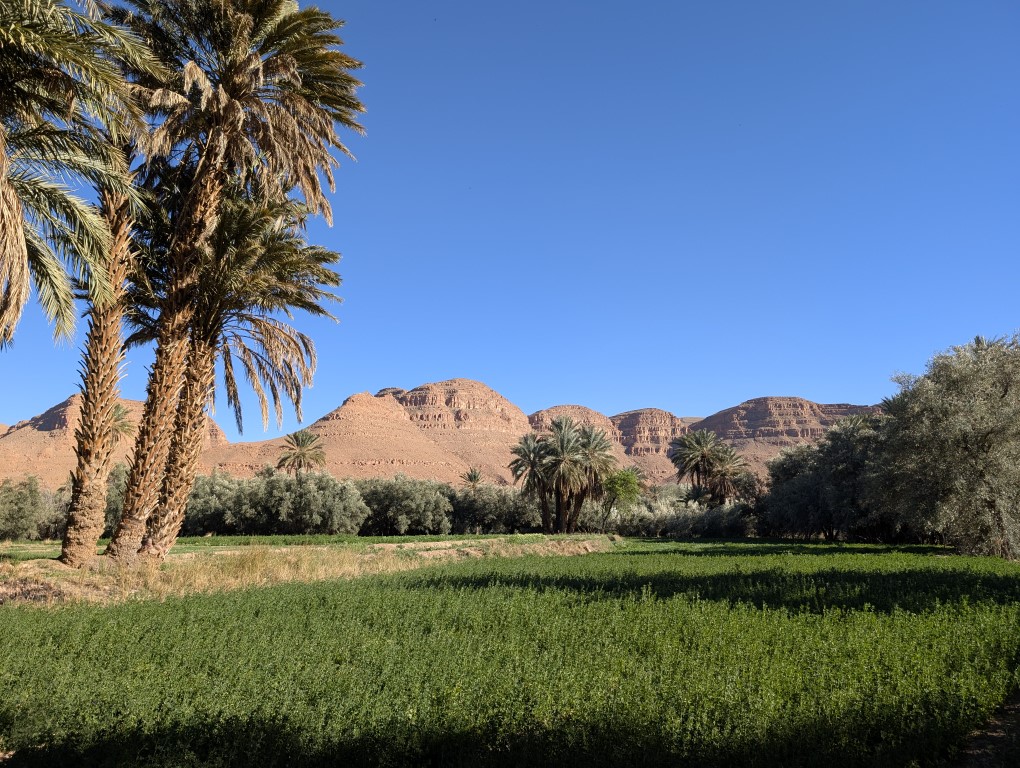
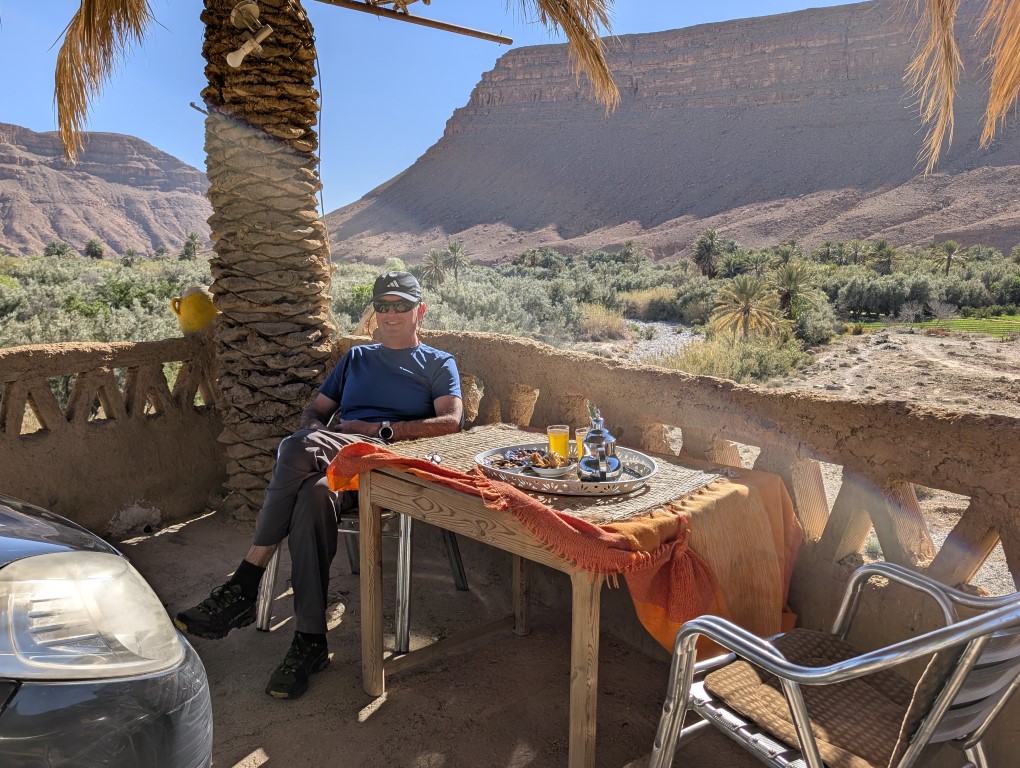
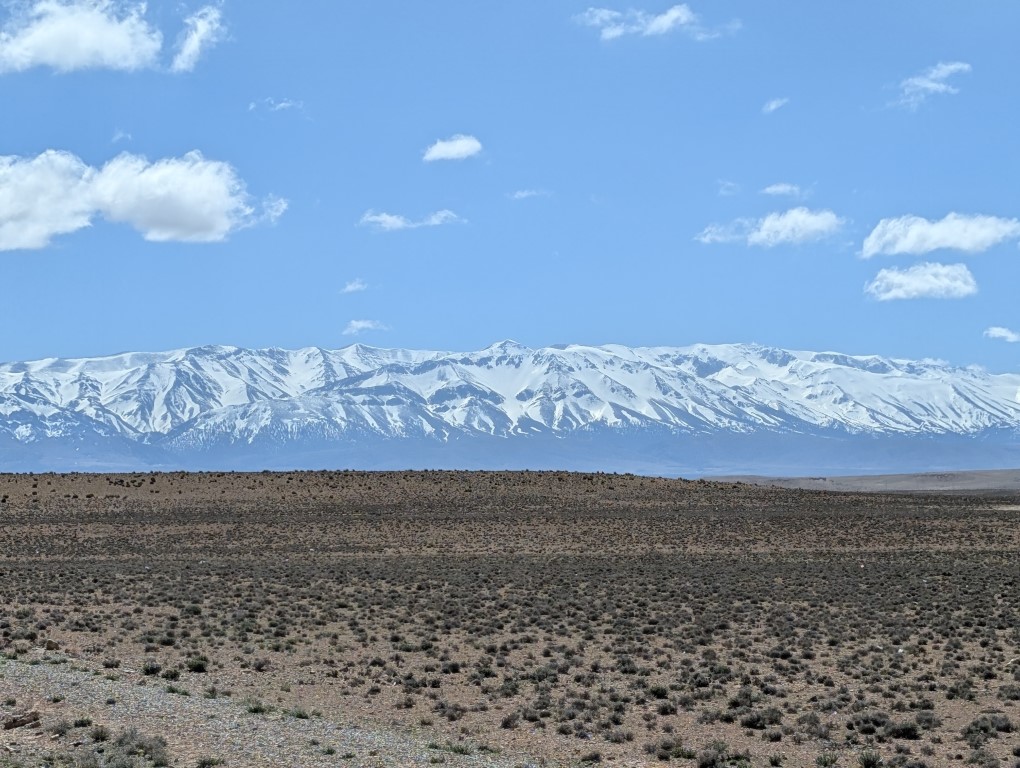
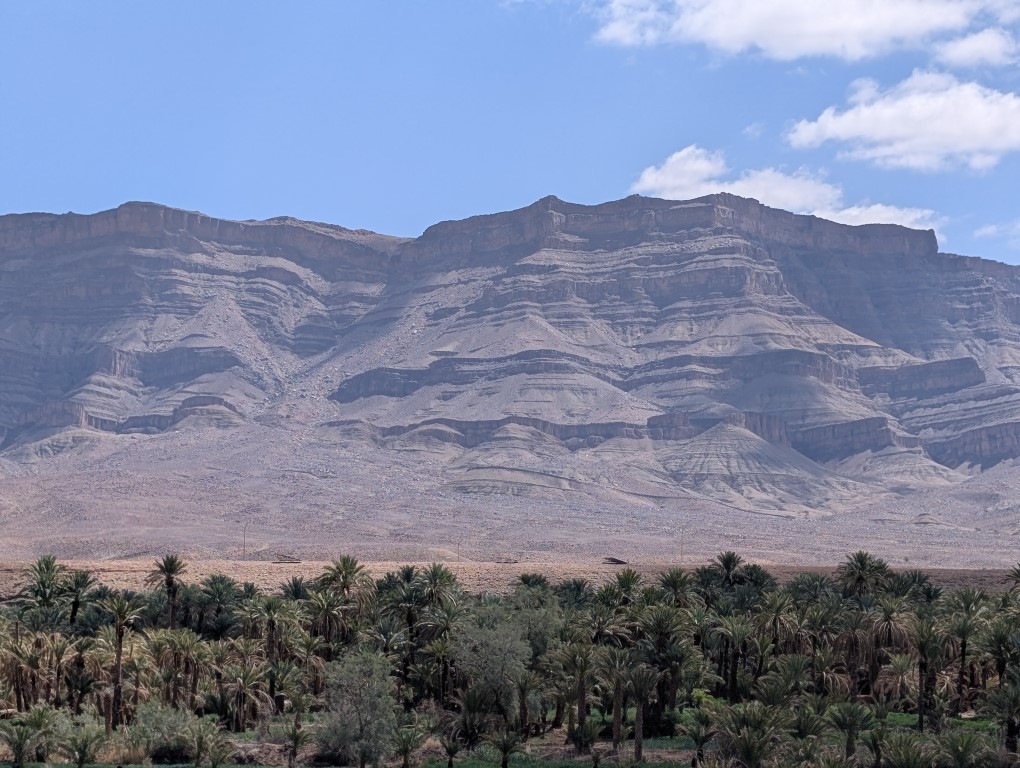
Along the drive, we saw heaps of Moroccans out tending their farm fields which they do by hand. It is an entire social network here that you can witness as you cover the miles. It struck me that Moroccans are either hustling for a tourist dollar or have their backs bent in the field to earn a dollar and provide food for themselves and their country. And from somewhere far away, the greedy “have’s” are making the prices of fuel soar for them and maybe even deterring a tourist from taking a flight here.
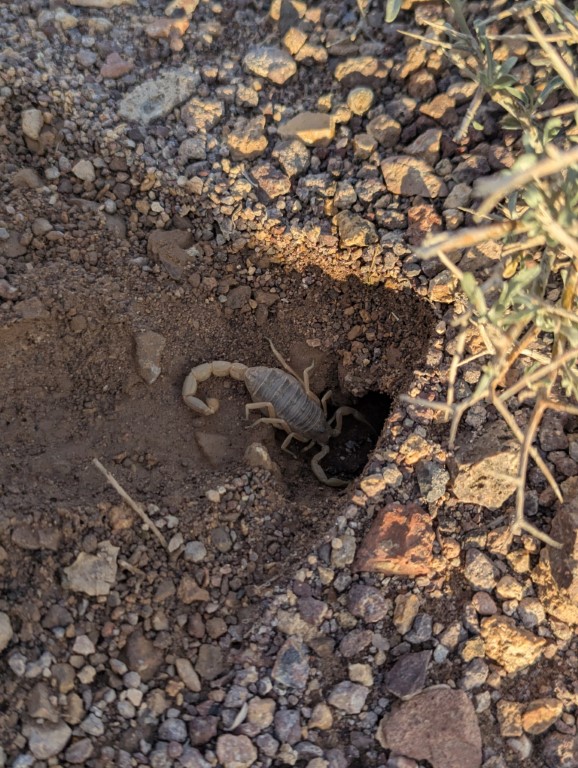
We got to talking about quotes that we like while driving and came up with a couple. Jon likes the one from Mark Twain that says “Travel is fatal to predudice, bigotry, and narrow minded-ness, and many of our people need it sorely on these accounts”.
Well then mine is “Tell me, what is it you plan to do with your one wild and precious life?” by Mary Oliver.
I’m doing it.